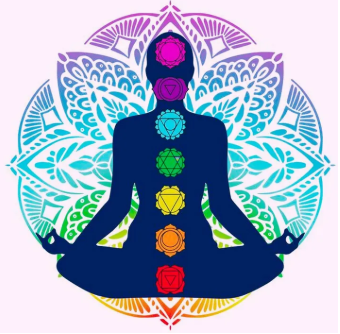
Witness Consciousness Meditation is an advanced awareness practice to observe thoughts without attachment. Learn how it works, benefits, and practice steps.
✱ What Is Witness Consciousness Meditation?
Witness Consciousness Meditation is an advanced meditation practice in which the practitioner learns to observe thoughts, emotions, and sensations as a neutral witness.
Instead of identifying with mental activity, you remain aware of it from a calm, detached perspective.
The goal is not to change thoughts, but to observe them without involvement.
This practice is suitable for meditators who already have experience with mindfulness or silent meditation.
✤ How Witness Consciousness Meditation Works
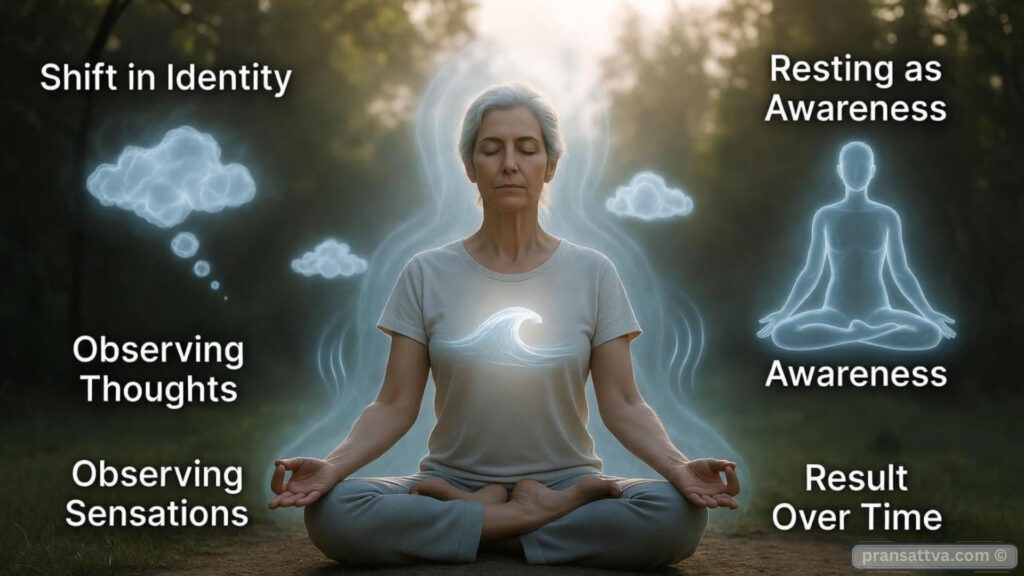
Witness Consciousness Meditation works by shifting identity from “I am the thinker” to “I am the observer.”
During practice, you learn to:
- Notice thoughts without reacting
- Observe emotions without suppression
- Watch sensations without labeling
- Rest in awareness itself
Over time, this creates mental clarity, emotional balance, and inner stability.
✤ Why Witness Consciousness Meditation Is Considered Advanced
This meditation is considered advanced because:
- It requires strong awareness stability
- There is no fixed object like breath or mantra
- Detachment must be maintained naturally
- Emotional maturity is important
It should be practiced only after building a solid meditation foundation.
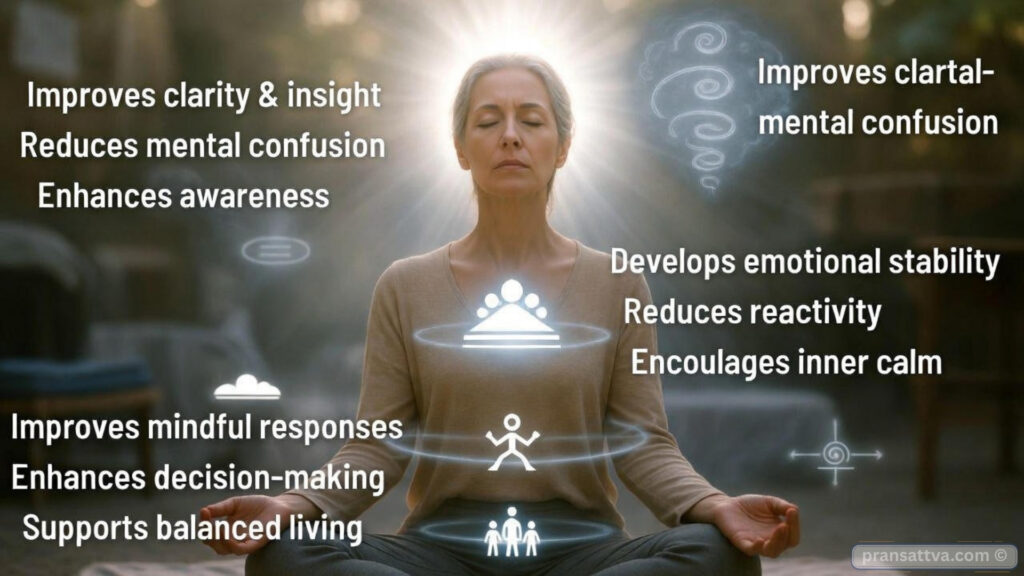
✤ Benefits of Witness Consciousness Meditation
1) Mental Benefits
- Improves clarity and insight
- Reduces mental confusion
- Enhances awareness
- Strengthens attention
2) Emotional Benefits
- Develops emotional stability
- Reduces reactivity
- Encourages inner calm
- Builds self-awareness
3) Lifestyle Benefits
- Improves mindful responses
- Enhances decision-making
- Supports balanced living
✤ Key Characteristics of Witness Consciousness Meditation
- Observation-based practice
- Non-reactive awareness
- Mostly unguided
- Requires meditation experience
- Emphasis on detachment and clarity
This meditation develops deep inner observation and understanding.
✤ Types of Witness Consciousness Meditation
1) Thought Witnessing
Observing thoughts as passing mental events.
2) Emotion Witnessing
Maintaining awareness during emotional experiences.
3) Sensation Witnessing
Watching physical sensations without judgment.
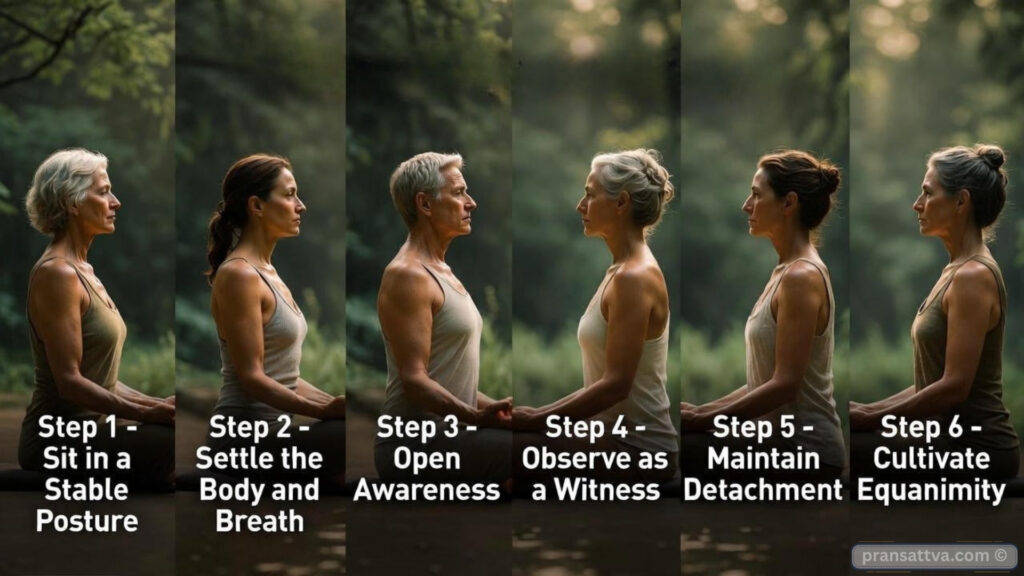
✤ How to Practice Witness Consciousness Meditation (Step-by-Step)
Step 1: Sit in a Stable Posture
Sit comfortably with a relaxed, upright spine.
Step 2: Settle the Body and Breath
Allow breathing to remain natural.
Step 3: Open Awareness
Do not choose a single focus object.
Step 4: Observe as a Witness
Notice thoughts, emotions, and sensations calmly.
Step 5: Maintain Detachment
Do not follow or suppress experiences.
Step 6: End Gently
Sit quietly for a few moments before opening your eyes.
Recommended duration:
Start with 20–30 minutes, increase gradually with experience.
 Best Time to Practice Witness Consciousness Meditation
☑ Early Morning (Best Time)
- Mind is naturally calm
- Minimal distractions
☑ Late Evening
- Suitable for experienced practitioners
☒ Avoid Practice
- When mentally exhausted
- Immediately after heavy meals
- Without meditation foundation
⚠️ Common Mistakes to Avoid
- Forcing detachment
- Analyzing thoughts intellectually
- Expecting instant insight
- Practicing inconsistently
Witness awareness develops through patience and regular practice.
✤ Witness Consciousness vs Mindfulness Meditation
- Mindfulness focuses on present experience
- Witness consciousness focuses on the observer
- Witness meditation is deeper and more detached
Both practices complement each other in advanced meditation.
Conclusion
Witness Consciousness Meditation is a profound advanced practice that cultivates clarity, detachment, and inner balance.
By observing thoughts and emotions without identification, practitioners develop deep awareness and mental freedom.
With consistent practice, witness consciousness becomes a natural way of experiencing life with calm understanding.