(From Hatha Yoga Pradipika – the most authentic and traditional list)
Classical Hatha Yoga describes eight powerful pranayamas that form the core of traditional yogic breathing. These techniques purify the energy channels, awaken inner vitality, balance mental states, and prepare the practitioner for deeper meditation.
Ye pranayamas centuries-old yogic science ka foundational part hain, jinka uddeshya body, mind aur subtle energy system ka transformation hai.
✤ What is Classical Hatha Yoga Pranayama
Hatha Yoga Pradipika ke anusaar, pranayama ka main purpose hai:
- Nadis (energy channels) ka purification
- Breath control through structured techniques
- Balancing prana (life force)
- Awakening inner heat or cooling energy
- Preparing the mind for meditation
- Strengthening the nervous system
Classical pranayamas ko “authentic yogic breathing practices” maana jata hai, jo aaj bhi world’s best pranayama sequence ko define karte hain.
✤ How Classical Hatha Yoga Pranayama Works on Breath, Mind & Energy
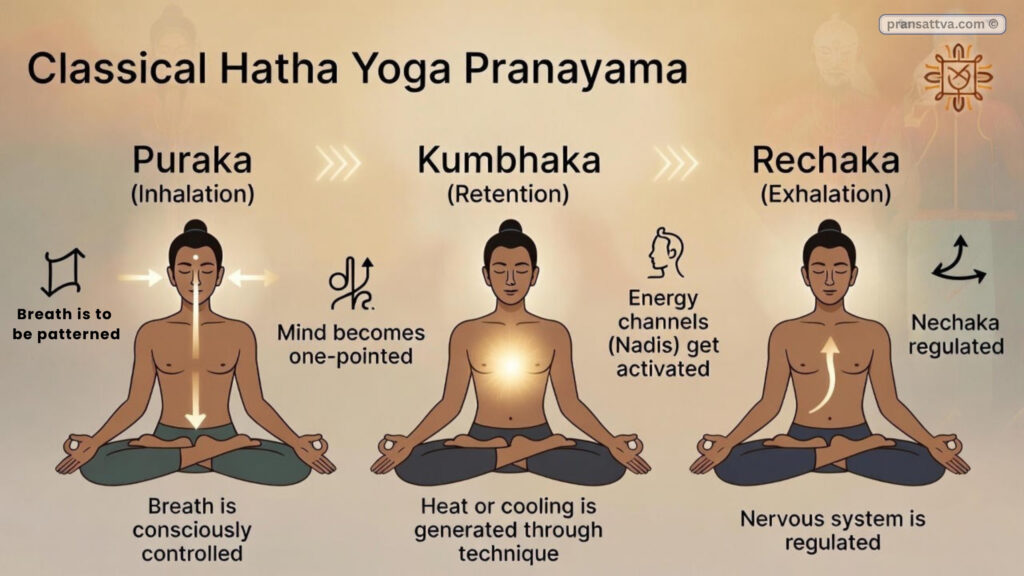
Ye pranayamas pranayama ke teen pillars par based hote hain:
☑ Puraka — Inhalation
☑ Kumbhaka — Retention
☑ Rechaka — Exhalation
How Classical Hatha Yoga Pranayama Works on Breath, Mind & Energy
In techniques ke zariye:
- Breath ko consciously control kiya jata hai
- Heat ya cooling generate ki jati hai
- Nervous system regulate hota hai
- Mind ek-pointed hota hai
- Energy system activated hota hai
Regular practice se strong vitality, mental focus aur emotional balance develop hota hai.
✤ Benefits of Classical Hatha Yoga Pranayama for Body, Mind & Energy
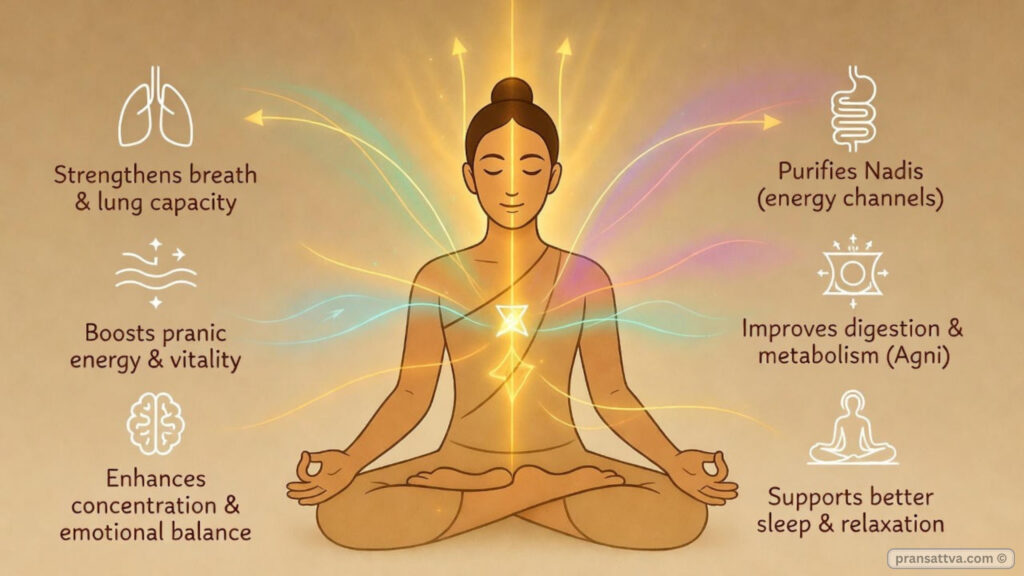
1. Strengthens Breath & Lung Capacity
Purifies and enhances respiratory efficiency.
2. Boosts Pranic Energy
Awakens inner vitality and improves stamina.
3. Enhances Concentration & Emotional Balance
Promotes deep mental stability and reduces stress.
4. Improves Digestion & Metabolism
Some pranayamas activate digestive fire (Agni).
5. Prepares for Meditation
Calms the mind and increases awareness.
6. Purifies Nadis (Energy Channels)
Clears energetic blockages for smooth prana flow.
7. Improves Sleep & Relaxation
Cooling pranayamas support relaxation & stress release.
8. Supports Holistic Wellness
Balances body, mind, breath, and energy.
✤ The 8 Classical Hatha Yoga Pranayamas Explained (8 Types)
Use this clean formatted list on your website:
1. Suryabhedi Pranayama
Right-nostril inhalation to generate heat, boost energy, and improve metabolism.
👉 Read More
2. Ujjayi Pranayama
Ocean-like throat breath for mental focus, relaxation, and meditative awareness.
👉 Read More
3. Sheetali Pranayama
Cooling tongue-rolled breath that lowers internal heat and calms the mind.
👉 Read More
4. Bhastrika Pranayama
Fast inhale–exhale cycles to energize the body and awaken prana.
👉 Read More
5. Bhramari Pranayama
Humming sound breathing that soothes the mind and reduces stress.
👉 Read More
6. Moorchha Pranayama
A deep relaxation breath that creates a meditative “conscious trance” state.
👉 Read More
7. Plavini Pranayama
Air-holding technique that produces buoyancy, lightness, and deep inner stillness.
👉 Read More
8. Kapalbhati Pranayama
Strong exhalation technique for detoxification, digestion, and mental sharpness.
👉 Read More
 Best Time to Practice Classical Hatha Pranayamas
☑ Early Morning (Empty Stomach)
Best for clarity, focus, energy flow, and nadi purification.
☑ Before Yoga or Meditation Practice
Prepares body & mind for deeper awareness.
☑ During Winter (Heating Pranayamas)
Suryabhedi, Bhastrika, Kapalbhati — energize the system.
☑ During Summer (Cooling Pranayamas)
Sheetali — reduces internal heat and irritation.
⚠️ Moorchha & Plavini only advanced practitioners ya proper guidance ke saath karein.
⚠️ Precautions & Contraindications for Classical Hatha Yoga Pranayama
☒ Avoid strong pranayamas if you have:
- High blood pressure
- Heart problems
- Migraine
- Vertigo
- Epilepsy
- Recent surgery
- Pregnancy (avoid heating + breath retention)
☒ Avoid cooling pranayamas if:
- You have sinusitis
- Respiratory infections
- Low body temperature
☑ General Precautions:
- Always practice on an empty stomach
- Keep the spine upright
- Start slowly; increase intensity gradually
- Avoid breath retention if you feel dizzy
- Stop immediately if discomfort arises
Conclusion: Why Classical Hatha Yoga Pranayama Is the Foundation of Yogic Breathwork
Classical Hatha Yoga pranayama represents the original yogic breathwork system — balancing body, mind, and energy at the deepest level.
Practicing Suryabhedi, Ujjayi, Sheetali, Bhastrika, Bhramari, Moorchha, Plavini, and Kapalbhati helps develop strength, focus, emotional stability, and spiritual awareness.
These eight pranayamas form the foundation of traditional yogic breathing and remain highly effective even today.