Hatha Yoga is a traditional yoga practice focused on asanas, breathing and balance. Learn what Hatha Yoga is, its benefits and how it works for beginners.
Hatha Yoga is a traditional form of yoga that focuses on physical postures (asanas), breathing techniques and mental balance. Hatha Yoga is ideal for beginners who want strength, flexibility and inner calm.
It is the perfect starting point for beginners, helping the body prepare for deeper yoga practices and meditation.
Hatha Yoga balances the mind and body by bringing awareness to each breath and each movement.
✤ What Is Hatha Yoga?
Hatha Yoga emphasizes:
- Slow, steady movement
- Controlled breathing
- Proper posture (alignment)
- Mind–body connection
- Building a strong foundation
It is ideal for beginners because the poses are simple, safe, and easy to learn.
It improves overall body flexibility, posture, balance, and mental calmness.
These asanas detoxify the body, stretch the muscles, strengthen the organs, and prepare the mind for meditation.
✤ How Hatha Yoga Works: A Complete Beginner-to-Advanced Explanation
Hatha Yoga works by creating a balance between the body, breath, and mind.
Every posture (asana) is designed to gently stretch, strengthen, and open the body while coordinating the movement with slow breathing.
This combination creates physical stability, mental calmness, and energetic alignment.
Here is how Hatha Yoga functions internally:
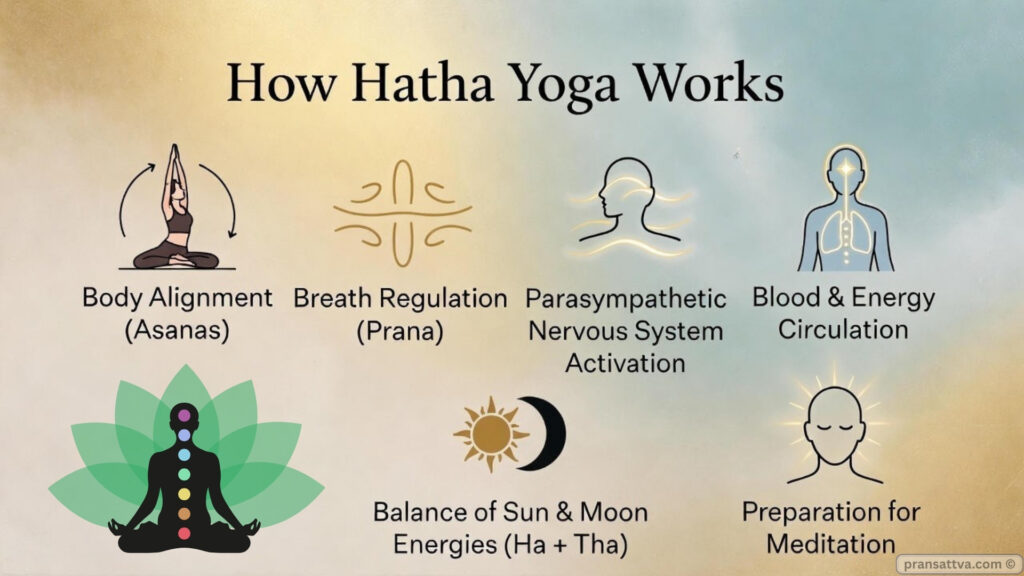
1. Aligns the Body Through Postures (Asanas)
Hatha Yoga uses slow and controlled poses that:
- Open tightened muscles
- Improve joint mobility
- Correct posture
- Increase body awareness
When the body becomes aligned, breathing becomes smoother and the mind becomes more focused.
2. Uses Breath to Regulate Energy (Prana)
Hatha Yoga emphasizes mindful breathing (Pranayama) during each pose.
This helps to:
- Improve oxygen flow
- Calm the nervous system
- Support energy balance
- Reduce internal stress
Breath acts as a bridge between body and mind.
3. Activates the Parasympathetic Nervous System
Slow movement + deep breathing =
A relaxed nervous system.
This reduces:
- Anxiety
- Stress hormones
- Mental restlessness
- Fatigue
You feel calm, grounded, and mentally clear.
4. Increases Blood & Energy Circulation
Hatha postures improve blood flow to:
- Spine
- Lungs
- Digestive organs
- Brain
- Endocrine system
This enhances metabolism, immunity, and overall vitality.
5. Balances Masculine & Feminine Energies (Ha + Tha)
The word Hatha itself means:
- Ha – Sun (active, warming energy)
- Tha – Moon (cooling, calming energy)
Hatha Yoga harmonizes these two energies, creating a state of inner balance.
6. Prepares the Mind for Meditation
By making the body stable and breath steady, Hatha Yoga quiets internal noise.
This sets the foundation for:
- Focus
- Stillness
- Mindfulness
- Deep meditation
A calm mind naturally becomes more peaceful and aware.
7. Strengthens the Body Safely
Unlike fast yoga styles, Hatha Yoga:
- Moves slowly
- Prevents strain
- Allows proper alignment
- Teaches mindful transitions
Perfect for beginners and for long-term wellness.
Short Summary
Hatha Yoga works by slowing the body, deepening the breath, relaxing the mind, and balancing the energy system.
It connects physical movement with mindful awareness, creating a complete mind–body transformation.
✤ Benefits of Hatha Yoga: Strength, Flexibility & Inner Balance
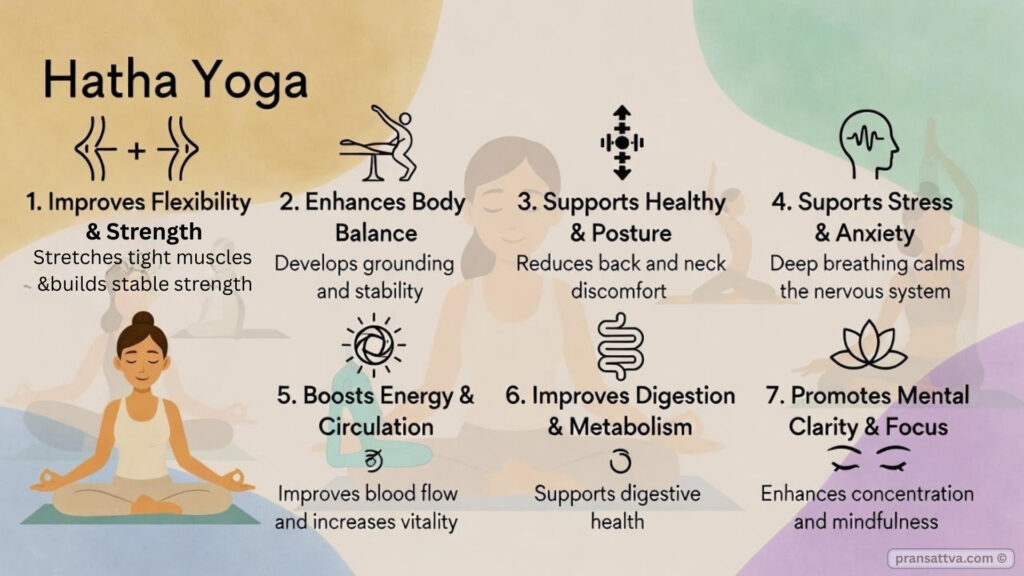
1. Improves Flexibility & Strength
Stretches tight muscles and builds stable body strength.
2. Enhances Body Balance
Develops grounding and stability in daily activities.
3. Supports Healthy Posture
Corrects slouching and reduces back or neck discomfort.
4. Reduces Stress & Anxiety
Slow breathing calms the nervous system.
5. Boosts Energy & Circulation
Enhances blood flow and increases pranic energy.
6. Improves Digestion & Metabolism
Twists and forward bends support digestive health.
7. Prepares the Body for Meditation
Helps settle the mind and stabilize the breath.
✤ Popular Hatha Yoga Asanas: Beginner-Friendly Poses Explained
1. Tadasana (Mountain Pose)
Improves posture, enhances body awareness, and builds balance.
2. Vrikshasana (Tree Pose)
Strengthens the legs and improves concentration and stability.
3. Trikonasana (Triangle Pose)
Opens the hips, strengthens the legs, and increases flexibility.
4. Bhujangasana (Cobra Pose)
Opens the chest, reduces back stiffness, and improves spinal mobility.
5. Paschimottanasana (Seated Forward Bend)
Deep stretch for the spine and hamstrings; promotes relaxation.
6. Padmasana (Lotus Pose)
Supports meditation, calms the mind, and enhances stability.
7. Dhanurasana (Bow Pose)
Strengthens the spine, boosts energy, and improves digestion.
8. Halasana (Plow Pose)
Stretches the back, stimulates digestion, and improves flexibility.
 Best Time to Practice Hatha Yoga for Maximum Benefits
☑ Early Morning (Empty Stomach)
Ideal for flexibility, clarity, and energy.
☑ Evening (Light Stomach)
Excellent for stress relief and relaxation.
☑ Before Meditation or Pranayama
Prepares the body for deeper mental practices.
⚠️ Precautions & Contraindications of Hatha Yoga Practice
☑ General Precautions
- Avoid practicing on a full stomach
- Do not force any posture
- Move slowly and breathe naturally
- Keep your spine aligned
- Warm up before deeper stretches
- Use support if you’re a beginner
☒ Avoid or practice under guidance if you have:
- Severe back pain
- Sciatica
- High blood pressure (avoid extreme bends)
- Heart problems
- Recent surgery
- Pregnancy (avoid deep twists & forward bends)
Conclusion
Hatha Yoga Asanas are the foundation of all physical yoga practices.
These poses strengthen the body, calm the mind, improve posture, and develop breath awareness.
Practicing asanas like Tadasana, Trikonasana, Bhujangasana, Paschimottanasana, Padmasana, and others builds a strong base for advanced yoga and meditation.
Hatha Yoga is simple, effective, and perfect for anyone beginning their yoga journey.