Easy Breathing Techniques to Start Your Yoga Journey
Beginner pranayama techniques are simple, safe, and perfect for anyone starting their yoga or breathing practice.
They help prepare your lungs, mind, and nervous system for deeper pranayama levels like Nadi Shuddhi, Bhastrika, or Ujjayi.
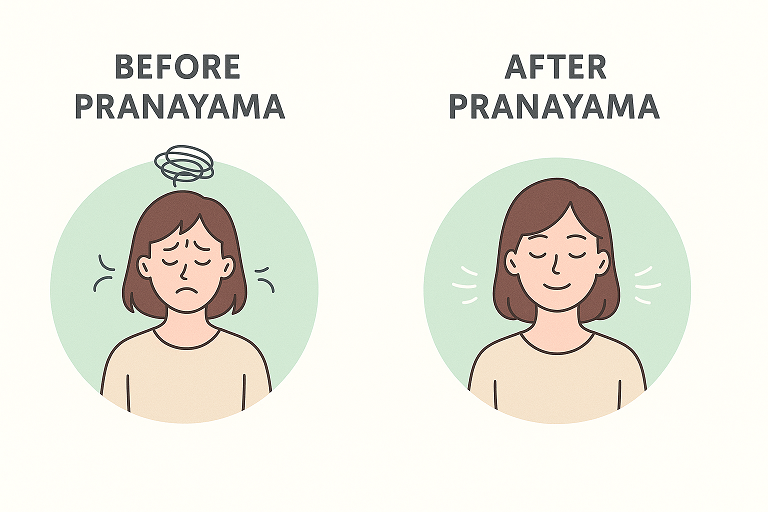
These practices calm the mind, increase lung capacity, and bring instant relaxation.
✤ What is Beginner Pranayamas?
Beginner pranayamas are basic breath-awareness practices that focus on:
- Slowing the breath
- Improving lung capacity
- Reducing stress
- Bringing mental clarity
- Strengthening natural breathing patterns
These simple practices build the foundation for all advanced pranayamas.
✤ Benefits of Beginner Pranayama for Mind, Lungs & Relaxation
☑ 1. Reduces Stress & Anxiety
Slow breathing shifts the body into relaxation mode, reducing mental tension.
☑ 2. Improves Lung Function
Enhances airflow, strengthens respiratory muscles, and boosts breathing efficiency.
☑ 3. Builds Breath Awareness
Helps beginners understand how breath influences emotions and energy levels.
☑ 4. Increases Focus & Mindfulness
Regular practice improves concentration, attention span, and mental clarity.
☑ 5. Creates a Stable Foundation
Prepares the body for deeper breathing practices like Nadi Shuddhi, Bhastrika, etc.
☑ 6. Supports Better Sleep
Calming breathing helps ease the mind before bedtime.
☑ 7. Improves Posture
Encourages upright sitting and natural spinal alignment.
☑ 8. Safe for All Age Groups
These techniques are gentle and suitable even for beginners and seniors.
✤ Beginner Pranayama – 6 Safe & Easy Breathing Techniques
Below are the six best pranayamas for beginners, Safe, easy & best to start with.
- Deep Breathing – Slow full breaths that relax the body and calm the mind.
👉 Read More - Diaphragmatic (Abdominal) Breathing – Belly-rising breath that strengthens the diaphragm and improves lung efficiency.
👉 Read More - Thoracic Breathing – Breathing that expands the rib cage and increases lung capacity.
👉 Read More - Clavicular Breathing – Upper-chest breath for lung apex activation.
👉 Read More - Full Yogic Breath – Combines belly, chest, and upper chest breathing into one complete breath cycle.
👉 Read More - Anulom Vilom – Balances left–right brain hemispheres and calms the nervous system.
👉 Read More
☑ Beginner Pranayama – 6 Safe & Easy Breathing Techniques
Although beginner pranayamas are generally safe, practicing with awareness ensures better results and prevents discomfort.
1. Practice on an Empty Stomach
Do pranayama after a gap of 2–3 hours post-meal for easy breathing and smooth airflow.
2. Sit Comfortably With a Straight Spine
Good posture improves lung expansion and supports natural breath flow.
3. Keep the Breath Smooth & Gentle
Avoid forcing the breath.
Beginner pranayamas should feel soft, natural, and effortless.
4. Start Slowly & Increase Gradually
Begin with 2–3 minutes and then extend to 5–10 minutes as you feel comfortable.
5. Avoid Practicing When Physically Exhausted
Extreme tiredness can affect breathing rhythm.
Rest for a few minutes before starting.
6. Avoid Fast or Erratic Breathing
Beginner pranayamas focus on slow breathing, not speed or intensity.
7. Pause if You Feel Dizzy or Uncomfortable
If you feel lightheaded, stop immediately and breathe normally.
8. Choose a Quiet & Ventilated Space
Fresh air supports deeper, more relaxed breathing.
☒ Contraindications: Who Should Be Careful With Beginner Pranayama
Beginner pranayamas are safe for most people, but caution is needed in certain cases:
1. Severe Asthma or Active Breathing Issues
Practice only under guidance.
Avoid deep or forceful breathing.
2. Uncontrolled High Blood Pressure
Avoid strong chest expansion or breath-holding.
3. Heart Conditions
Practice only gentle breathing and consult a healthcare professional.
4. Recent Surgery
Avoid pranayama if you have had abdominal, chest, or heart surgery until medically cleared.
5. Vertigo or Frequent Dizziness
Practice very gently with slow breaths.
6. Migraines (During Active Phase)
Avoid clavicular or rapid chest movement during migraine attacks.
7. Blocked Nose / Severe Cold
Breathing discomfort may occur; wait until the nasal passage is clear.
8. Pregnant Women
Gentle breathing is safe,
BUT avoid breath-holding or chest-tightening techniques.
☑ Best Practice Tips (Safe & Effective Results)
1. Practice Daily at the Same Time
Morning is ideal, but evening practice also works.
2. Start With Soft Breathing
Focus on quality of breath, not the duration.
3. Keep Shoulders Relaxed
Do not lift or tighten the shoulders while breathing.
4. Use Natural Nose Breathing Only
Avoid mouth breathing unless absolutely necessary.
5. Combine with a Short Meditation
After pranayama, sit quietly for 1–2 minutes → deeper relaxation.
6. Stay Consistent
Even 5 minutes daily is more effective than long sessions irregularly.
7. Listen to Your Body
Stop immediately if anything feels too intense.
✤ Conclusion
Beginner pranayamas offer a gentle and effective way to improve breathing, calm the mind, and prepare the body for advanced yogic practices.
With everyday practice, these simple techniques can bring noticeable improvements in energy, clarity, and emotional balance.