Ashtanga Yoga is a traditional and disciplined yoga practice based on set sequences. Learn the meaning of Ashtanga Yoga, its series, benefits and how to practice safely.
Ashtanga Yoga is a traditional and structured style of yoga that follows a fixed sequence of poses synchronized with breath. Rooted in ancient yogic teachings, Ashtanga Yoga builds strength, flexibility, discipline and mental focus.
This style builds exceptional strength, flexibility, stamina, and mental focus.
Ashtanga is taught in two main formats:
- Led Class (teacher counts and guides)
- Mysore Style (self-practice under supervised guidance)
✤ What Is Ashtanga Yoga? Complete Beginner’s Explanation
Ashtanga Yoga was systematized by Sri K. Pattabhi Jois and is rooted in ancient yoga texts.
Its practice is based on:
☑ Breath (Ujjayi Pranayama)
☑ Bandhas (Energy Locks)
☑ Drishti (Gaze Point)
☑ Fixed Sequences
☑ Strength + Flexibility Balance
Unlike general yoga styles, Ashtanga is not random.
Every class follows the exact same order of poses, making it a disciplined and transformational practice.
✤ How Ashtanga Yoga Works: Breath, Movement & Discipline
Ashtanga works through a powerful combination of:
1. Dynamic Vinyasa Movement
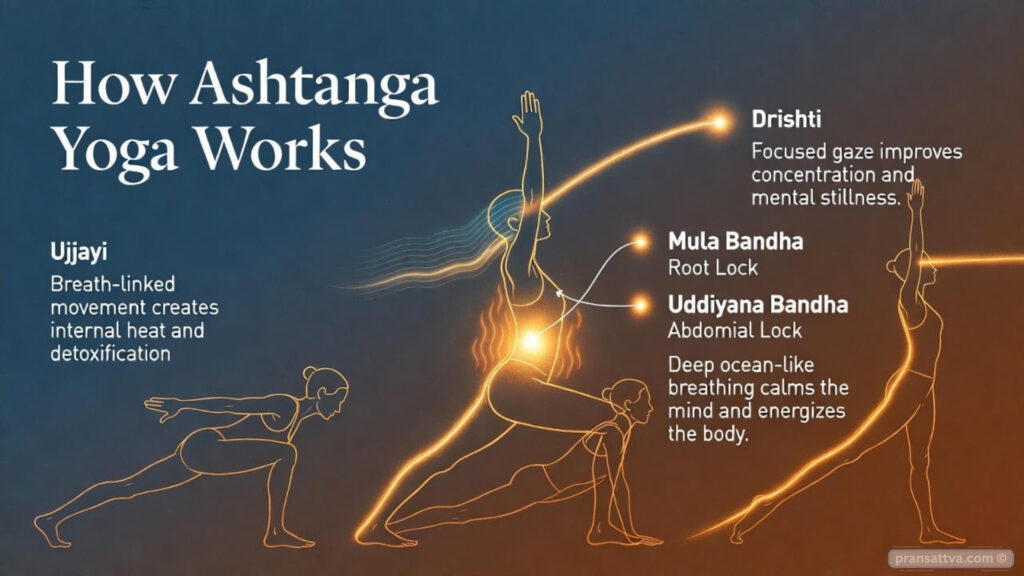
Every pose is linked to breathing and movement, creating internal heat and detoxifying the system.
2. Ujjayi Breath
Deep ocean-like breathing calms the mind while energizing the body.
3. Bandhas Activation (Energy Locks)
- Mula Bandha (Root Lock)
- Uddiyana Bandha (Abdominal Lock)
These locks stabilize the core and regulate pranic energy.
4. Drishti (Focused Gaze)
Each pose has a specific gaze point, improving concentration and mental stillness.
5. Structured Series
Practitioners progress through fixed sequences, ensuring:
- Consistency
- Strength-building
- Flexibility improvement
- Balanced growth
✤ Benefits of Ashtanga Yoga for Strength, Discipline & Focus
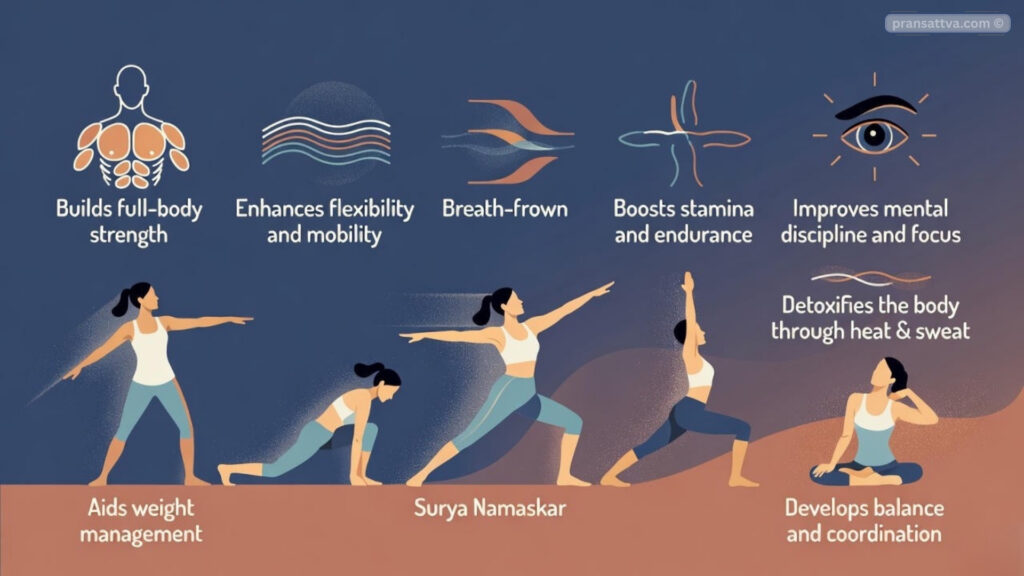
1. Builds full-body strength
2. Enhances flexibility and mobility
3. Boosts stamina and endurance
4. Improves mental discipline and focus
5. Aids weight management
6. Detoxifies the body through heat & sweat
7. Develops balance and coordination
8. Promotes emotional stability and confidence
✤ Ashtanga Yoga Series & Asanas
Primary Series (Yoga Chikitsa — Yoga Therapy)
Designed to detoxify, align the body, and build foundational strength.
1. Padangusthasana
Forward bend that stretches hamstrings and improves balance.
2. Marichyasana A, B, C, D
Twisting + binding poses that detoxify the spine and improve digestion.
3. Janu Sirsasana
Forward bend promoting relaxation and hamstring flexibility.
4. Navasana (Boat Pose)
Strengthens core muscles and improves stability.
5. Setu Bandhasana (Bridge Pose)
Opens the chest, strengthens the spine, and improves digestion.
Intermediate Series (Nadi Shodhana — Nerve Purification)
Focuses on opening the energy channels and increasing flexibility.
1. Kapotasana
Deep backbend that opens the chest, shoulders, and hip flexors.
2. Eka Pada Sirsasana
Leg-behind-the-head pose that enhances flexibility and concentration.
3. Pincha Mayurasana (Forearm Stand)
Advanced balancing pose that builds strength and control.
 Best Time to Practice Ashtanga Yoga for Maximum Benefits
☑ Early Morning (Highly Recommended)
Traditional Ashtanga is always practiced at sunrise.
☑ Empty Stomach (3–4 hr gap after meals)
Ensures better breathing and flexibility.
☑ Before Meditation (optional)
Helps settle the mind after intense movement.
⚠️ Full Moon & New Moon days:
Traditional Ashtanga practitioners rest.
⚠️ Precautions & Contraindications of Ashtanga Yoga Practice
☑ General Precautions:
- Warm up properly
- Focus on breath, not speed
- Never force binds or deep twists
- Rest when needed
- Use modifications as required
☒ Avoid or practice under guidance if you have:
- Shoulder, wrist, or knee injuries
- High blood pressure
- Hernia or abdominal issues
- Severe back problems
- Pregnancy (avoid twisting & extreme poses)
Ashtanga is a strong style — beginners must progress slowly.
Conclusion
Ashtanga Yoga is a powerful, structured, and transformative practice.
With fixed sequences like the Primary Series and Intermediate Series, practitioners develop strength, discipline, flexibility, and deep inner focus.
Asanas such as Padangusthasana, Marichyasana Series, Navasana, Setu Bandhasana, Kapotasana, Eka Pada Sirsasana, and Pincha Mayurasana make Ashtanga one of the most effective and complete yoga systems in the world.