
Discover Ayurveda, the ancient Indian science of life. Learn about doshas, Ayurvedic diet, daily routine, herbs, Panchakarma, benefits, precautions, and holistic healing for body, mind & soul.
 What Is Ayurveda? (Ancient Science of Life)
Ayurveda is one of the world’s oldest natural healing systems, originating in India more than 5,000 years ago.
The word Ayurveda comes from two Sanskrit words:
“Ayur” = Life
“Veda” = Knowledge
Together, Ayurveda means “The Science of Life.”
Meaning of Ayurveda: Ayurveda = Ayur + Veda
Ayurveda teaches that health is not only the absence of disease but a harmonious balance of the body, mind, and spirit.
It focuses on natural healing, daily routines, diet, herbs, and lifestyle practices that keep the body balanced and prevent diseases before they occur.
In today’s fast-paced lifestyle, Ayurveda offers simple, practical methods to restore energy, improve digestion, boost immunity, and bring inner peace.
🌿 How Ayurveda Works
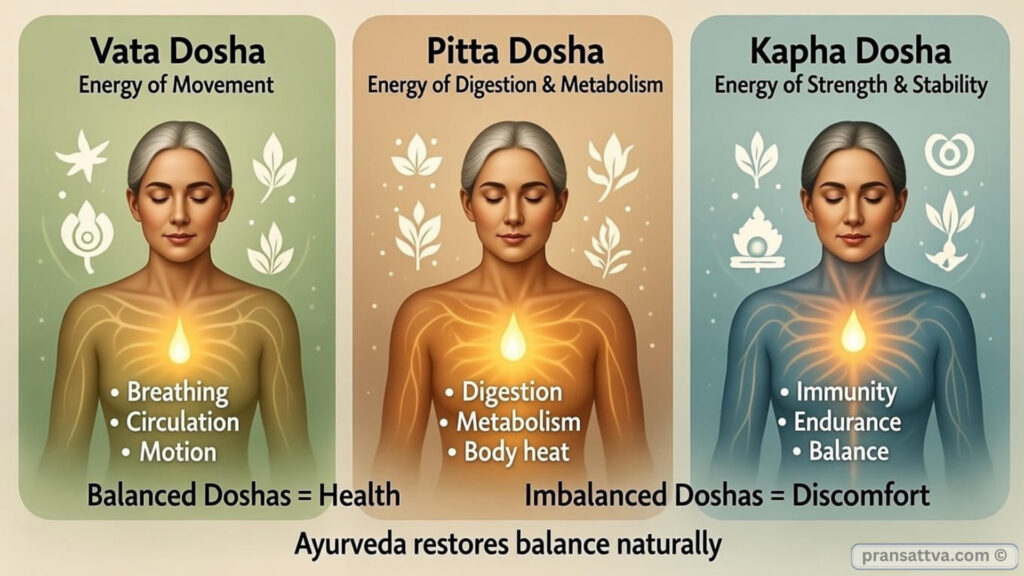
Ayurveda is based on the concept of Doshas, which are the natural energies in the body:
- Vata Dosha – Controls movement, breathing, circulation (Energy of Movement)
- Pitta Dosha – Controls digestion, metabolism, body heat (Energy of Digestion & Metabolism)
- Kapha Dosha – Controls strength, stability, immunity (Energy of Strength & Stability)
Every person is a unique combination of these three doshas.
When doshas are balanced → you feel healthy.
When they get imbalanced → sickness or discomfort happens.
Ayurveda focuses on bringing the doshas back into balance naturally.
🌿 How to Practice Ayurveda in daily life?
1) Ayurvedic Daily Routine (Dinacharya)
- Wake up early
- Drink warm water
- Practice yoga or walking
- Meditate
- Eat fresh, warm meals
2) Ayurvedic Diet: Eating According to Dosha & Season
Ayurveda believes that food is the first medicine.
Eat according to the season and your dosha.
3) Digestive Fire (Agni) in Ayurveda
Healthy digestion = healthy body.
Avoid overeating, cold foods, or eating late at night.
4) Ayurvedic Herbal Remedies
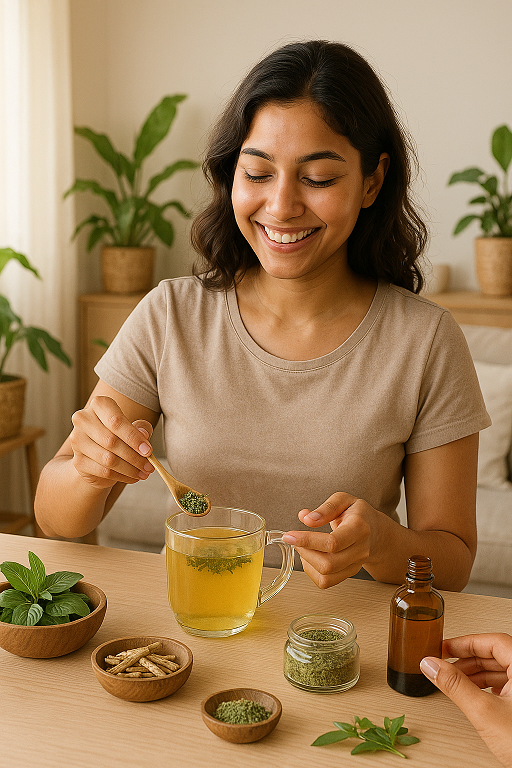
Herbs like turmeric, ginger, tulsi, ashwagandha, and neem are commonly used for healing.
5) Abhyanga: Ayurvedic Oil Massage Therapy
Daily oil massage improves circulation, relaxes the body, and balances doshas.
6) Panchakarma Detox Therapy
Structured cleansing routines remove toxins and deep impurities.
7) Meditation, Pranayama & Mindfulness in Ayurveda
Meditation, pranayama, and grounding activities support mental health.
 Best Time to Follow Ayurvedic Practices
☑ Morning Routine (Best Time for Ayurveda)
Best for warm water, meditation, yoga, and herbal tonics.
☑ Midday & Evening Ayurvedic Guidelines
Ideal time for main meal of the day.
Great for light walks, herbal teas, and calming routines.
☒ What to Avoid in Ayurveda
- Eating late at night
- Sleeping immediately after meals
- Cold or processed foods

🌿 Benefits of Ayurveda for Body, Mind & Lifestyle
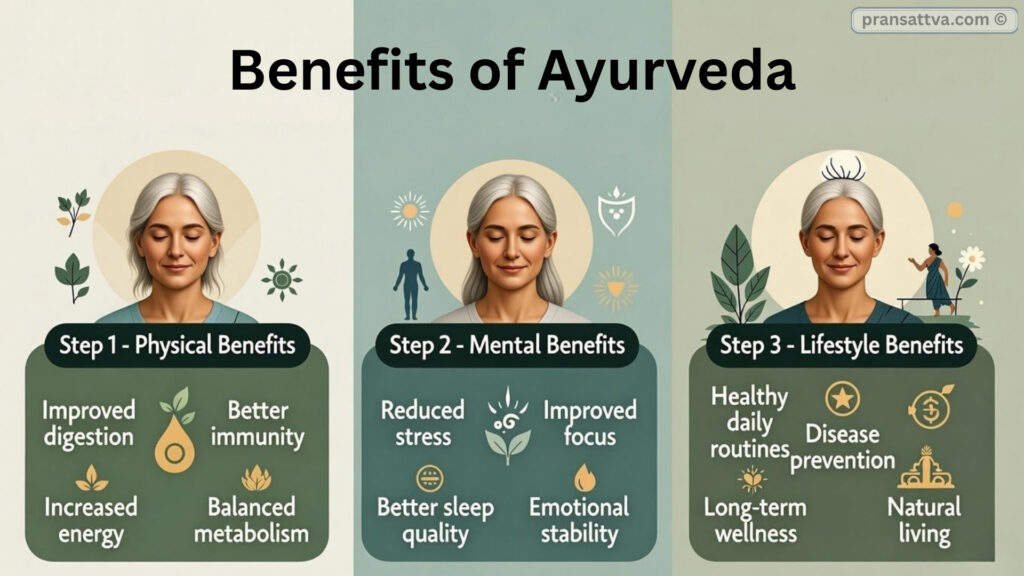
1) Physical Benefits of Ayurveda
- Improves digestion
- Enhances immunity
- Boosts energy levels
- Balances hormones
- Promotes natural healing
- Improves skin and hair health
2) Mental & Emotional Benefits
- Reduces stress and anxiety
- Enhances focus
- Improves sleep quality
- Creates emotional stability
3) Lifestyle & Long-Term Wellness Benefits
- Helps form healthy routines
- Increases discipline
- Builds long-term wellness
- Prevents disease naturally
🌼 Key Characteristics of Ayurveda
- Completely natural
- Holistic (mind + body + spirit)
- Personalized for every individual
- Focuses on prevention, not just cure
- Uses herbs, diet, massage, and daily habits
- Safe and suitable for all ages
🌿 Categories of Ayurveda & Their Types
1) Ayurvedic Dosha System
Focuses on understanding the body type.
Types:
- Vata Dosha – Air + space energy
- Pitta Dosha – Fire + water energy
- Kapha Dosha – Earth + water energy
2) Ayurvedic Diet (Ahara)
Eating according to body type and seasons.
Types:
- Vata Balancing Diet – Warm, moist foods
- Pitta Balancing Diet – Cooling, light meals
- Kapha Balancing Diet – Spicy, warm, light foods
3) Ayurvedic Lifestyle (Dinacharya & Ritucharya)
Daily and seasonal routines for wellness.
Types:
- Morning Routine
- Night Routine
- Seasonal Routines
4) Panchakarma Therapy
Deep detox treatment.
Types:
- Vamana – Therapeutic vomiting
- Virechana – Purgation
- Basti – Medicinal enema
- Nasya – Nasal detox therapy
- Raktamokshana – Blood purification
5) Ayurvedic Herbal System
Healing with natural herbs.
Types of Herbs:
- Ashwagandha – Reduces stress
- Triphala – Supports digestion
- Neem – Purifies the blood
- Turmeric (Haldi) – Anti-inflammatory
- Tulsi – Boosts immunity
6) Ayurvedic Body Treatments
Types:
- Abhyanga – Oil massage
- Shirodhara – Oil dripping on forehead
- Swedana – Herbal steam
- Udvartana – Herbal powder massage
7) Ayurvedic Mind & Spiritual Practices
Types:
🌿 Important Precautions in Ayurveda (Safety Guidelines)
Ayurveda is a natural healing system, but it still requires proper guidance and awareness. Following these precautions helps ensure safe, effective, and personalized results.
1) Avoid Self-Medication with Strong Ayurvedic Herbs
Some Ayurvedic herbs (like Guggul, Ashwagandha, Shilajit, Kutki, Triphala, etc.) can be powerful.
These should NOT be taken without proper assessment of your body type and condition.
💡 Always consult a certified Ayurvedic doctor or Nadi Vaidya before starting any herbal medicine.
2) Do Not Mix Ayurvedic & Allopathic Medicines Without Advice
Ayurvedic herbs may interact with:
- BP medicines
- Diabetes medicines
- Thyroid medicines
- Anxiety or depression medicines
👉 Always take professional advice if you are on any long-term medication.
3) Avoid Panchakarma Without Expert Supervision
Treatments like:
- Vamana
- Virechana
- Basti
- Nasya
- Raktamokshana
are powerful detox procedures and must only be done under trained Ayurvedic therapists.
4) Identify Your Dosha Correctly Before Treatment
Wrong dosha identification can lead to:
- Wrong diet
- Wrong herbs
- Wrong lifestyle recommendations
👉 A correct diagnosis by an Ayurvedic practitioner is very important.
5) Pregnant & Breastfeeding Women Should Not Take Herbs Without Guidance
Some herbs like:
- Neem
- Turmeric in high doses
- Aloe vera latex
- Castor oil
may not be safe during pregnancy.
👉 Always consult a qualified Ayurvedic doctor.
6) Do Not Take Excessive Herbal Supplements
More herbs ≠ Better results.
Overuse may cause:
- Digestive issues
- Heat imbalance
- Sleep disturbance
- Skin reactions
Follow proper dosage only.
7) Ensure Herbs Are Pure & Authentic
Buy Ayurvedic products only from:
- Trusted brands
- Certified suppliers
- GMP-approved companies
Cheap or impure herbs can harm the body.
8) Avoid Eating Cold, Stale or Processed Food
These weaken digestion (Agni) and create ama (toxins).
Ayurveda works best when digestion is strong.
9) Don’t Delay Medical Attention
Ayurveda supports natural healing, but for:
- High fever
- Severe pain
- Acute infections
- Serious medical issues
👉 Contact a doctor immediately. Ayurveda can be used as supportive care.
10) Introduce Ayurvedic Habits Gradually
Do not change your entire lifestyle overnight.
Make small, consistent changes like:
- Warm water
- Early meals
- Light yoga
- Herbal teas
Gradual adoption works better than sudden detox routines.
🌿 Ayurveda vs Modern Medicine: Key Differences
Both Ayurveda and Modern Medicine aim to improve human health, but their approach, philosophy, and treatment methods are fundamentally different. Ayurveda focuses on natural, root-cause healing and long-term balance, while modern medicine specializes in fast symptom relief and emergency care.
1. Treatment Approach
Ayurveda
- Treats the root cause of illness
- Heals the body, mind, and lifestyle together
- Focuses strongly on prevention before disease occurs
Modern Medicine
- Controls symptoms quickly
- Treatment based on medical tests and reports
- Highly effective for acute and critical conditions
2. Philosophy of Healing
Ayurveda
- Health is a balance of Body–Mind–Spirit
- Emphasizes Dosha balance (Vata, Pitta, Kapha)
Modern Medicine
- Disease-centric approach
- Focuses mainly on physical organs and systems
3. Type of Medicines Used
Ayurveda
- Natural herbs like turmeric, neem, ashwagandha
- Uses oils, diet regulation, and lifestyle changes
Modern Medicine
- Synthetic drugs and chemical formulations
- Includes painkillers, antibiotics, injections, and surgeries
4. Speed of Results
Ayurveda
- Slow but deep and long-lasting results
- Highly effective for chronic conditions
Modern Medicine
- Fast-acting results
- Best for emergencies and acute illnesses
5. Side Effects
Ayurveda
- Minimal side effects when practiced under proper guidance
- Natural and gentle on the body
Modern Medicine
- Possible side effects
- Long-term medication dependency may occur
6. Personalization of Treatment
Ayurveda
- Treatment customized according to individual dosha type
- Personalized diet, routine, and lifestyle
Modern Medicine
- Similar treatment protocols for the same disease
- Limited personalization
7. Diagnostic Methods
Ayurveda
- Nadi Pariksha (pulse diagnosis)
- Analysis of digestion, lifestyle, and mental state
Modern Medicine
- Blood tests, scans, X-rays, MRI, and lab investigations
- Technology-based diagnosis
8. Focus on Prevention
Ayurveda
- Prevents disease before it develops
- Emphasizes daily routines (Dinacharya) and seasonal care
Modern Medicine
- Focuses mainly on treatment after disease occurs
- Preventive care is limited
9. Long-Term Health Impact
Ayurveda
- Strengthens immunity and overall vitality
- Promotes a sustainable and healthy lifestyle
Modern Medicine
- Provides immediate relief
- Limited guidance for long-term lifestyle improvement
10. Best Use Cases
Ayurveda Is Best For
- Digestive disorders
- Stress and anxiety
- Hormonal imbalance
- Immunity and lifestyle-related diseases
Modern Medicine Is Best For
- Accidents and emergencies
- Infections
- Surgeries
- Severe acute medical conditions
🌿 Ayurveda or Modern Medicine: Which Is Better?
Ayurveda and modern medicine are not opposites but complementary systems. Modern medicine is ideal for emergencies and rapid relief, while Ayurveda is best for long-term wellness, prevention, and root-cause healing.
Can Ayurveda and Modern Medicine Be Used Together?
Yes ✔
Ayurveda and modern medicine are not opposites but complementary systems. Modern medicine is ideal for emergencies and rapid relief, while Ayurveda is best for long-term wellness, prevention, and root-cause healing.
🌿 Ayurveda vs Modern Medicine: Quick Comparison Table
| Aspect | Ayurveda | Modern Medicine |
|---|---|---|
| Approach | Root-cause healing | Symptom relief |
| Medicines | Natural herbs | Synthetic drugs |
| Side Effects | Minimal | Possible |
| Speed | Slow & steady | Fast |
| Personalization | High | Limited |
| Focus | Prevention + cure | Cure |
🌿 Conclusion: Why Ayurveda Is the Science of Holistic Living
Ayurveda is a natural and holistic healing system that helps you create a balanced, healthy, and peaceful life. By understanding your dosha, eating the right foods, following daily routines, and using herbal remedies, you can improve your physical, mental, and emotional well-being.
Even small Ayurvedic habits practiced every day can transform your overall health.
🌿 Ayurveda – Frequently Asked Questions (FAQ)
1) What is Ayurveda?
Ayurveda is a traditional Indian healing system that focuses on balancing the body, mind, and spirit through diet, lifestyle, herbs, and natural therapies.
2) Is Ayurveda scientifically proven?
Many Ayurvedic herbs and treatments have scientific studies supporting their benefits, especially in digestion, immunity, stress reduction, and chronic conditions.
3) What are the three doshas in Ayurveda?
The three doshas are:
- Vata (air + space) – movement and energy
- Pitta (fire + water) – digestion and metabolism
- Kapha (earth + water) – strength and immunity
4) How can I find my dosha type?
You can identify your dosha by noticing your physical features, personality traits, digestion pattern, and emotional tendencies. Online quizzes or an Ayurvedic practitioner can help determine it accurately.
5) What causes dosha imbalance?
Irregular eating habits, stress, lack of sleep, overeating, eating cold or processed food, seasonal changes, and unhealthy routines can disturb dosha balance.
6) Can Ayurveda cure diseases?
Ayurveda focuses on root-cause healing, not just symptoms. It can help manage digestion issues, stress, skin problems, hormonal imbalance, immunity, and joint pain.
However, severe conditions should be treated along with medical guidance.
7) Is Ayurveda safe?
Yes, Ayurveda is natural and generally safe when used properly. Always follow recommended doses and guidelines, especially for herbal supplements.
8) What foods should I avoid in Ayurveda?
- Cold foods
- Heavy fried items
- Processed snacks
- Excess sugar
- Overeating or eating late at night
These weaken digestion (Agni).
9) What is Agni in Ayurveda?
Agni means digestive fire.
Strong Agni = good digestion, better energy, healthy immunity.
Weak Agni = bloating, indigestion, fatigue, toxins in the body.
10) What is Panchakarma?
Panchakarma is a deep detox therapy that removes toxins and resets body balance. It includes treatments like Vamana, Virechana, Basti, Nasya, and Raktamokshana.
11) Are Ayurvedic herbs effective?
Yes. Popular herbs like turmeric, neem, tulsi, ashwagandha, and triphala have proven benefits for immunity, stress relief, digestion, and inflammation.
12) Can I use Ayurveda with modern medicine?
Yes, Ayurveda can complement modern treatments, but always consult your doctor if you take strong medications.
13) Does Ayurveda help with weight loss?
Yes. Ayurveda supports natural weight loss through digestion-boosting foods, herbs like triphala and guggul, and lifestyle changes like early dinners and daily movement.
14) What is the ideal Ayurvedic daily routine? (Dinacharya)
- Wake up early
- Drink warm water
- Yoga or light movement
- Meditation
- Regular meals
- Early bedtime
This routine strengthens the body and reduces stress.
15) Is Ayurveda suitable for everyone?
Yes. Ayurveda can be adapted for children, adults, seniors, pregnant women, and people with different body types.
16) How long does it take to see results with Ayurveda?
Ayurveda works gently but deeply.
Many people see improvements within 1–2 weeks, and long-term benefits with consistent practice.
17) Can Ayurveda help with skin and hair problems?
Absolutely. Herbs like neem, aloe vera, bhringraj, and turmeric are very effective for glowing skin and healthy hair.
18) Are there side effects of Ayurvedic treatments?
Natural Ayurvedic methods rarely have side effects when done correctly. Overuse of herbs or self-treatment without knowledge may cause issues.
19) What is the difference between Ayurveda and modern medicine?
Modern medicine treats symptoms quickly.
Ayurveda treats the root cause, lifestyle, digestion, and mental health — making it a holistic healing system.
20) Can I practice Ayurveda at home?
Yes! Simple habits like warm water, healthy meals, herbal teas, oil massage, and regular sleep can easily be done at home.