
Ayurveda is one of the world’s oldest and most holistic systems of natural healing. Originating in India over 5,000 years ago, Ayurveda focuses on maintaining balance in the body, mind, and lifestyle rather than only treating diseases.
The word Ayurveda comes from Sanskrit:
- Ayur = Life
- Veda = Knowledge
Together, Ayurveda means “The Science of Life.”
Ayurveda teaches that true health is achieved when the body’s energies, digestion, mind, and daily habits remain in harmony with nature. This ancient system offers simple yet powerful principles that can be applied in daily life for long-term wellness.
🌿 What Is Ayurveda? (Simple Explanation)
Ayurveda is a natural healthcare system that focuses on prevention, balance, and personalized healing. Instead of using one treatment for everyone, Ayurveda considers each individual’s body type, digestion, mental state, and lifestyle.
According to Ayurveda:
- Health is a state of balance
- Disease occurs when balance is disturbed
- Nature provides everything needed for healing
Ayurveda uses diet, daily routines, herbs, therapies, yoga, and meditation to restore harmony and support the body’s natural healing ability.
🌿 Core Principles of Ayurveda
The foundation of Ayurveda is built on a few key principles that guide all treatments and lifestyle recommendations.
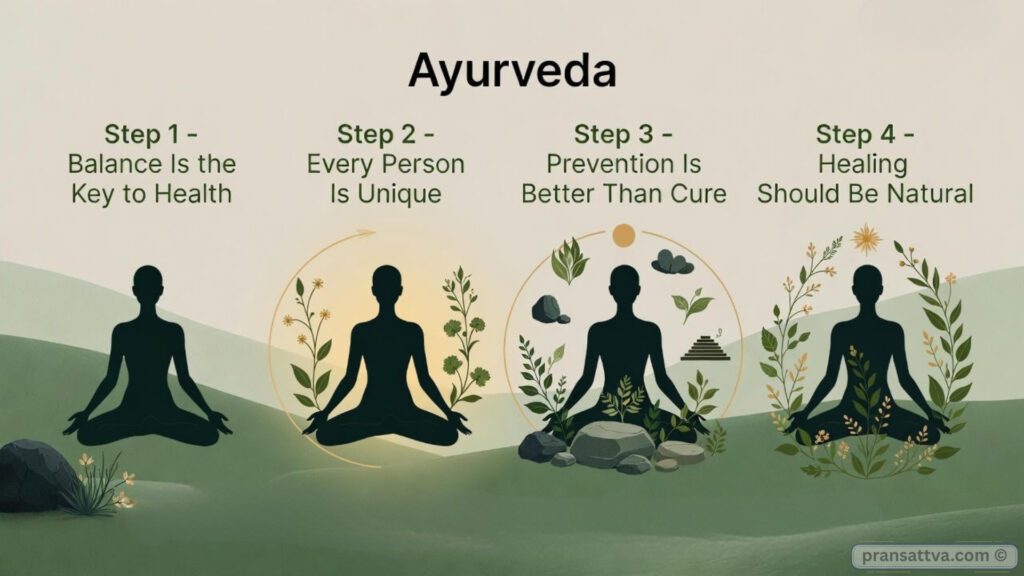
1. Balance Is the Key to Health
Ayurveda believes that health exists when the body’s natural energies remain balanced. Any imbalance can lead to discomfort, weakness, or disease.
2. Every Person Is Unique
No two people are the same. Ayurveda treats individuals, not diseases. Diet, lifestyle, and remedies are always personalized.
3. Prevention Is Better Than Cure
Ayurveda focuses strongly on preventing illness through daily habits, proper diet, and seasonal care rather than waiting for disease to occur.
4. Healing Should Be Natural
Ayurveda prefers natural methods such as herbs, food, oil massage, and lifestyle correction to support long-term wellness with minimal side effects.
🌿 The Five Elements in Ayurveda (Panchamahabhuta)
Ayurveda explains the universe and the human body using five natural elements:
- Earth (Prithvi) – Stability and structure
- Water (Jala) – Fluidity and nourishment
- Fire (Agni) – Digestion and metabolism
- Air (Vayu) – Movement and circulation
- Space (Akasha) – Expansion and openness
These five elements combine to form the three doshas in the body.
The Three Doshas: Foundation of Ayurveda
Doshas are biological energies that govern all physical and mental functions.
1) Vata Dosha (Air + Space)
- Controls movement, breathing, circulation, and nervous system
- Imbalance may cause anxiety, dryness, or irregular digestion
2) Pitta Dosha (Fire + Water)
- Controls digestion, metabolism, and body temperature
- Imbalance may cause acidity, anger, or inflammation
3) Kapha Dosha (Earth + Water)
- Controls strength, stability, and immunity
- Imbalance may cause heaviness, lethargy, or weight gain
Every person has all three doshas, but usually one or two are dominant.
🌿 Role of Digestion (Agni) in Ayurveda
Ayurveda considers digestion (Agni) as the root of health.
- Strong Agni → Good digestion, energy, immunity
- Weak Agni → Toxins (Ama), fatigue, illness
Maintaining healthy digestion through proper food timing, warm meals, and mindful eating is a basic Ayurvedic principle.
🌿 Ayurvedic Lifestyle Basics (Dinacharya)
Ayurveda emphasizes daily routines that align with nature’s rhythm.
Basic Ayurvedic habits include:
- Waking up early
- Drinking warm water in the morning
- Eating fresh, warm meals
- Avoiding overeating and late-night meals
- Practicing yoga, pranayama, or meditation
- Sleeping early for proper recovery
These simple habits help maintain balance and prevent disease.
🌿 Ayurvedic Diet: Food as Medicine
Ayurveda believes food is the first medicine.
Diet is recommended based on:
- Dosha type
- Season
- Digestive strength
General principles:
- Eat freshly cooked food
- Prefer warm and light meals
- Avoid cold, stale, or processed foods
- Eat at regular times
🌿 Ayurvedic Therapies and Natural Care
Ayurveda includes various natural therapies to support healing, such as:
- Abhyanga (oil massage)
- Herbal remedies
- Panchakarma detox therapies
- Meditation and breathwork
These therapies aim to cleanse toxins, improve circulation, and restore balance.
🌿 Benefits of Following Ayurveda Basics
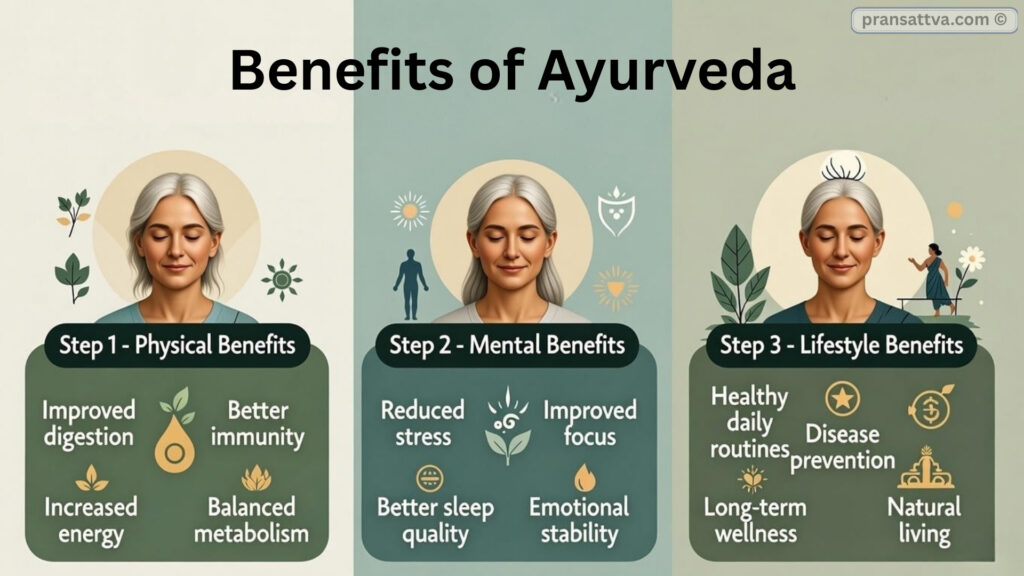
1) Physical Benefits of Ayurveda
- Improves digestion
- Enhances immunity
- Boosts energy levels
- Balances hormones
- Promotes natural healing
- Improves skin and hair health
2) Mental & Emotional Benefits
- Reduces stress and anxiety
- Enhances focus
- Improves sleep quality
- Creates emotional stability
3) Lifestyle & Long-Term Wellness Benefits
- Helps form healthy routines
- Increases discipline
- Builds long-term wellness
- Prevents disease naturally
🌿 Is Ayurveda Safe for Beginners?
Yes. Ayurveda is generally safe when practiced correctly. Beginners should:
- Start with simple lifestyle and diet changes
- Avoid self-medicating with strong herbs
- Follow moderation
- Consult qualified practitioners for therapies or supplements
🌿 Ayurveda Basics – Conclusion
Ayurveda is not just a medical system; it is a complete way of living. By understanding its basic principles—doshas, digestion, daily routines, and natural balance—you can create a healthier, more peaceful life.
Even small Ayurvedic habits practiced consistently can bring powerful long-term benefits to the body, mind, and soul.