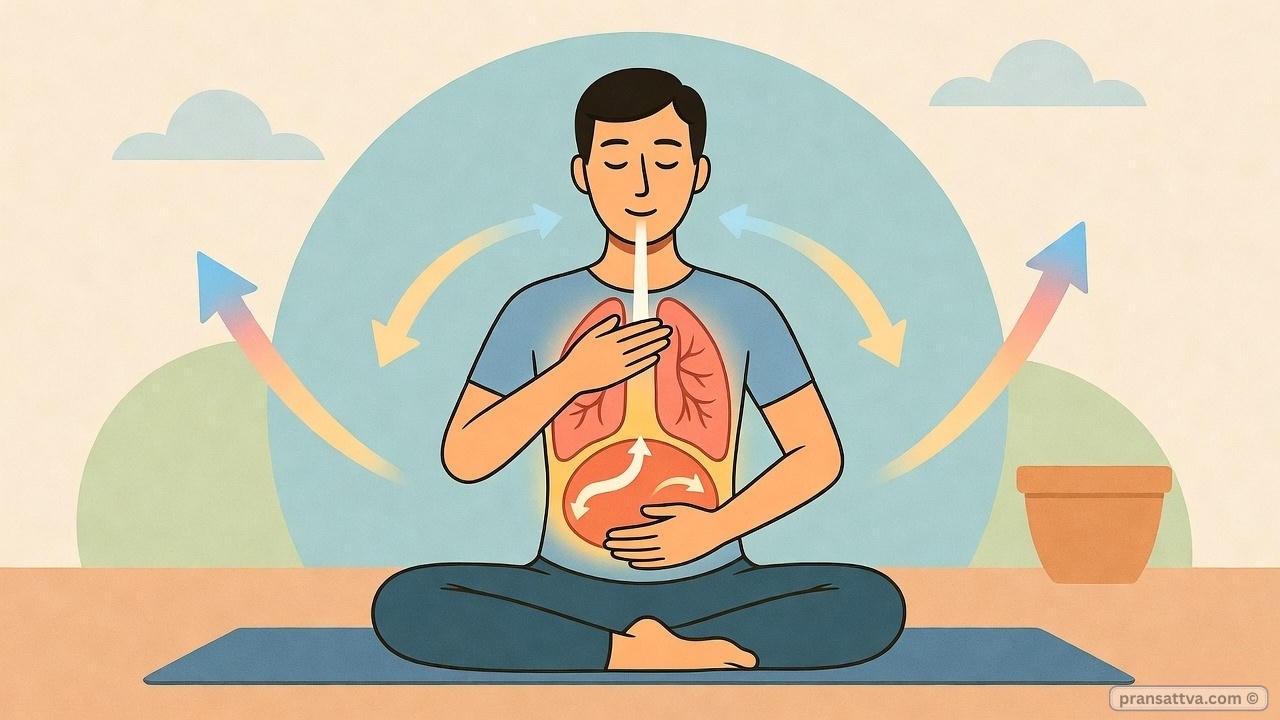
What Is Deep Abdominal (Diaphragmatic) Breathing?
Deep abdominal breathing (also called diaphragmatic or belly breathing) is the foundation of all pranayama and yoga practices. Most adults use only 30–40% of their lung capacity. This simple technique teaches you to use 80–90% without any effort.
It is 100% safe for everyone – children, seniors, pregnant women, heart patients, and absolute beginners.
Why Deep Abdominal Breathing is the #1 Starting Point
- Activates the parasympathetic nervous system (rest & digest mode)
- Reduces cortisol (stress hormone) instantly
- Improves oxygen supply to brain and organs
- Strengthens the diaphragm muscle
- Lowers blood pressure naturally
- Helps control anxiety and panic attacks
Step-by-Step Guide (With Pictures Description)
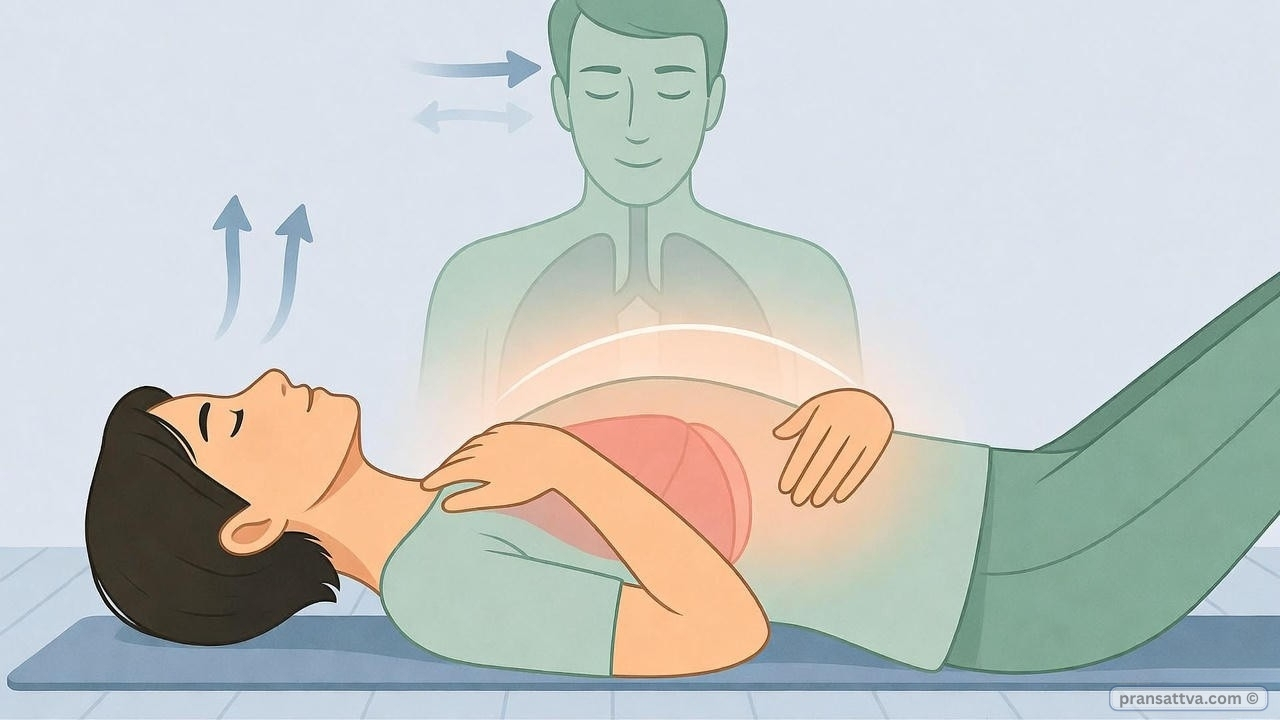
Best Position to Start Deep Abdominal Breathing (Shavasana)
- Lie down on your back (Shavasana) on a yoga mat or bed
- Knees bent, feet flat on floor (or use a pillow under knees if back pain)
- Place one hand on belly (navel area), one hand on chest
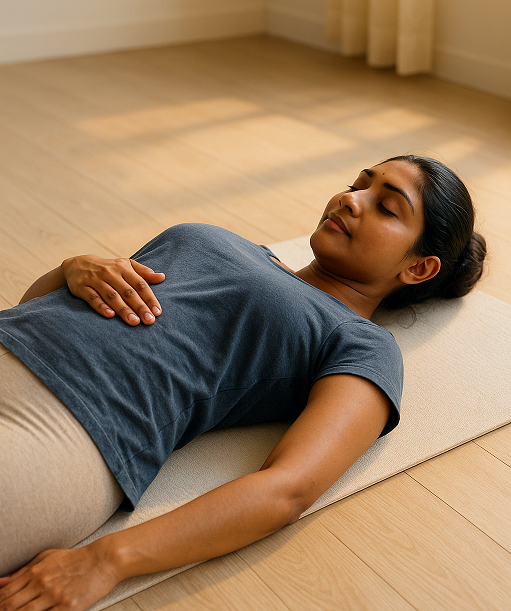
Exact Steps for Deep Abdominal (Diaphragmatic) Breathing
- Close your eyes. Relax whole body.
- Inhale slowly through nose (3–5 seconds) → Let belly rise like a balloon. Chest hand should barely move.
- Exhale gently through nose (4–6 seconds) → Belly falls naturally. No force.
- Pause 1–2 seconds, then repeat.
- Continue for 3–10 minutes.
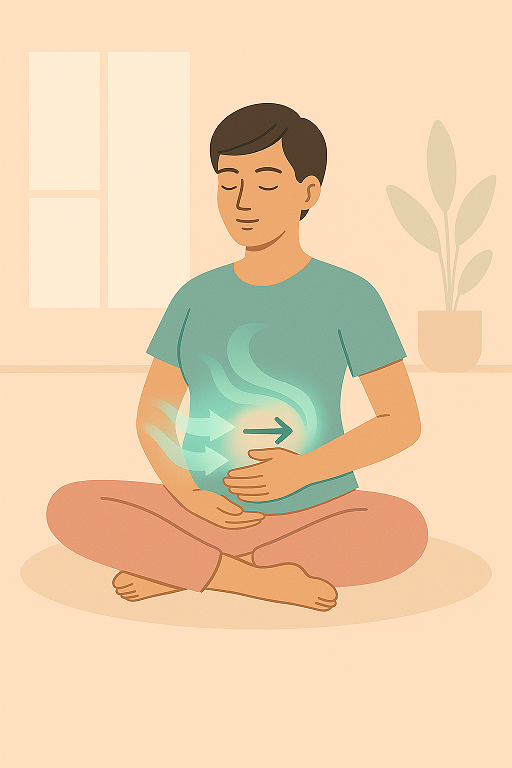
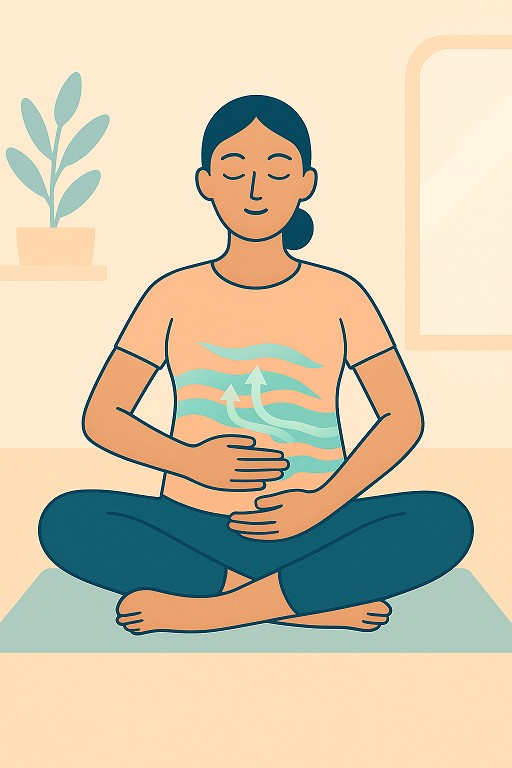
Sitting Deep Abdominal Breathing (Home & Office Practice)
Sit straight → spine erect → hands on belly or on a knee → same breathing pattern.
Daily Deep Abdominal Breathing Practice Schedule
| Time of Day | Duration | Best For |
|---|---|---|
| Morning (empty stomach) | 5–10 minutes | Energy & focus |
| Before sleep | 5 minutes | Deep relaxation |
| During stress/anxiety | 10 deep breaths | Instant calm |
Common Mistakes to Avoid in Deep Abdominal Breathing
- Chest rising first → wrong
- Forcing the belly out → wrong
- Fast breathing → wrong
- Shoulders lifting → wrong
Scientific Benefits of Deep Abdominal Breathing (Research-Backed)
- Harvard Medical School: Reduces stress in 3 minutes
- Journal of Clinical Psychology: Effective for anxiety & depression
- American Lung Association: Improves COPD & asthma symptoms
Precautions for Deep Abdominal (Diaphragmatic) Breathing
Absolutely safe for everyone. Only stop if you feel dizzy (very rare).
Although perfectly safe, every pregnant woman should consult her doctor or gynecologist before starting any breathing practice, especially if there are complications like high-risk pregnancy, placenta previa, or high blood pressure.
Deep Abdominal Breathing – Frequently Asked Questions
Q: How many times a day?
A: 3–4 sessions of 5 minutes each.
Q: Can I do it after meals?
A: Wait 2 hours after heavy meal.
Q: When will I see results?
A: Most people feel calmer from Day 1.
Q: Is Deep Abdominal Breathing Safe During Pregnancy?
Yes – deep abdominal breathing is completely safe and highly beneficial during all stages of pregnancy. It is widely recommended by gynecologists, prenatal yoga experts, and organizations like AIIMS and Indian Medical Association.
Benefits for pregnant women:
- Reduces pregnancy stress and anxiety
- Improves oxygen flow to mother and baby
- Helps manage shortness of breath and lower back pain
- Prepares the body for natural childbirth
Important precaution:
Although perfectly safe, every pregnant woman should consult her doctor or gynecologist before starting any breathing practice, especially if there are complications like high-risk pregnancy, placenta previa, or high blood pressure.
Tips while practicing:
- Use left-side lying position or supported sitting after first trimester
- Place pillows under knees and back for comfort
- Keep sessions gentle and short (5–10 minutes)
- Stop immediately if you feel dizzy or uncomfortable