
Deep Mindfulness Meditation is an advanced practice for awareness and clarity. Learn how it works, benefits, and how to practice mindfulness deeply and safely.
✱ What Is Deep Mindfulness Meditation?
Deep Mindfulness Meditation is an advanced form of mindfulness practice where awareness is maintained continuously and deeply without judgment.
Unlike basic mindfulness, which focuses on short periods of awareness, deep mindfulness involves sustained observation of thoughts, emotions, sensations, and mental states with clarity and stability.
This practice is suitable for those who already have experience with basic mindfulness or meditation.
✤ How Deep Mindfulness Meditation Works
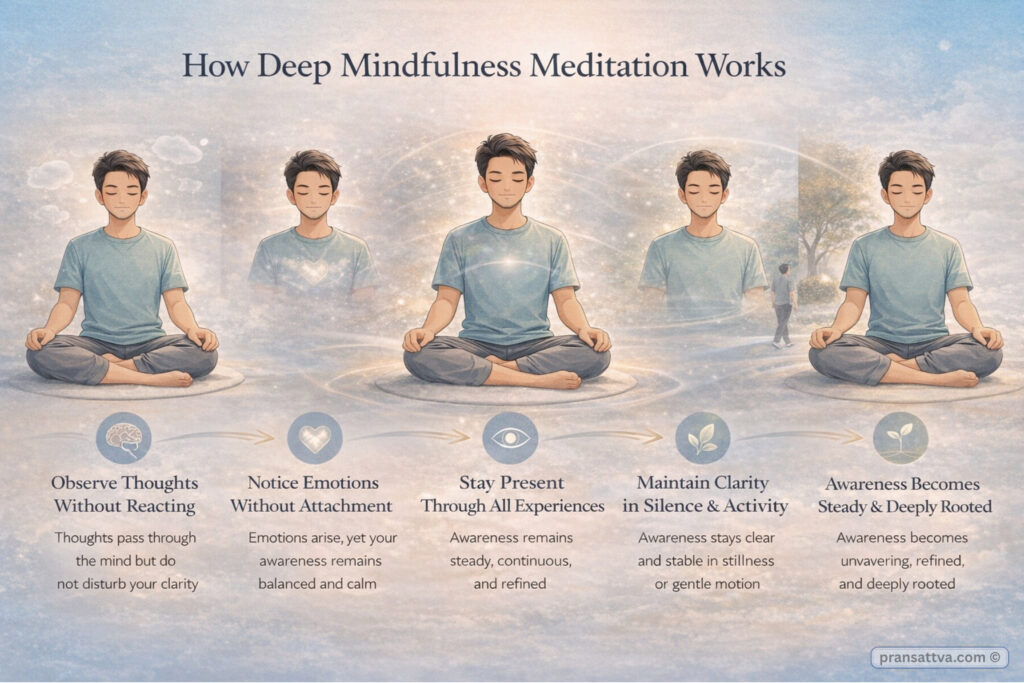
Deep Mindfulness Meditation works by training the mind to remain aware for longer durations, even when thoughts or emotions arise.
During practice, you learn to:
- Observe thoughts without reacting
- Notice emotions without attachment
- Stay present through all experiences
- Maintain clarity during silence and activity
Over time, awareness becomes steady, refined, and deeply rooted.
✤ Why Deep Mindfulness Meditation Is Considered Advanced
This meditation is considered advanced because:
- It requires sustained attention
- Emotional stability is needed
- Awareness continues without guidance
- Mental distractions are handled internally
It builds upon the foundation created by basic mindfulness meditation.
✤ Benefits of Deep Mindfulness Meditation
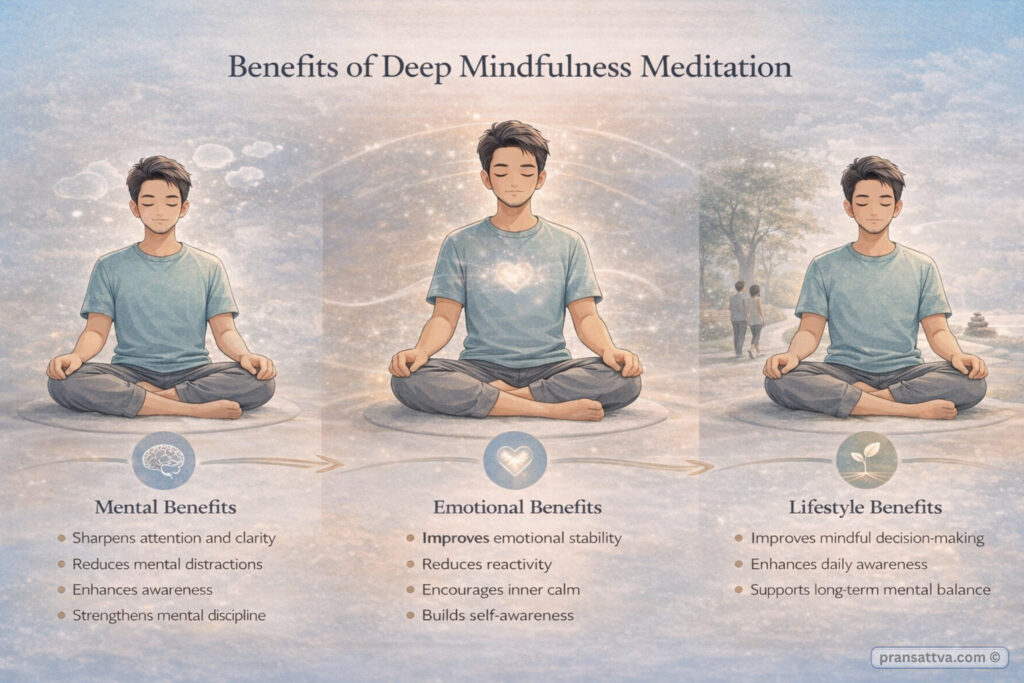
1) Mental Benefits
- Sharpens attention and clarity
- Reduces mental distractions
- Enhances awareness
- Strengthens mental discipline
2) Emotional Benefits
- Improves emotional stability
- Reduces reactivity
- Encourages inner calm
- Builds self-awareness
3) Lifestyle Benefits
- Improves mindful decision-making
- Enhances daily awareness
- Supports long-term mental balance
✤ Key Characteristics of Deep Mindfulness Meditation
- Continuous present-moment awareness
- Non-judgmental observation
- Longer practice duration
- Mostly unguided
- Requires meditation experience
This practice develops mental maturity and insight.
✤ Types of Deep Mindfulness Meditation
1) Thought Observation Mindfulness
Observing thoughts as they arise and pass.
2) Emotion Awareness Mindfulness
Maintaining awareness during emotional experiences.
3) Open Monitoring Mindfulness
Allowing all experiences without selecting a single focus.
✤ How to Practice Deep Mindfulness Meditation (Step-by-Step)
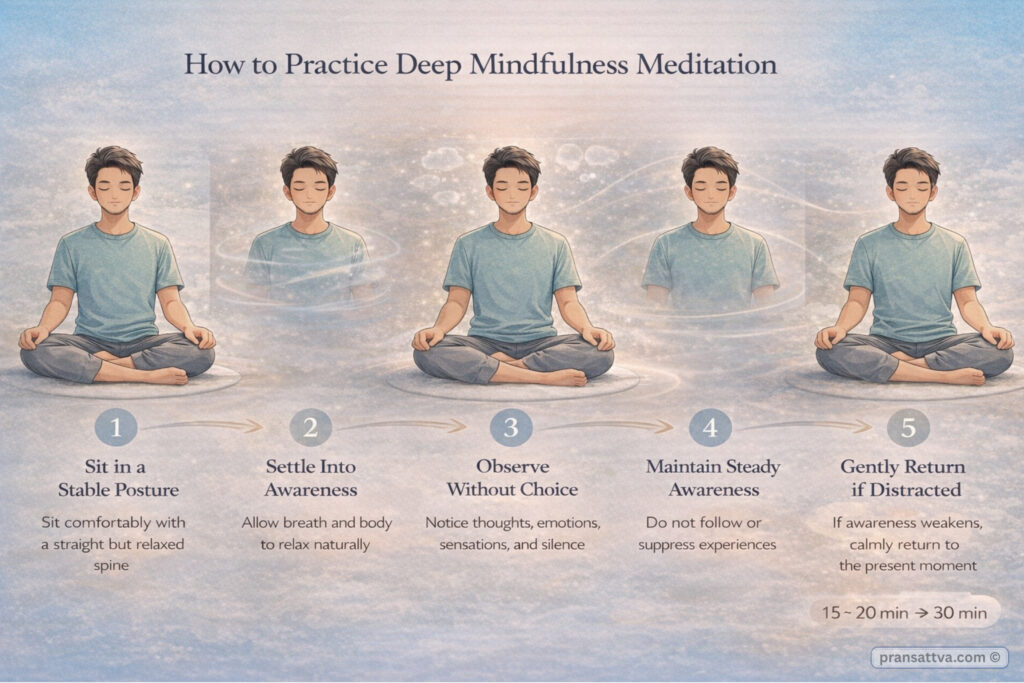
Step 1: Sit in a Stable Posture
Sit comfortably with a straight but relaxed spine.
Step 2: Settle Into Awareness
Allow breath and body to relax naturally.
Step 3: Observe Without Choice
Notice thoughts, emotions, sensations, and silence.
Step 4: Maintain Steady Awareness
Do not follow or suppress experiences.
Step 5: Gently Return if Distracted
If awareness weakens, calmly return to the present moment.
Step 6: End Mindfully
Remain still for a few moments after practice.
Recommended duration:
Start with 20–30 minutes, gradually increase with comfort.
 Best Time to Practice Deep Mindfulness Meditation
☑ Early Morning (Best Time)
- Mind is calm and fresh
- Fewer distractions
☑ Late Evening
- Suitable for experienced practitioners
☒ Avoid Practice
- When mentally exhausted
- Immediately after heavy meals
⚠️ Common Mistakes to Avoid
- Forcing awareness
- Expecting no thoughts
- Judging experiences
- Practicing without foundation
Deep mindfulness develops with patience and regular practice.
✤ Deep Mindfulness vs Basic Mindfulness Meditation
- Basic mindfulness is short and simple
- Deep mindfulness is sustained and refined
- Deep mindfulness requires experience
Both are essential stages of mindfulness development.
Conclusion
Deep Mindfulness Meditation is a powerful advanced practice that cultivates sustained awareness, clarity, and emotional stability.
By learning to observe all experiences without judgment, this meditation helps develop inner balance and mindful living at a deeper level.
With consistent practice, deep mindfulness becomes a natural state of awareness.