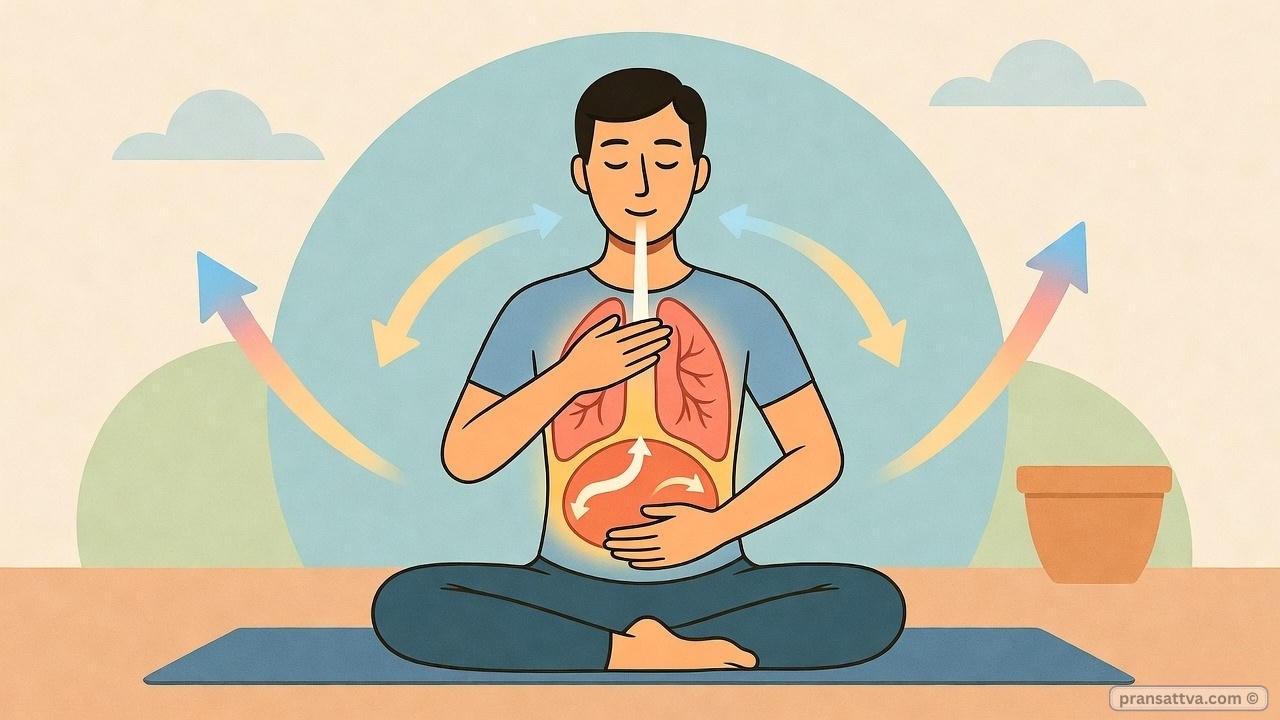
What Is Diaphragmatic (Abdominal) Breathing?
Diaphragmatic (Abdominal) Breathing is a technique that promotes relaxation and stress reduction by engaging the diaphragm effectively. To practice this method while sitting, maintain an upright posture with your feet flat on the ground and hands resting on your abdomen, following the same rhythmic breathing pattern. Establishing a daily practice schedule is essential for optimal results, as individuals typically experience a sense of calm from the first session, with full benefits evident within 21 days. This technique is also safe and beneficial during pregnancy, provided that consultation with a gynecologist occurs if there are any complications.
Why Diaphragmatic Breathing is the #1 Technique for Beginners
- Activates the parasympathetic nervous system (“rest & digest” mode)
- Instantly lowers cortisol and stress levels
- Increases oxygen supply to brain and vital organs
- Strengthens the diaphragm muscle
- Reduces blood pressure naturally
- Improves digestion and sleep quality
- Safe for children, seniors, pregnant women & heart patients
How to Practice Diaphragmatic Breathing Step by Step
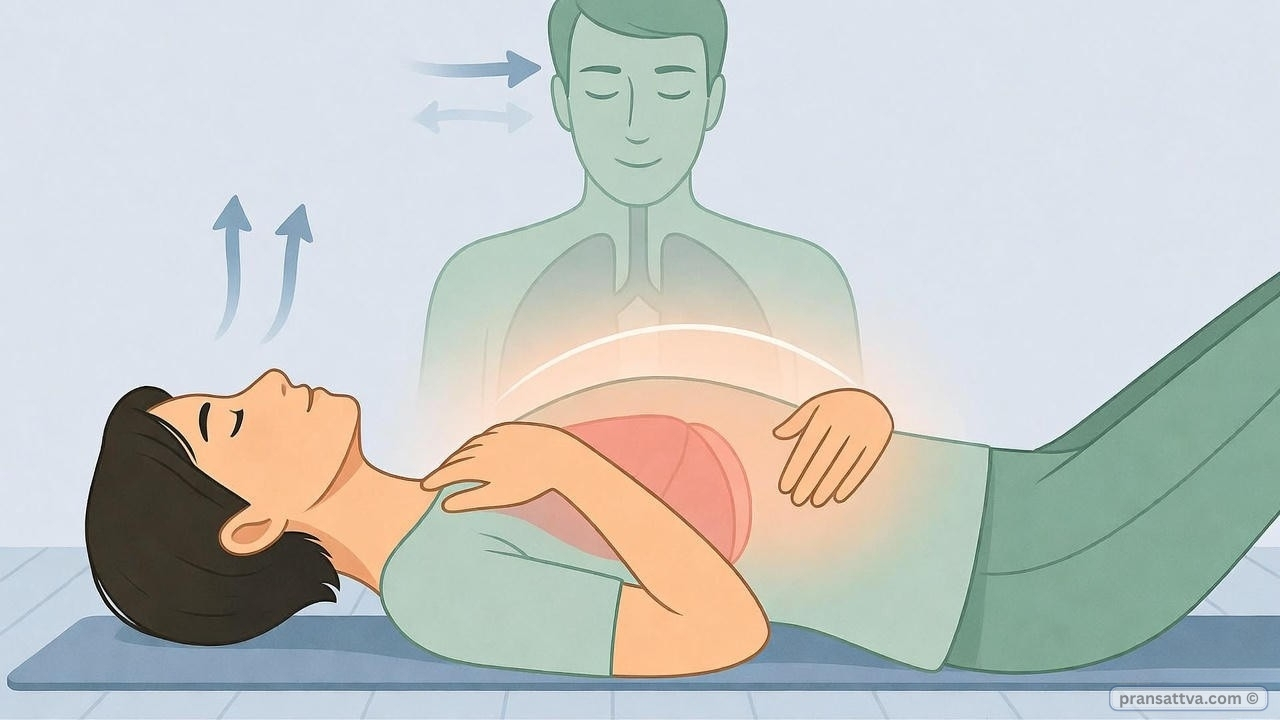
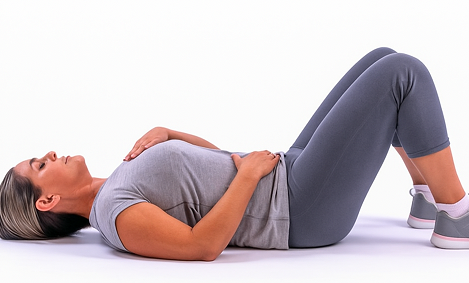
Best Starting Position for Diaphragmatic Breathing (Shavasana)
- Lie down on your back on a yoga mat or bed
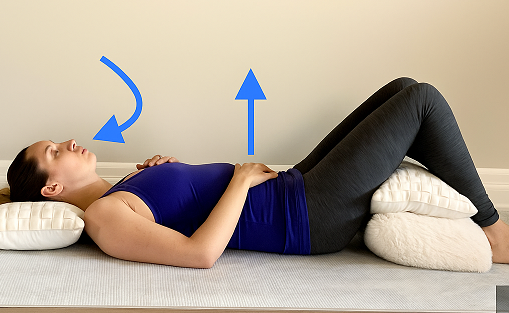
- Bend knees, feet flat on floor (or use pillow under knees if lower back pain)
- Place one hand on belly (navel area), one hand on chest
- Relax shoulders and jaw completely
⊛ First Sleeping Position. ⊛ Second Sleeping Position.
Exact Breathing Steps for Diaphragmatic (Abdominal) Breathing
- Inhale slowly through nose for 4 seconds → belly rises like a balloon (chest hand should barely move)
- Hold gently for 1–2 seconds (optional for beginners)
- Exhale slowly through nose for 5–6 seconds → belly falls naturally
- Pause 1–2 seconds, then repeat
- Continue 5–10 minutes
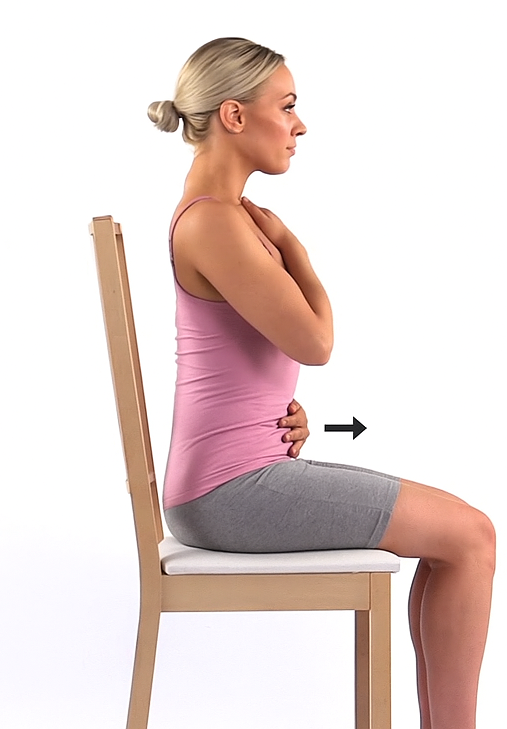
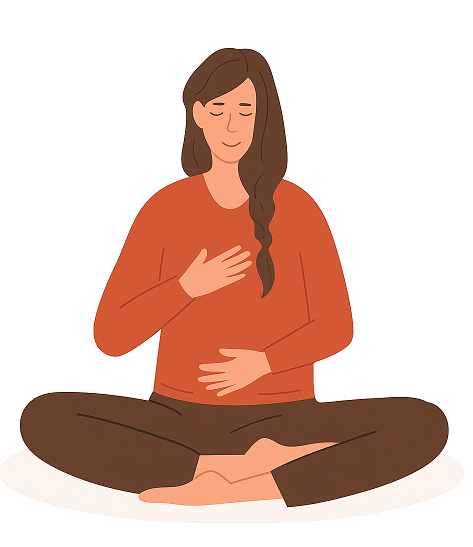
Sitting Diaphragmatic Breathing (Chair & Home Practice)
Sit straight on chair → feet flat → hands on belly → same breathing pattern.
⊛ Chair Sitting Position. ⊛ Sukhasana (Home) Sitting Position.
Daily Diaphragmatic Breathing Practice Schedule
| Time | Duration | Purpose |
|---|---|---|
| Morning (empty stomach) | 5–10 min | Energy & mental clarity |
| Afternoon break | 3–5 min | Stress relief |
| Before sleep | 5–7 min | Deep relaxation & better sleep |
Common Mistakes to Avoid in Diaphragmatic Breathing
- Chest rising first → wrong
- Forcing the belly out with muscles → wrong
- Fast or shallow breathing → wrong
- Lifting shoulders → wrong
Scientific Benefits of Diaphragmatic Breathing (Research-Backed)
- Harvard Medical School: Reduces anxiety in 60 seconds
- American Journal of Physiology: Lowers blood pressure in 8 weeks
- Journal of Clinical Psychology: Effective for panic attacks
- Mayo Clinic: Recommended for COPD & asthma patients
Diaphragmatic Breathing During Pregnancy: Safety & Benefits
100% safe and highly recommended in all trimesters.
- Improves oxygen flow to mother and baby
- Reduces pregnancy stress and nausea
- Helps during labor and delivery
Important: Always consult your gynecologist before starting if you have any pregnancy complications.
Precautions for Diaphragmatic (Abdominal) Breathing
- Completely safe for everyone
- Stop if you feel dizzy (very rare)
- Avoid right after heavy meals (wait 2 hours)