Jnana Yoga is the path of knowledge and self-realization in yoga philosophy. Learn the meaning of Jnana Yoga, its principles, practices and spiritual benefits.
Jnana Yoga is a classical path of yoga that focuses on knowledge, self-inquiry and wisdom to attain self-realization. It emphasizes understanding the true nature of the self through study, reflection and meditation.
Unlike other yoga paths, Jnana Yoga does not involve physical asanas.
Instead, it focuses on mind training, conscious introspection, and the pursuit of truth.
It is ideal for individuals who are naturally reflective, philosophical, and spiritually curious.
✤ What Is Jnana Yoga? Path of Knowledge & Self-Realization
Jnana Yoga literally translates to:
“Jnana” = Knowledge / Wisdom
“Yoga” = Union / Realization
The goal of Jnana Yoga is to discover:
- Who am I?
- What is my true nature?
- What is real vs. unreal?
- What is the nature of consciousness?
It seeks to remove ignorance (Avidya) and awaken awareness (Atma Jnana).
✤ How Jnana Yoga Works: Self-Inquiry, Reflection & Awareness
Jnana Yoga works through deep understanding, not physical movement.
Its core practices include:
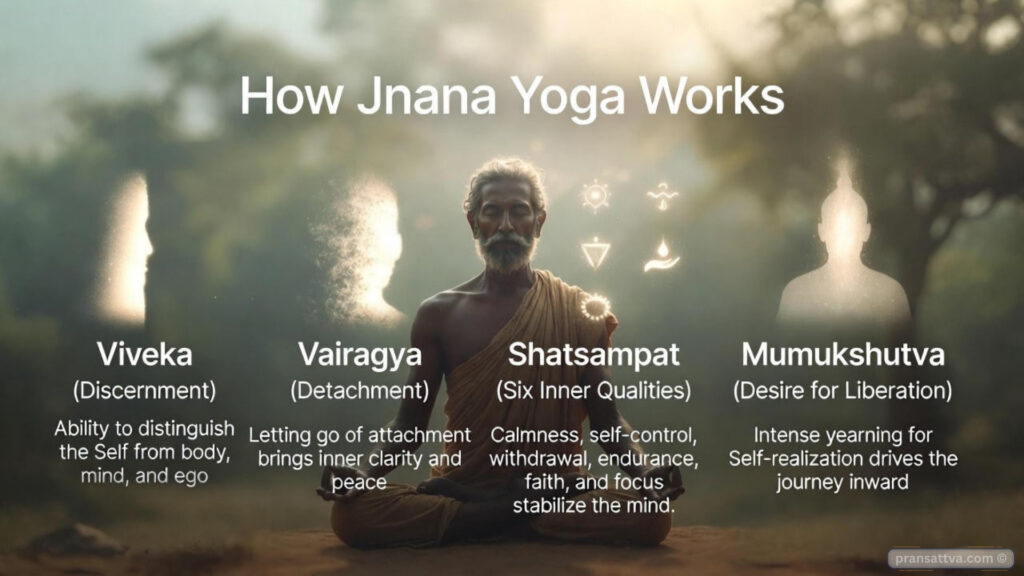
1. Viveka (Discernment)
The ability to differentiate between:
- The permanent (Soul / Self)
- The impermanent (Body, mind, emotions, ego)
2. Vairagya (Detachment)
Letting go of:
- Ego
- Desires
- Conditioning
- Negative patterns
This creates clarity and inner peace.
3. Shatsampat (Six Inner Qualities)
To stabilize the mind:
- Calmness
- Self-control
- Withdrawal
- Endurance
- Faith
- Focus
4. Mumukshutva (Desire for Liberation)
Deep longing to know the truth and attain inner freedom.
5. Self-Inquiry (Atma Vichara)
Asking the question “Who am I?”, observing thoughts, and understanding consciousness.
This is the most important practice and was taught by Sri Ramana Maharshi.
6. Study of Scriptures (Svadhyaya)
Texts like:
- Upanishads
- Bhagavad Gita
- Vedanta scriptures
They guide the seeker towards deeper understanding.
✤ Benefits of Jnana Yoga for Mental Clarity & Inner Freedom
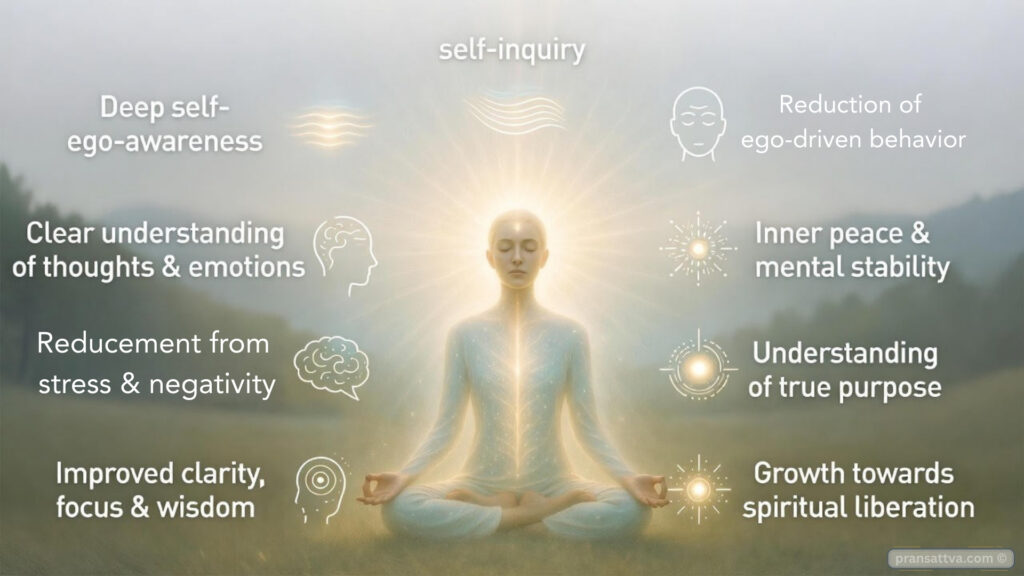
1. Deep self-awareness
2. Clear understanding of thoughts & emotions
3. Reduction of ego-driven behavior
4. Inner peace & mental stability
5. Detachment from stress & negativity
6. Improved clarity, focus & wisdom
7. Understanding of true purpose
8. Growth towards spiritual liberation
✤ Key Practices in Jnana Yoga (No Physical Asanas)
Although it has no physical poses, here are the main mental & spiritual practices:
1. Self-Inquiry (Who Am I?)
Observing thoughts and discovering the true self beyond mind and body.
2. Contemplation & Reflection
Meditating on questions like:
- What is reality?
- What is consciousness?
3. Study of Wisdom Texts
Upanishads, Bhagavad Gita, Vedanta philosophy.
4. Meditation on Awareness
Remaining aware of:
- Thoughts
- Silence
- Presence
5. Letting Go of Ego
Understanding that ego is temporary and not the real self.
6. Mind Training
Developing calmness, patience, silence, and inner strength.
 Best Time to Practice Jnana Yoga for Self-Inquiry & Clarity
☑ Early Morning (quiet mind)
Ideal for reflection and meditation.
☑ Evening (before sleep)
Supports introspection and emotional release.
☑ During Silence or Solitude
Helps deepen awareness.
☑ Anytime You Are Overthinking
Jnana Yoga reduces clutter and brings clarity.
⚠️ Precautions & Considerations in Jnana Yoga Practice
Although Jnana Yoga is safe, here are some guidelines:
☑ General Advice:
- Practice slowly and gently
- Avoid overthinking — stay balanced
- Combine with grounding practices like breathing
- Maintain emotional awareness
- Seek guidance if confusion arises
☒ Not recommended for:
- People who are extremely stressed (start with calming yoga first)
- Those who struggle with excessive introspection
- Anyone with intense anxiety or unstable mental health
Jnana Yoga should always bring clarity, not confusion.
Conclusion
Jnana Yoga is the path of wisdom, truth, and self-realization.
Instead of physical postures, it uses self-inquiry, contemplation, discrimination, and meditation to help practitioners understand their true nature.
It is a powerful approach to transforming the mind, dissolving ego, and awakening inner awareness.
Jnana Yoga teaches that the greatest knowledge is the knowledge of the Self.