Karma Yoga is the path of selfless action and service. Learn the meaning of Karma Yoga, its principles, practices, benefits and best time to practice.
Karma Yoga is a spiritual path of yoga that emphasizes selfless action, duty and service without attachment to results. By practicing Karma Yoga, individuals purify the mind, reduce ego and progress toward inner freedom.
Karma Yoga is the path of selfless service, where actions are performed with sincerity, purity, and without attachment to the outcome.
It teaches that true freedom comes when we work without ego, without selfishness, and without craving rewards.
Unlike physical yoga styles, Karma Yoga does not involve asanas.
It is a lifestyle and mindset that transforms everyday actions into spiritual practice.
✤ What Is Karma Yoga? Path of Selfless Action Explained
“Karma” means action, and “Yoga” means union.
So, Karma Yoga is about creating inner harmony through selfless actions.
This path teaches:
- Do your duty
- Serve others
- Stay honest
- Avoid ego
- Let go of expectations
Karma Yoga is practical and can be applied by anyone — students, workers, parents, or spiritual seekers.
It is the yoga of peaceful action, kindness, and responsibility.
✤ How Karma Yoga Works: Action Without Attachment
Karma Yoga purifies the mind through conscious, selfless action:
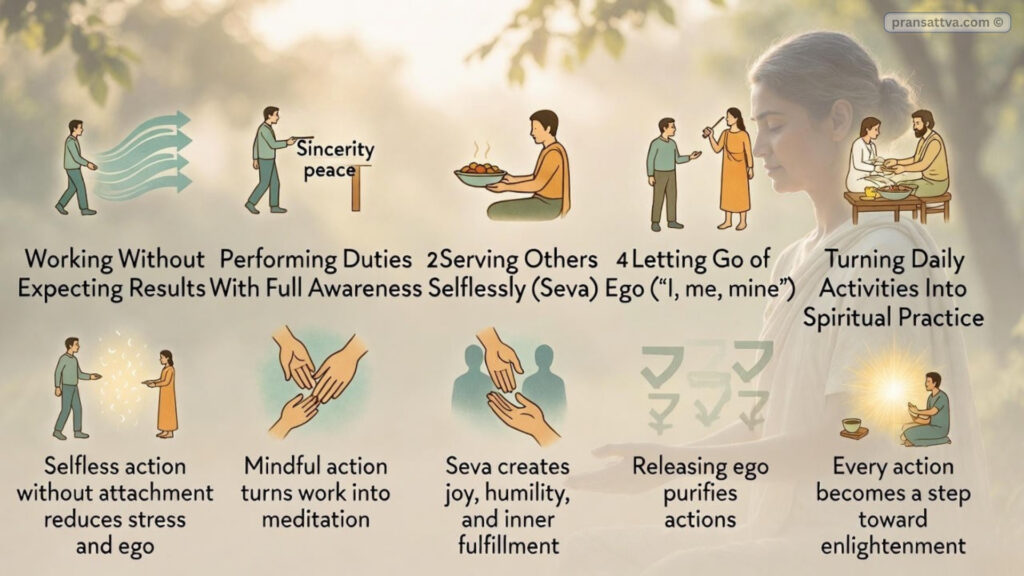
1. Working Without Expecting Results
You act sincerely but avoid attachment to outcomes.
This reduces stress, disappointment, and ego.
2. Performing Duties With Full Awareness
Every action becomes meaningful and mindful.
3. Serving Others Selflessly (Seva)
Helping others without wanting praise creates inner joy.
4. Letting Go of Ego (“I, me, mine”)
Actions become pure when they’re not driven by personal gain.
5. Turning Daily Activities Into Spiritual Practice
Cooking, teaching, working, helping — all become forms of meditation when done with intention.
6. Reducing Negative Karma
Selfless actions create positive mental patterns and reduce karmic burden.
✤ Benefits of Karma Yoga for Mental Peace & Inner Growth
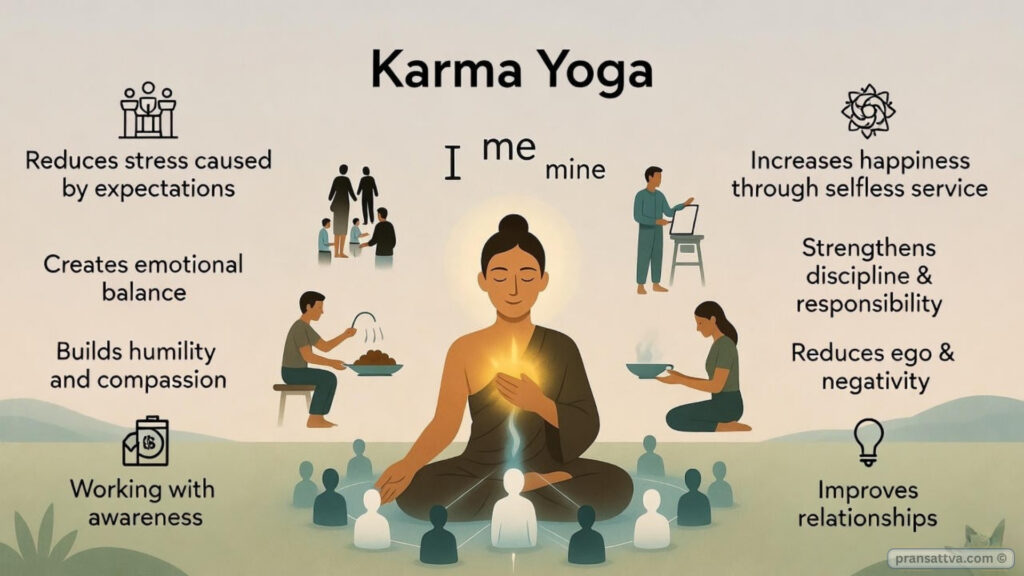
1. Reduces stress caused by expectations
2. Creates emotional balance
3. Builds humility and compassion
4. Strengthens discipline & responsibility
5. Increases happiness through selfless service
6. Reduces ego & negativity
7. Improves relationships
8. Creates inner peace and clarity
Karma Yoga leads to a peaceful and purposeful life.
✤ Main Practices in Karma Yoga (No physical poses)
Use this list directly on your website:
1. Selfless Service (Seva)
Helping others without wanting recognition or reward.
2. Mindful Action
Performing every task with sincerity and awareness.
3. Letting Go of Results
Focusing on effort, not the outcome.
4. Working With Compassion
Approaching all actions with kindness and empathy.
5. Duty Without Attachment (Nishkama Karma)
Doing what is right simply because it is right.
6. Serving Society
Helping community, environment, or those in need.
7. Gratitude & Humility
Acting with an open, grateful, ego-free heart.
 Best Time to Practice Karma Yoga in Daily Life
Karma Yoga is unique — it can be practiced anywhere, anytime, because it is a mindset, not a pose.
☑ Best times:
- While working
- While helping others
- During daily chores
- During emotional stress
- Anytime you take responsibility
- Anytime you perform service
Every action becomes yoga when done selflessly.
⚠️ Precautions & Considerations in Karma Yoga Practice
While Karma Yoga is safe, emotional balance is important:
☑ Do not overwork yourself
☑ Set healthy boundaries
☑ Avoid becoming people-pleasing
☑ Serve from love, not guilt
☑ Keep actions balanced, not extreme
Selflessness should come from joy, not pressure.
Conclusion
Karma Yoga is the path of selfless action, where everyday tasks become spiritual practice.
By acting without ego, without anxiety, and without expecting results, individuals cultivate peace, compassion, and emotional freedom.
It is a powerful path for leading a happier, meaningful, and service-oriented life.
Karma Yoga teaches:
“Do your best, let go of the rest.”