Mandala Yoga is a circular and creative yoga flow that moves in all directions. Learn what Mandala Yoga is, how it works, benefits, poses and best time to practice.
Mandala Yoga is a dynamic, creative form of yoga that involves moving around the mat in circular patterns.
The word Mandala means “circle” — symbolizing balance, wholeness, and the natural flow of energy in the body.
This practice opens the hips, strengthens the legs, improves flexibility, and connects breath with circular movements.
It is grounding, energizing, and meditative at the same time.
✤ What Is Mandala Yoga? Circular Flow Practice Explained
Mandala Yoga combines elements of:
- Vinyasa flow
- Circular transitions
- Side-switching sequences
- Hip-opening and balancing poses
- Breath-synchronized movement
Instead of facing one direction, the practitioner rotates around the mat, completing circular patterns that represent energetic balance.
Mandala Yoga is ideal for people who enjoy fluid movement, creativity, balance work, and hip-focused flows.
✤ How Mandala Yoga Works: Circular Movement & Balanced Flow
Mandala Yoga works through spiral movement + breath + direction change, creating a full-body energy flow.
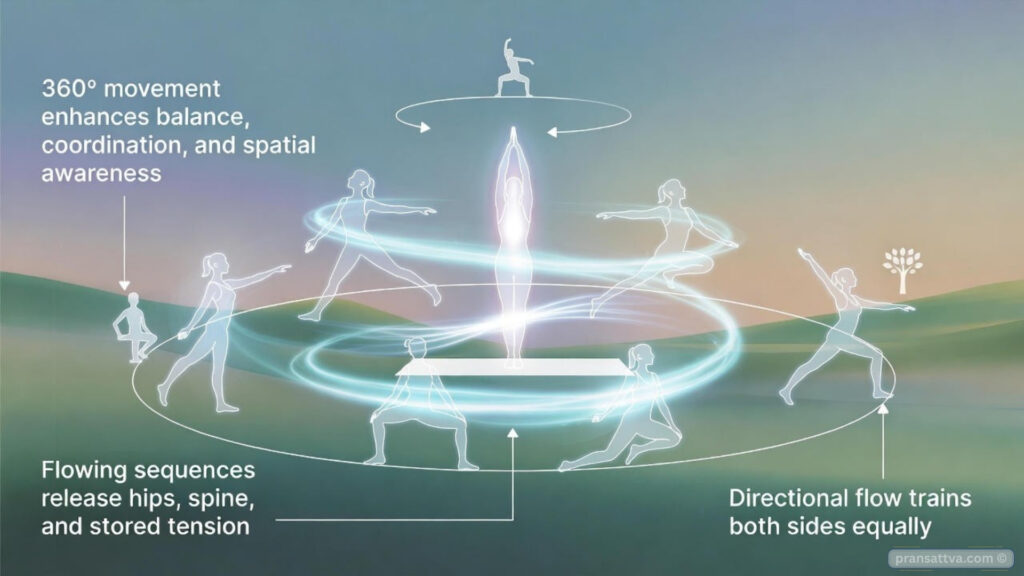
1. Circular Transitions (360° Movement)
The practitioner moves around the mat in a circular direction, enhancing:
- Balance
- Coordination
- Spatial awareness
2. Opens Hips & Spine Through Flowing Sequences
Most poses target:
- Hip flexors
- Hamstrings
- Glutes
- Lower back
Perfect for emotional release and pelvic mobility.
3. Balances Both Sides of the Body
Because the flow switches direction,
left and right sides get equal strength & flexibility training.
4. Energizes the Body & Mind
Constant rotation creates fresh energy flow and awakens awareness.
5. Promotes Moving Meditation
The circular rhythm helps quiet the mind and improves focus.
✤ Benefits of Mandala Yoga for Balance, Strength & Focus
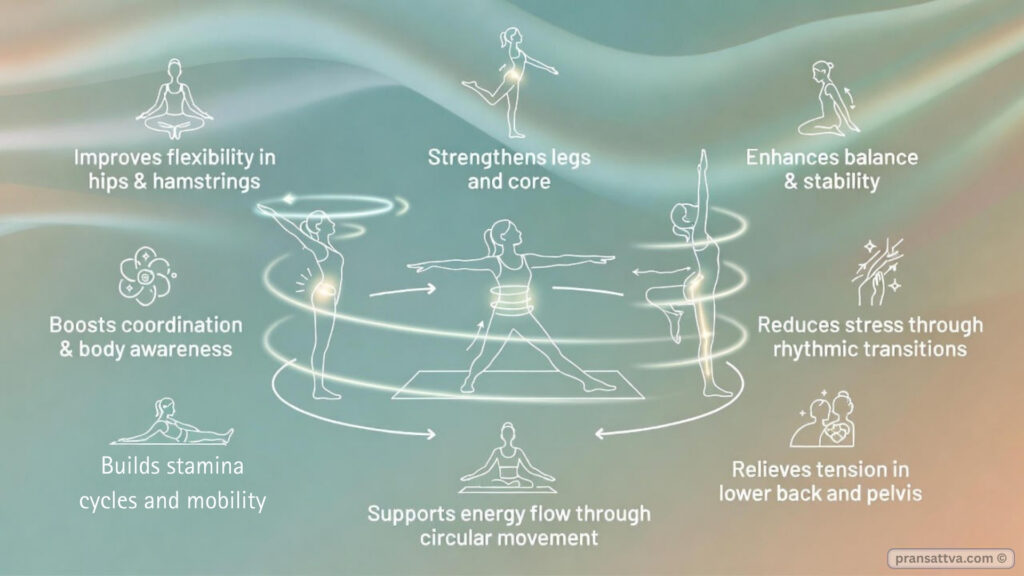
1. Improves flexibility in hips & hamstrings
2. Strengthens legs and core
3. Enhances balance & stability
4. Boosts coordination & body awareness
5. Supports energy flow through circular movement
6. Relieves tension in lower back and pelvis
7. Reduces stress through rhythmic transitions
8. Builds stamina and mobility
Mandala Yoga is a perfect blend of movement + breath + flow.
✤ Popular Mandala Yoga Asanas (Circular Movement–Based)
Use this formatting directly on your website:
1. Circular Flow Lunge
A dynamic lunge sequence that moves around the mat, opening hips and strengthening legs.
2. Mandala Forward Fold
A circular transition into a deep forward fold that stretches hamstrings and relaxes the spine.
3. 360° Warrior Flow
A creative warrior-based sequence that rotates 360°, improving balance and cooling energy flow.
 Best Time to Practice Mandala Yoga for Flow & Energy Balance
☑ 1. Morning (for energy & mobility)
Helps awaken the body and improve flexibility.
☑ 2. Afternoon (to release tension)
Circular motions loosen hips and reduce stiffness.
☑ 3. Before Vinyasa or Power Yoga
Great as a warm-up to improve mobility.
☑ 4. Evening (light flow)
Supports emotional release and calmness.
⚠️ Precautions & Contraindications of Mandala Yoga Practice
☑ General Guidelines:
- Move slowly when changing direction
- Maintain proper balance
- Use props if needed
- Avoid forcing hip openings
- Keep breath steady
☒ Avoid or modify if you have:
- Knee injuries
- Ankle instability
- Severe lower back pain
- Vertigo or dizziness
- Pregnant women (avoid fast circular transitions)
Mandala Yoga should feel smooth, controlled, and balanced.
Conclusion
Mandala Yoga is a unique and refreshing practice that blends circular motion, breath, and flowing transitions to create a balanced energy experience.
With asanas like Circular Flow Lunge, Mandala Forward Fold, and 360° Warrior Flow, practitioners develop hip flexibility, body awareness, emotional balance, and energetic harmony.
It is one of the most creative and meditative movement styles in yoga.