Insight-Based Observation Meditation is an advanced practice for deep awareness and clarity. Learn how it works, benefits, and step-by-step practice guidance.
✱ What Is Insight-Based Observation Meditation?
Insight-Based Observation Meditation is an advanced awareness practice that focuses on observing thoughts, emotions, and sensations clearly and directly, without reacting or judging them.
The aim is not relaxation alone, but gaining insight into how experiences arise and pass.
This practice helps practitioners develop clarity, understanding, and mental stability through observation.
✤ How Insight-Based Observation Meditation Works
This meditation works by training the mind to observe experiences as they naturally appear, moment by moment.
During practice, the meditator learns to:
- Notice thoughts without following them
- Observe emotions without suppression
- Recognize sensations without labeling
- Allow experiences to come and go
Over time, this builds clear insight and steady awareness.

✤ Why Insight-Based Observation Meditation Is Considered Advanced
This practice is considered advanced because:
- It requires strong attention and patience
- There is no fixed object like breath or mantra
- Awareness must remain open and stable
- Emotional balance is necessary
It is best practiced after gaining experience with basic mindfulness or silent meditation.
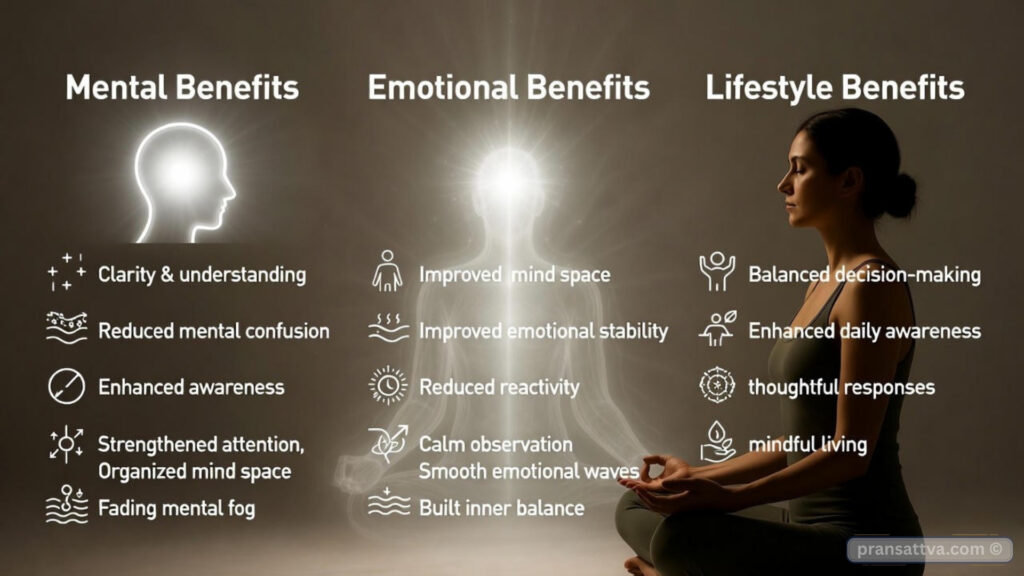
✤ Benefits of Insight-Based Observation Meditation
1) Mental Benefits
- Improves clarity and understanding
- Reduces mental confusion
- Enhances awareness
- Strengthens attention
2) Emotional Benefits
- Improves emotional stability
- Reduces reactivity
- Encourages calm observation
- Builds inner balance
3) Lifestyle Benefits
- Supports mindful decision-making
- Enhances daily awareness
- Encourages thoughtful responses
✤ Key Characteristics of Insight-Based Observation Meditation
- Observation-focused practice
- Non-reactive awareness
- Mostly unguided
- Requires prior meditation experience
- Emphasis on clarity and insight
This meditation gradually develops deep understanding and mental maturity.
✤ Types of Insight-Based Observation Meditation
1) Thought Observation Practice
Observing thoughts as temporary mental events.
2) Emotion Observation Practice
Maintaining awareness during emotional experiences.
3) Sensation Observation Practice
Noticing physical sensations without interpretation.
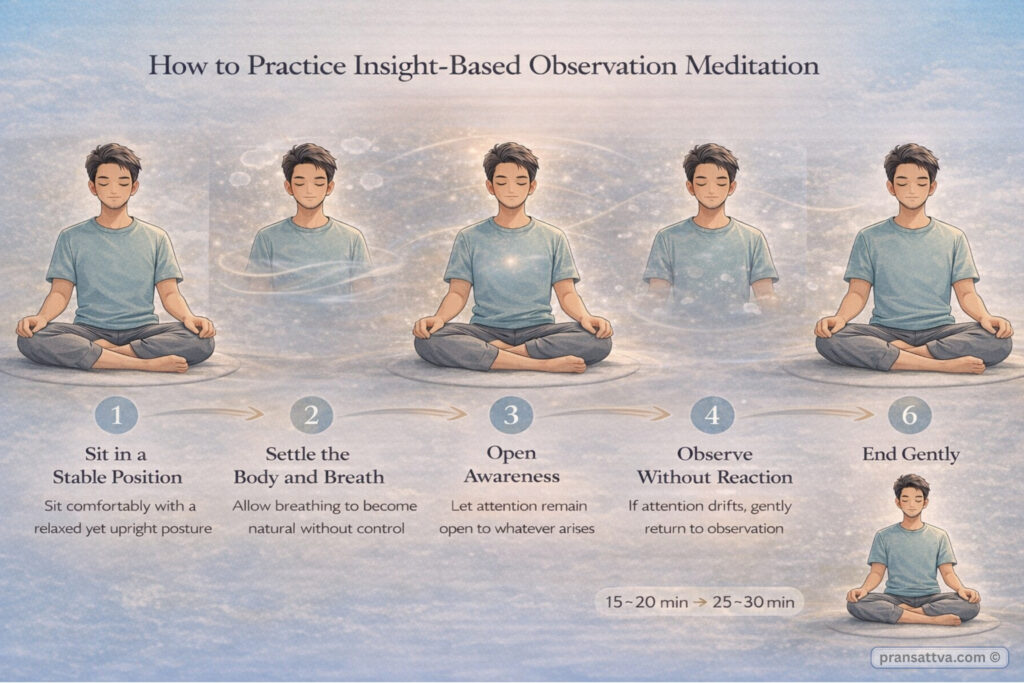
✤ How to Practice Insight-Based Observation Meditation (Step-by-Step)
Step 1: Sit in a Stable Position
Sit comfortably with a relaxed yet upright posture.
Step 2: Settle the Body and Breath
Allow breathing to become natural without control.
Step 3: Open Awareness
Let attention remain open to whatever arises.
Step 4: Observe Without Reaction
Notice thoughts, emotions, or sensations calmly.
Step 5: Maintain Steady Awareness
If attention drifts, gently return to observation.
Step 6: End Gently
Sit quietly for a few moments before finishing.
Recommended duration:
Begin with 20–30 minutes, increase gradually with comfort.
 Best Time to Practice Insight-Based Observation Meditation
☑ Early Morning (Best Time)
- Mind is fresh
- Fewer distractions
- Ideal for deep awareness
☑ Evening
- Suitable for experienced practitioners
- Helps settle the mind
☒ Avoid Practice
- When extremely tired
- Immediately after heavy meals
- Without prior meditation experience
⚠️ Common Mistakes to Avoid
- Analyzing experiences intellectually
- Expecting instant insight
- Forcing awareness
- Getting frustrated with thoughts
Insight develops through patience and regular practice.
✤ Insight-Based Observation vs Deep Mindfulness Meditation
- Deep mindfulness emphasizes continuous awareness
- Insight-based observation emphasizes understanding experiences
- Both practices complement each other
Together, they support deep clarity and inner stability.
Conclusion
Insight-Based Observation Meditation is a powerful advanced practice that develops clarity, awareness, and understanding through direct observation.
By calmly observing thoughts, emotions, and sensations without reaction, practitioners cultivate insight, balance, and mindful living.
With consistent practice, this meditation becomes a valuable tool for deeper awareness and inner growth.