
Beginner meditation is a gentle and easy practice for calmness and focus. Learn how beginner meditation works, its benefits, types, and best time to practice.
✱ What Is Beginner Meditation?
Beginner Meditation includes simple, gentle, and easy-to-practice techniques designed for people who are new to meditation or starting their mindfulness journey.
These practices focus on:
- Relaxation
- Basic awareness
- Mental calm
- Short and comfortable duration
✤ How Beginner Meditation Works
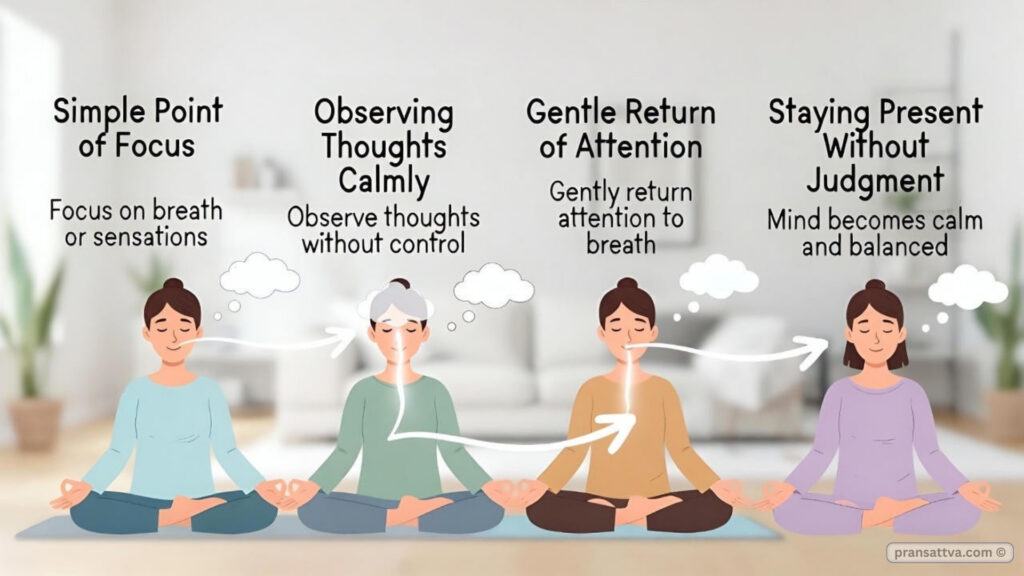
Beginner Meditation works by gently training the mind to focus on one simple point, such as breathing, body sensations, or guided instructions.
Instead of controlling thoughts, beginners learn to:
- Observe thoughts calmly
- Bring attention back gently
- Stay present without judgment
This process naturally helps reduce mental noise and creates inner balance.
✤ Benefits of Beginner Meditation
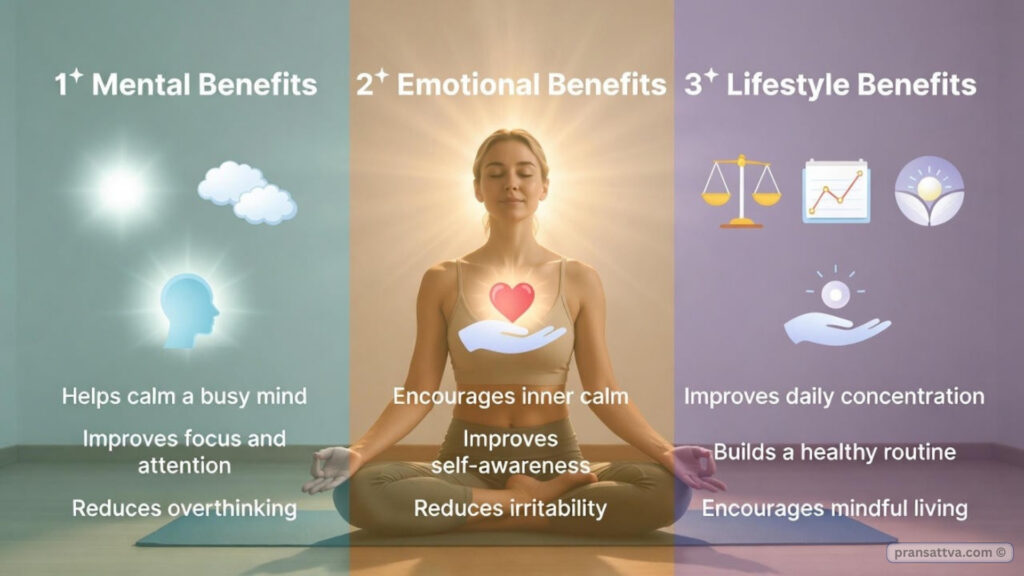
1) Mental Benefits
- Helps calm a busy mind
- Improves focus and attention
- Reduces overthinking
- Supports emotional balance
2) Emotional Benefits
- Encourages inner calm
- Improves self-awareness
- Reduces irritability
- Builds positive mindset
3) Lifestyle Benefits
- Improves daily concentration
- Builds a healthy routine
- Encourages mindful living
- Enhances overall well-being
✤ Key Characteristics of Beginner Meditation
- Simple and easy to learn
- Short duration (5–15 minutes)
- No special equipment needed
- Safe and natural practice
- Suitable for all age groups
- Can be practiced at home
Beginner meditation is designed to be comfortable, stress-free, and sustainable.
✤ Beginner Meditation Types List
1) Breath Awareness Meditation
This meditation focuses on observing natural breathing without controlling it.
Why it is beginner-friendly:
- Very simple technique
- No prior experience required
- Easy to practice anywhere
2) Guided Meditation
In guided meditation, instructions are given through audio or voice guidance.
Why it is beginner-friendly:
- Helps maintain focus
- Reduces confusion and distraction
- Ideal for first-time meditators
3) Body Scan Meditation
This technique involves moving attention slowly through different parts of the body.
Why it is beginner-friendly:
- Deeply relaxing
- Releases physical tension
- Improves mind–body awareness
4) Mantra Awareness Meditation
A simple word or sound is repeated silently to keep the mind focused.
Why it is beginner-friendly:
- Gives the mind an anchor
- Reduces wandering thoughts
- Easy to follow
5) Loving-Kindness Meditation
Focuses on generating positive and kind thoughts toward oneself and others.
Why it is beginner-friendly:
- Emotionally gentle
- Builds positivity and balance
- Reduces mental negativity
6) Basic Mindfulness Meditation
Awareness is placed on the present moment, such as breath, sensations, or surroundings.
Why it is beginner-friendly:
- Simple and practical
- Can be applied in daily life
- Improves focus naturally
 Best Time to Do Beginner Meditation
☑ Morning (Best Time)
- Mind is fresh
- Fewer distractions
- Helps set a calm tone for the day
☑ Evening
- Helps release daily stress
- Supports relaxation before sleep
☒ Avoid Meditation
- Immediately after heavy meals
- When extremely tired
- During discomfort without guidance
✤ How Long Should Beginners Meditate?
- Start with 5–10 minutes daily
- Gradually increase to 15–20 minutes
- Consistency matters more than duration
Short, regular sessions give better results than long, irregular ones.
✤ Beginner Meditation Tips
- Sit comfortably, do not force posture
- Keep breathing natural
- Do not try to stop thoughts
- Be patient with yourself
- Practice daily at a fixed time
Conclusion
Beginner Meditation is the perfect starting point for anyone who wants to bring calm, focus, and balance into daily life.
With simple techniques and regular practice, beginner meditation helps create mental clarity, emotional stability, and inner peace.
Starting slow and staying consistent is the key to long-term meditation success.