
Breath Awareness is a simple mindfulness practice that focuses on observing natural breathing to calm the mind, reduce stress and improve focus. Learn how to practice breath awareness step by step.
✱ What Is Breath Awareness Meditation?
Breath Awareness Meditation is a simple and natural meditation technique that focuses on observing the breath as it is, without controlling or changing it.
In this practice, attention is gently placed on:
- The flow of inhalation
- The flow of exhalation
- The natural rhythm of breathing
This method helps calm the mind and develop present-moment awareness, making it one of the best meditation techniques for beginners.
✤ How Breath Awareness Meditation Works
Breath Awareness Meditation works by using the breath as an anchor for the mind.
Instead of trying to stop thoughts, the practitioner learns to:
- Notice when the mind wanders
- Gently bring attention back to the breath
- Stay aware without judgment
Over time, this repeated process trains the mind to become more focused, calm, and stable.

✤ Why Breath Awareness Meditation Is Ideal for Beginners
This meditation is perfect for beginners because:
- Breathing happens naturally
- No special technique is required
- No prior meditation experience is needed
- It can be practiced anywhere
The simplicity of this practice makes it safe, gentle, and effective.
✤ Benefits of Breath Awareness Meditation
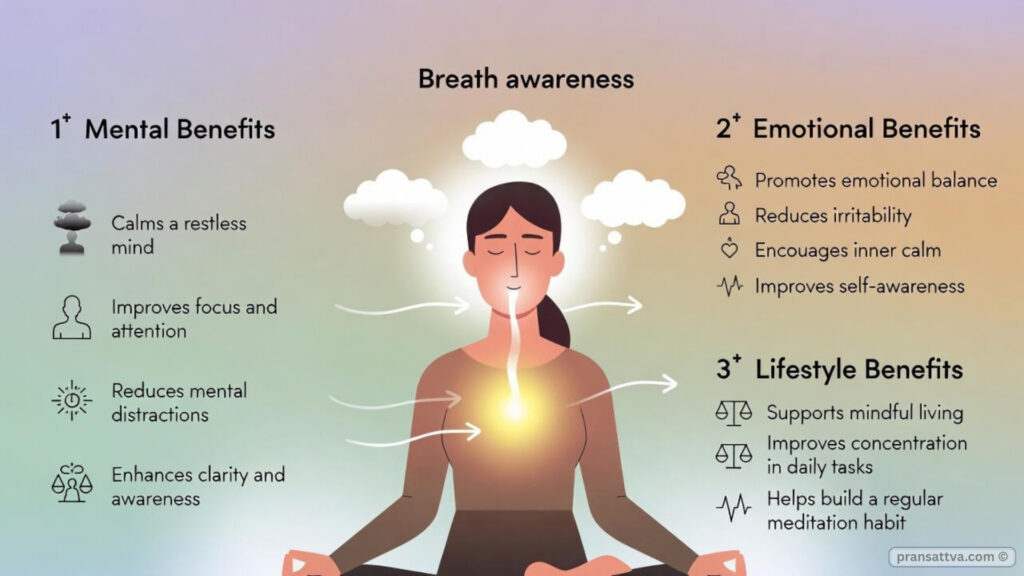
Mental Benefits
- Calms a restless mind
- Improves focus and attention
- Reduces mental distractions
- Enhances clarity and awareness
Emotional Benefits
- Promotes emotional balance
- Reduces irritability
- Encourages inner calm
- Improves self-awareness
Lifestyle Benefits
- Supports mindful living
- Improves concentration in daily tasks
- Helps build a regular meditation habit
✤ Key Characteristics of Breath Awareness Meditation
- Natural and effortless technique
- No breath control involved
- Short practice duration
- Suitable for all age groups
- Safe and beginner-friendly
- Can be practiced at home
This meditation respects the body’s natural rhythm and avoids strain.
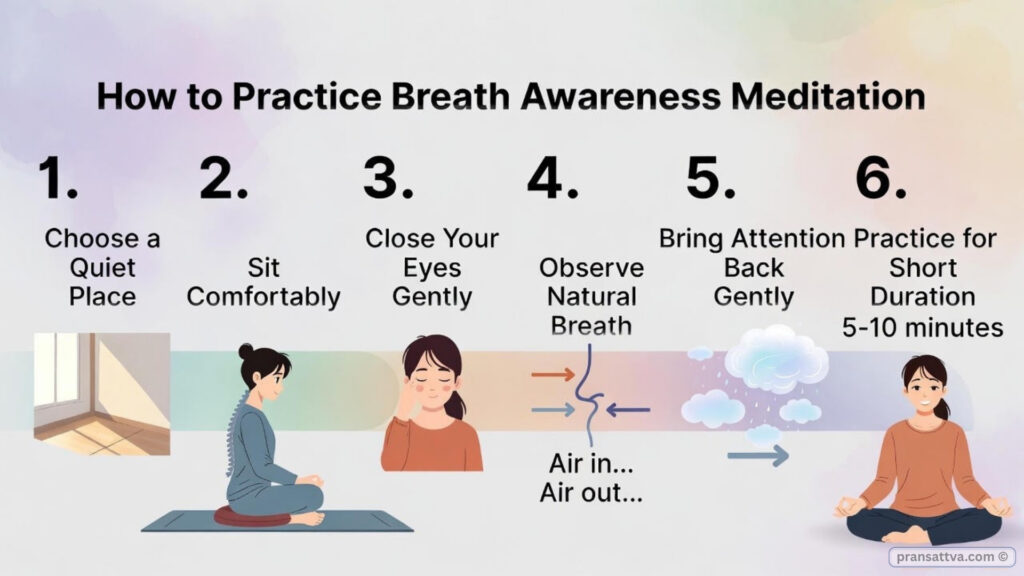
✤ How to Practice Breath Awareness Meditation (Step-by-Step)
Step 1: Choose a Quiet Place
Sit in a calm space where you won’t be disturbed.
Step 2: Sit Comfortably
Sit on the floor, cushion, or chair with your spine upright but relaxed.
Step 3: Close Your Eyes Gently
Relax your shoulders, face, and jaw.
Step 4: Observe Your Natural Breath
Simply notice:
- Air entering the nose
- Air leaving the nose
Do not control the breath.
Step 5: Bring Attention Back Gently
If your mind wanders, softly return focus to the breath.
Step 6: Practice for Short Duration
Start with 5–10 minutes daily and increase gradually.
 Best Time to Practice Breath Awareness Meditation
☑ Morning (Best Time)
- Mind is fresh
- Fewer distractions
- Helps start the day calmly
☑ Evening
- Helps release daily stress
- Supports relaxation
☑ Avoid Practice
- Immediately after heavy meals
- When extremely tired
✤ Common Mistakes to Avoid
- Trying to control breathing
- Forcing the mind to be silent
- Sitting in an uncomfortable posture
- Expecting instant results
Breath awareness meditation works best with patience and consistency.
Conclusion
Breath Awareness Meditation is one of the simplest and most effective meditation practices for calming the mind and building awareness.
By gently observing the breath without control, this practice helps develop focus, inner calm, and mindfulness.
With regular practice, even a few minutes a day can create noticeable mental balance and clarity.