
Guided meditation is an easy practice for beginners to calm the mind and improve focus. Learn how guided meditation works, its benefits, and best time to practice.
✱ What Is Guided Meditation?
Guided Meditation is a simple and supportive meditation practice where a person follows spoken instructions from a teacher, audio, or recording.
The guidance helps the practitioner:
- Relax the body
- Focus the mind
- Stay present without confusion
This makes guided meditation one of the best meditation techniques for beginners.
✤ How Guided Meditation Works
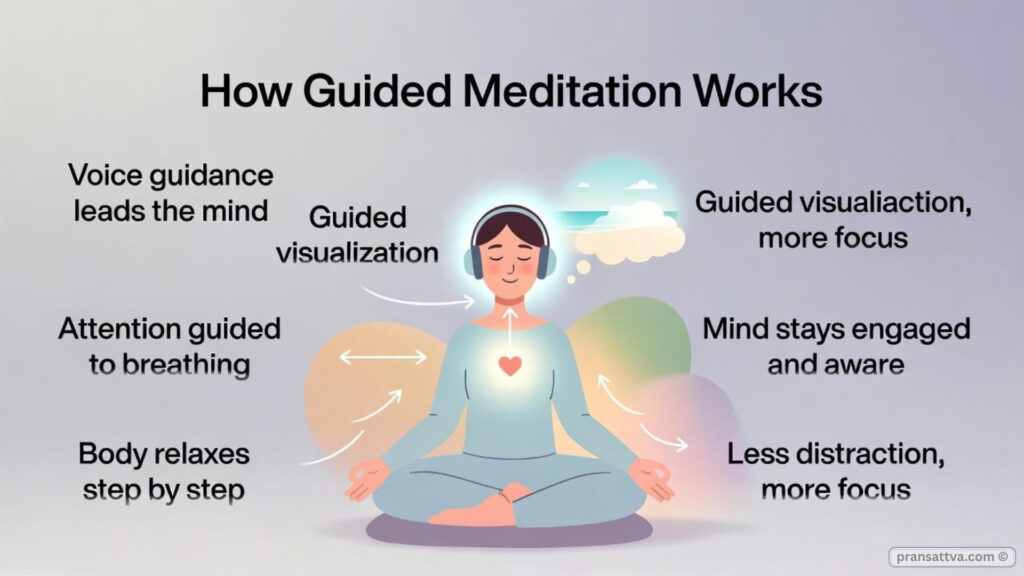
Guided Meditation works by directing attention step by step through verbal guidance.
Instead of meditating in silence, the practitioner listens to instructions such as:
- Focusing on breath
- Relaxing body parts
- Visualizing calming scenes
- Maintaining gentle awareness
This guidance helps reduce mental wandering and keeps the mind engaged.
✤ Why Guided Meditation Is Ideal for Beginners
Guided Meditation is beginner-friendly because:
- It provides clear direction
- No prior meditation experience is needed
- Helps maintain focus
- Reduces overthinking
Beginners feel more confident and comfortable with guided support.
✤ Benefits of Guided Meditation
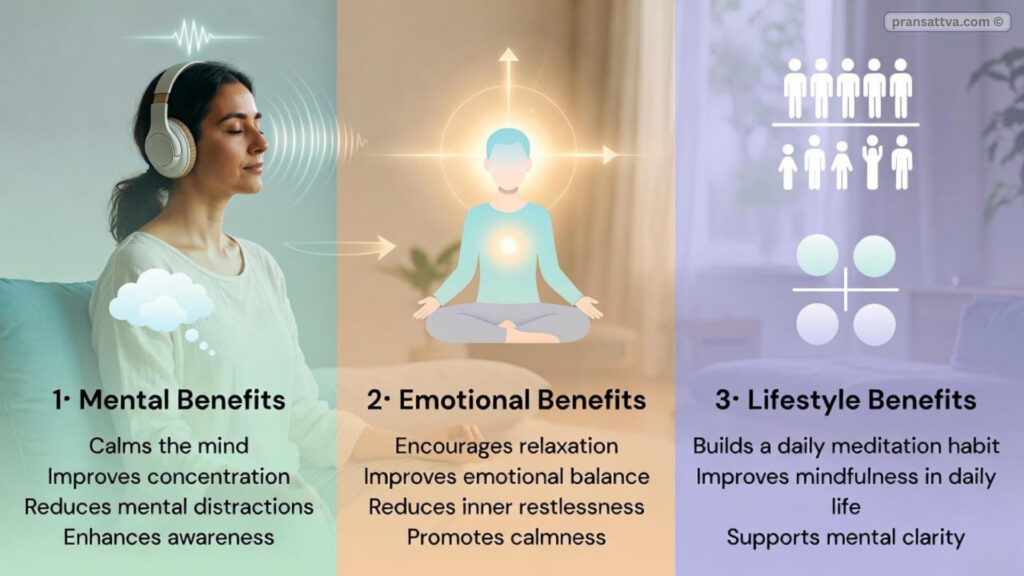
1) Mental Benefits
- Calms the mind
- Improves concentration
- Reduces mental distractions
- Enhances awareness
2) Emotional Benefits
- Encourages relaxation
- Improves emotional balance
- Reduces inner restlessness
- Promotes calmness
3) Lifestyle Benefits
- Builds a daily meditation habit
- Improves mindfulness in daily life
- Supports mental clarity
✤ Key Characteristics of Guided Meditation
- Verbal guidance based practice
- Easy to follow
- Short to medium duration
- Safe and gentle
- Suitable for all age groups
- Can be practiced at home
✤ Types of Guided Meditation
1) Breath-Focused Guided Meditation
Guidance helps focus attention on natural breathing.
2) Body Relaxation Guided Meditation
Instructions guide relaxation of different body parts.
3) Visualization Guided Meditation
Uses calming mental images to relax the mind.
4) Mindfulness Guided Meditation
Guides awareness toward present-moment experience.
✤ How to Practice Guided Meditation (Step-by-Step)
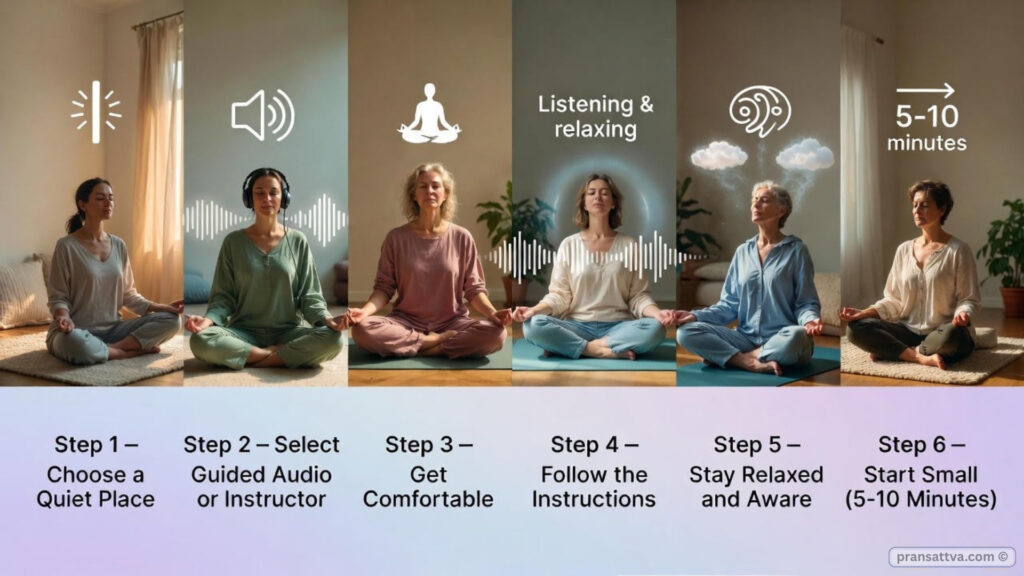
Step 1: Choose a Quiet Place
Sit or lie down in a calm and comfortable space.
Step 2: Select a Guided Audio or Instructor
Use a clear and gentle voice recording.
Step 3: Get Comfortable
Relax your body and close your eyes gently.
Step 4: Follow the Instructions
Listen carefully and allow yourself to relax.
Step 5: Stay Relaxed and Aware
If your mind wanders, gently return to the guidance.
Step 6: Start Small
Practice for 5–10 minutes daily, then increase gradually.
 Best Time to Practice Guided Meditation
☑ Morning
- Helps start the day calmly
- Improves focus for daily activities
☑ Evening
- Releases daily stress
- Supports relaxation
☒ Avoid Practice
- Immediately after heavy meals
- When extremely tired
⚠️ Common Mistakes to Avoid
- Trying to force relaxation
- Overthinking instructions
- Practicing in a noisy environment
- Expecting instant results
Guided meditation works best with regular and patient practice.
✤ Guided Meditation vs Silent Meditation
- Easier than silent meditation
- More supportive for beginners
- Helps build meditation confidence
It often acts as a bridge between beginner and advanced meditation.
Conclusion
Guided Meditation is a safe, effective, and beginner-friendly meditation technique that helps calm the mind and improve awareness.
With verbal guidance and regular practice, guided meditation makes meditation simple, comfortable, and enjoyable, especially for beginners.