
Learn everything about Pitta Dosha in Ayurveda. Understand its nature, signs of imbalance, Pitta-balancing diet, daily routine, lifestyle tips, yoga, and natural ways to restore balance safely.
🌿 Introduction to Pitta Dosha in Ayurveda
In Ayurveda, Pitta Dosha represents the energy of digestion, metabolism, and transformation.
It controls how the body processes food, regulates body temperature, supports intelligence, and manages hormonal and enzymatic activities.
Among the three doshas — Vata, Pitta, and Kapha — Pitta governs heat and transformation, making it essential for strong digestion and sharp mental clarity.
👉 (Ayurveda: Meaning, Benefits & Complete Natural Healing Guide)
🌿 What Is Pitta Dosha?
Pitta Dosha is formed by two elements:
- Fire (Agni)
- Water (Jala)
Pitta Dosha Energy
Energy of Digestion & Metabolism
Pitta governs:
- Digestive fire (Agni)
- Metabolism and nutrient absorption
- Body temperature
- Skin complexion and glow
- Intelligence, focus, and courage
🌿 Key Characteristics of Pitta Dosha
People with dominant Pitta Dosha generally have:
1) Physical Traits
- Medium, well-built body
- Warm body temperature
- Sharp appetite and strong digestion
- Sensitive or heat-prone skin
2) Mental & Emotional Traits
- Intelligent and focused
- Ambitious and goal-oriented
- Confident leadership qualities
- Can become irritable under stress
🌿 Signs & Symptoms of Pitta Dosha Imbalance
Excess Pitta may lead to:
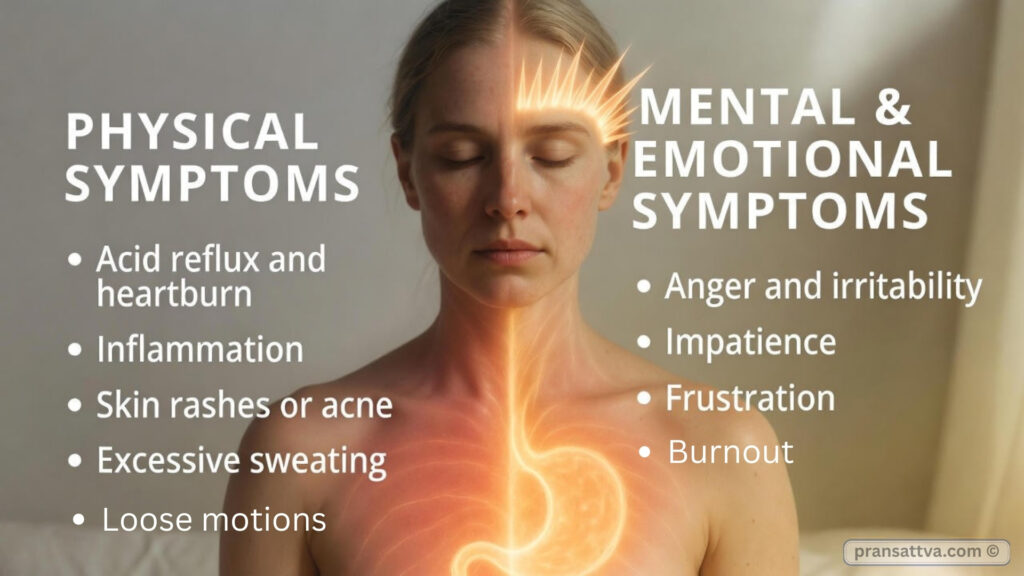
1) Physical Symptoms
- Acid reflux and heartburn
- Inflammation
- Skin rashes or acne
- Excessive sweating
- Loose motions
2) Mental & Emotional Symptoms
- Anger and irritability
- Impatience
- Frustration
- Burnout
🌿 Common Causes of Pitta Dosha Imbalance
Pitta imbalance often occurs due to:
- Excess spicy or oily food
- Overexposure to heat or sun
- Skipping meals
- Overworking and perfectionism
- Suppressed anger or emotions
🌿 Pitta Dosha Diet: What to Eat & What to Avoid
☑ Best Foods for Pitta Balance
- Cooling, light meals
- Sweet, bitter, and astringent tastes
- Rice, wheat, barley
- Fresh fruits and vegetables
- Coconut water and herbal teas
☒ Foods to Avoid for Pitta Dosha
- Very spicy food
- Fried and oily food
- Fermented food
- Excess caffeine and alcohol
- Sour and salty food in excess
🌿 Pitta Dosha Daily Routine (Dinacharya)
Balance and moderation are key for Pitta Dosha.
Morning Routine for Pitta
- Wake up early (before sunrise)
- Drink room-temperature water
- Practice moderate yoga
- Cooling pranayama
- Short meditation
Evening & Night Routine
- Avoid late-night work
- Eat dinner early
- Calm down before sleep
- Sleep before 10:30 PM
🌿 Best Lifestyle Practices to Balance Pitta Dosha
- Maintain a balanced daily schedule
- Take breaks during work
- Avoid excessive heat exposure
- Practice patience and relaxation
- Spend time in nature
🌿 Yoga & Pranayama for Pitta Dosha
Recommended Practices
- Gentle yoga sequences
- Forward bends
- Moon Salutation
- Sheetali Pranayama
- Sheetkari Pranayama
👉 (Pranayama for Dosha Balance)
🌿 Ayurvedic Herbs for Pitta Dosha Balance
Commonly recommended herbs:
- Amla
- Guduchi
- Shatavari
- Neem (under guidance)
⚠️ Always consult a qualified Ayurvedic doctor before using herbs regularly.
🌿 Can Pitta Dosha Be Balanced Naturally?
Yes ✔️
Pitta responds well to:
- Cooling foods
- Calm routines
- Emotional balance
- Moderate exercise
Consistent lifestyle discipline helps restore balance safely.
🌿 Conclusion: Living a Balanced Life with Pitta Dosha
Pitta Dosha supports intelligence, courage, and strong digestion.
When balanced, it promotes clarity and vitality. When imbalanced, it creates heat and irritation.
By following a Pitta-friendly diet, routine, and lifestyle, you can enjoy:
- Strong digestion
- Clear skin
- Emotional balance
- Sustainable energy