Best for nervous system regulation, emotional stability & breath control.
Ratio or rhythmic pranayamas focus on controlling the pattern of inhalation, retention, and exhalation. By creating specific breathing ratios, these practices regulate the nervous system, deepen breath awareness, and develop emotional balance.
They are ideal for beginners, meditators, working professionals, students, and anyone dealing with stress or irregular breathing patterns.
✤ What is Ratio / Rhythmic Pranayama
Meaning of Breath Ratios in Pranayama Practice
These pranayamas use controlled breath counts — such as equal breathing or structured inhale-hold-exhale cycles — to stabilize the mind and relax the body.
They help synchronize breath with awareness, promoting calmness and improving lung function.
Rhythmic breathing teaches the mind to slow down, increasing mindfulness and reducing anxiety.
✤ How Ratio / Rhythmic Pranayama Works to Regulate the Nervous System
Rhythmic pranayamas regulate the nervous system through:
- Controlled timing of the breath
- Slow, steady inhalation and exhalation
- Gentle breath retention
- Balanced lung expansion
- Reduction of anxiety-triggered breathing patterns
These methods activate the parasympathetic nervous system, improving emotional balance and reducing stress.
✤ Benefits of Ratio / Rhythmic Pranayama for Mind, Lungs & Emotions
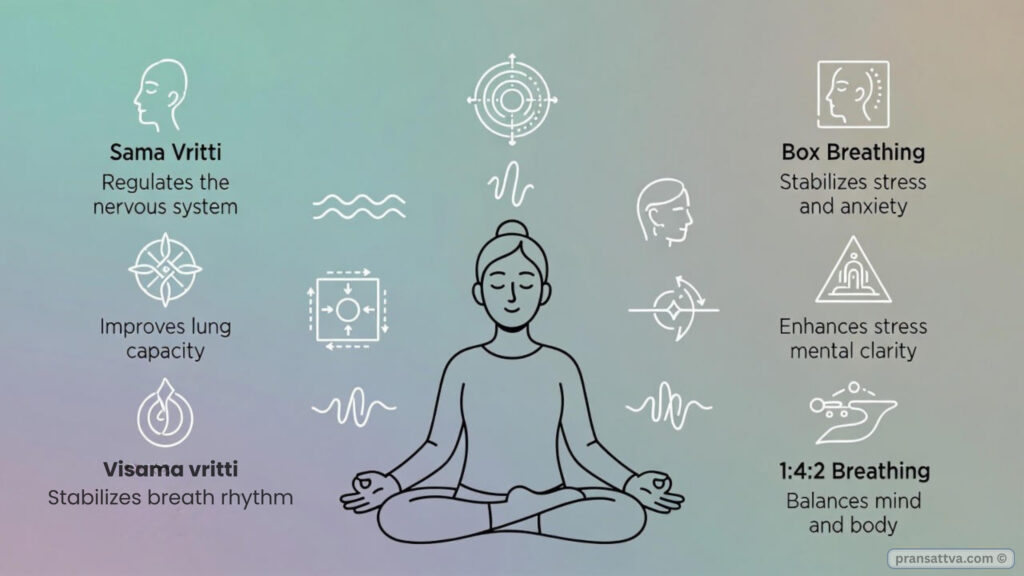
1. Regulates the Nervous System
Rhythmic breathing reduces hyperactivity and stabilizes emotional responses.
2. Improves Lung Strength & Breath Capacity
Ratios teach the lungs to expand fully and breathe efficiently.
3. Reduces Anxiety & Overthinking
Equal or structured breathing calms the mind instantly.
4. Enhances Focus & Concentration
Useful for students, meditators, and high-performance tasks.
5. Supports Meditation Practice
Acts as a bridge between regular breathing and deep meditation.
6. Controls Emotional Fluctuations
Helpful for anger, nervousness, stress, and mood imbalance.
7. Promotes Heart & Respiratory Health
Slows heart rate and enhances oxygen efficiency.
✤ Types of Ratio / Rhythmic Pranayama Techniques (5 Types)
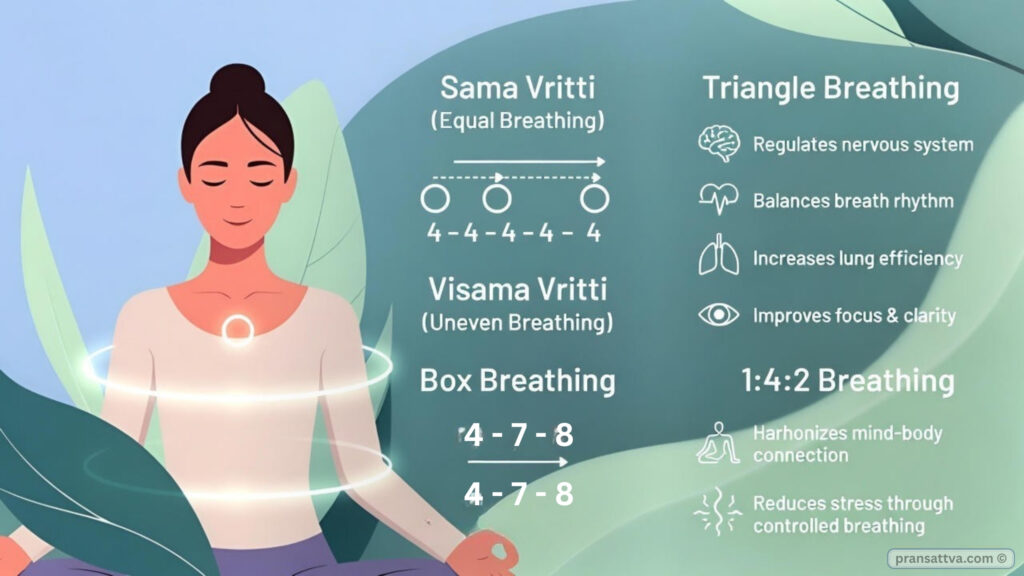
1. Sama Vritti (Equal Breathing)
Equal inhale and exhale count for deep calmness and balance.
👉 Read More
2. Visama Vritti
Unequal breath ratios like 1:2, 1:3, or 1:4 for advanced relaxation.
👉 Read More
3. Box Breathing (4-4-4-4 Pattern)
Military-style square breathing for stress reduction and focus.
👉 Read More
4. Triangle Breathing
Three-phase breath: inhale → hold → exhale for stability and calmness.
👉 Read More
5. 1:4:2 Breathing
Traditional yogic ratio for deep breath control and mental expansion.
👉 Read More
 Best Time to Practice Ratio / Rhythmic Pranayama
☑ Early Morning
Mind is fresh, calm, and more responsive to breath control.
☑ Before Meditation
Helps quiet the mind and increase awareness.
☑ During High Stress or Anxiety Moments
Equal breathing and box breathing instantly reduce stress.
☑ Evening
Helps unwind and release pressure accumulated throughout the day.
⚠️ Avoid long breath retention at night if you are a beginner.
⚠️ Precautions & Contraindications for Ratio / Rhythmic Pranayama
Rhythmic pranayamas are safe but require proper awareness.
☑ Precautions:
- Do not strain your breath while holding
- Increase ratios gradually
- Practice gently if you feel anxious
- Keep breath smooth, not forced
- Stop immediately if dizzy or uncomfortable
⚠️ Contraindications:
Avoid strong ratios or long retention if you have:
- Hypertension (high BP)
- Heart diseases
- Asthma or chronic lung issues
- Vertigo or dizziness
- Anxiety disorders triggered by breath-holding
- Pregnancy (avoid retention)
Beginners should start with simple Sama Vritti (equal breathing) before trying advanced ratios.
Conclusion: Why Ratio & Rhythmic Pranayama Is Powerful for Inner Stability
Ratio & Rhythmic Pranayamas are excellent for regulating the nervous system, calming emotional storms, and improving breath efficiency. Techniques like Sama Vritti, Visama Vritti, Box Breathing, Triangle Breathing, and the traditional 1:4:2 ratio build strong breath control and deep inner stability.
Practicing these techniques daily brings clarity, calmness, and emotional resilience.