
Silent Meditation is an advanced practice for deep awareness and inner clarity. Learn how silent meditation works, benefits, and how to practice it safely.
✱ What Is Silent Meditation?
Silent Meditation is an advanced meditation practice in which awareness is cultivated without guidance, mantra, or external focus.
The practitioner sits in silence and observes the present moment with clear, steady awareness.
Unlike beginner meditation, silent meditation does not rely on techniques.
It requires a strong foundation in meditation, as the mind is left free to observe thoughts, sensations, and silence itself.
✤ How Silent Meditation Works
Silent Meditation works by allowing the mind to settle naturally into awareness.
During the practice:
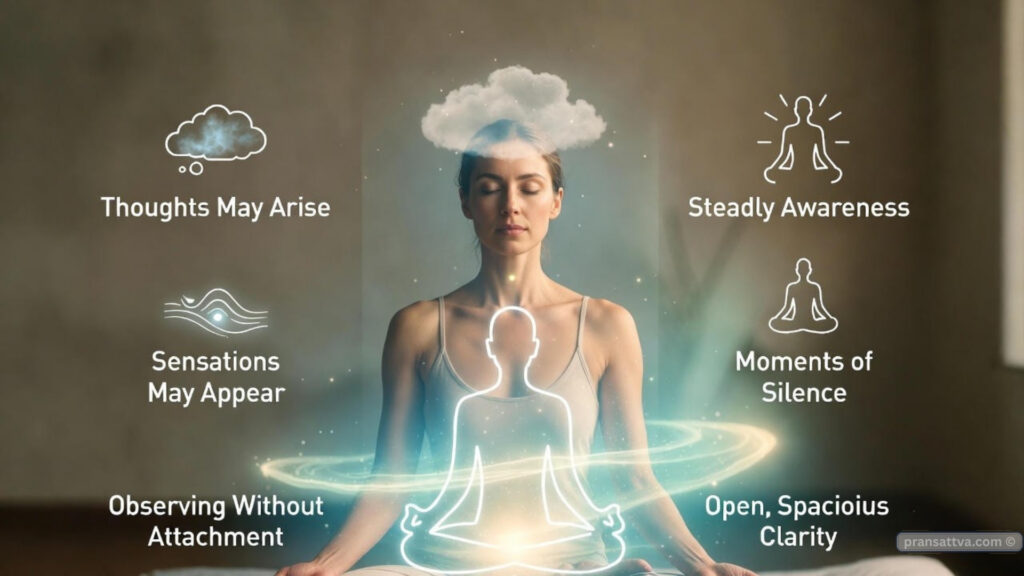
- Thoughts may arise
- Sensations may appear
- Moments of silence may occur
Instead of reacting, the practitioner simply observes without attachment.
Over time, this deepens mental clarity and inner stability.
✤ Why Silent Meditation Is Considered Advanced
Silent Meditation is classified as advanced because:
- There is no external guidance
- The mind must remain stable on its own
- Distractions must be handled internally
- Strong awareness and patience are required
It is best practiced after gaining experience with beginner meditation techniques.
✤ Benefits of Silent Meditation
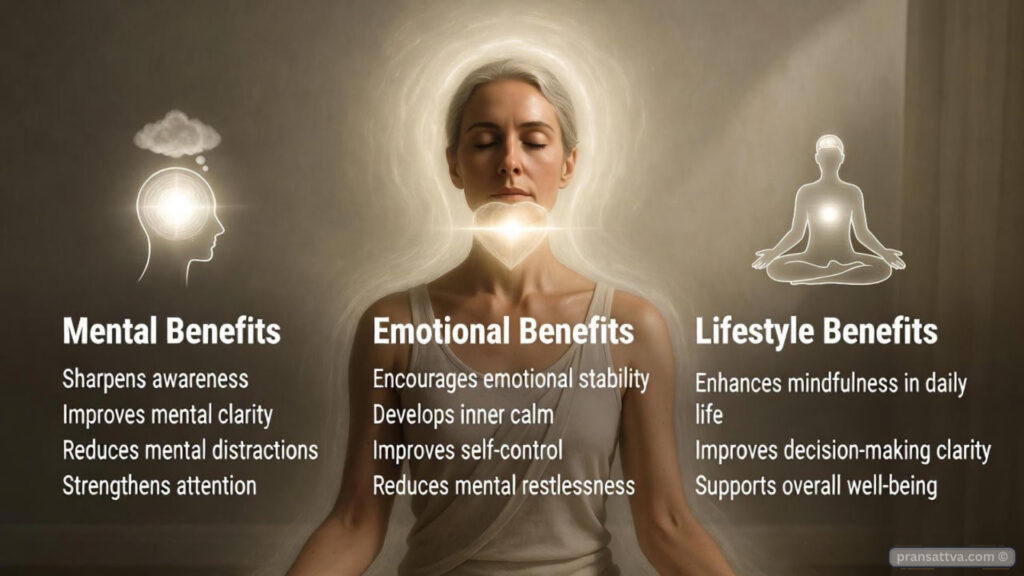
1) Mental Benefits
- Sharpens awareness
- Improves mental clarity
- Reduces mental distractions
- Strengthens attention
2) Emotional Benefits
- Encourages emotional stability
- Develops inner calm
- Improves self-control
- Reduces mental restlessness
3) Lifestyle Benefits
- Enhances mindfulness in daily life
- Improves decision-making clarity
- Supports inner balance and discipline
✤ Key Characteristics of Silent Meditation
- No guidance or mantra
- Deep awareness-based practice
- Requires prior meditation experience
- Longer sitting duration
- Emphasis on observation and stillness
Silent meditation develops mental maturity and inner discipline over time.
✤ Types of Silent Meditation
1) Awareness of Silence
Observing the natural silence between thoughts.
2) Open Awareness Meditation
Allowing all experiences to arise and pass without focus.
3) Witness-Based Silent Meditation
Observing thoughts and emotions as a neutral witness.
✤ How to Practice Silent Meditation (Step-by-Step)
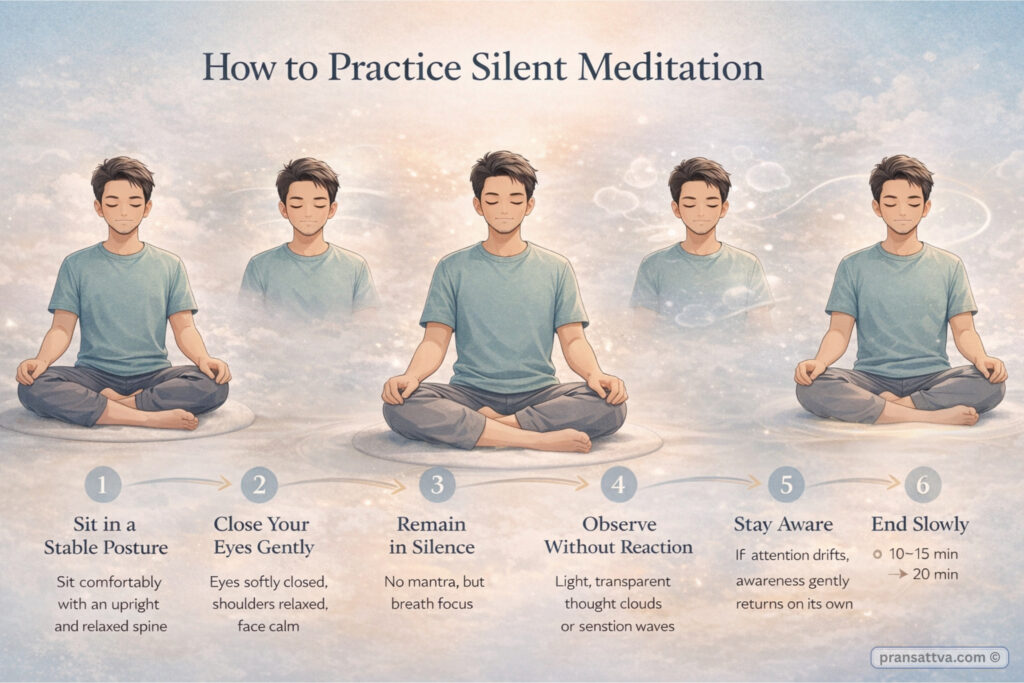
Step 1: Sit in a Stable Posture
Sit comfortably with an upright and relaxed spine.
Step 2: Close Your Eyes Gently
Allow the body and breath to settle naturally.
Step 3: Remain in Silence
Do not repeat a mantra or control breathing.
Step 4: Observe Without Reaction
Notice thoughts, sensations, or silence as they appear.
Step 5: Stay Aware
If attention drifts, gently return to awareness.
Step 6: End Slowly
After practice, sit quietly before opening your eyes.
Recommended duration:
Start with 15–20 minutes, increase gradually based on comfort.
 Best Time to Practice Silent Meditation
☑ Early Morning (Best Time)
- Mind is naturally calm
- Minimal distractions
- Ideal for deep awareness
☑ Late Evening
- Suitable for experienced practitioners
- Helps settle the mind
☒ Avoid Practice
- When extremely tired
- Immediately after heavy meals
- Without prior meditation experience
⚠️Common Mistakes to Avoid
- Expecting complete mental silence
- Forcing awareness
- Getting frustrated with thoughts
- Practicing without foundation
Silent meditation improves with patience and consistency.
✤ Silent Meditation vs Guided Meditation
- Silent meditation is unguided
- Guided meditation provides structure
- Silent meditation is deeper but more demanding
Both practices have value at different stages.
Conclusion
Silent Meditation is a powerful advanced meditation practice that develops deep awareness, clarity, and inner stillness.
By sitting in silence and observing without attachment, practitioners gradually experience mental stability and refined awareness.
With consistent practice, silent meditation becomes a profound tool for inner growth and mindfulness.