
Learn everything about Vata Dosha in Ayurveda. Understand its nature, signs of imbalance, Vata-balancing diet, daily routine, lifestyle tips, yoga, and natural ways to restore balance safely.
🌿 Introduction to Vata Dosha in Ayurveda
In Ayurveda, Vata Dosha is the energy of movement.
It controls all motion in the body and mind, including breathing, circulation, nerve impulses, digestion movement, and creative thinking.
Among the three doshas — Vata, Pitta, and Kapha — Vata is considered the most influential, because imbalance in Vata can disturb both Pitta and Kapha.
🌿 What Is Vata Dosha?
Vata Dosha is formed by two elements:
- Air (Vayu)
- Space (Akasha)
1) Vata Dosha Energy
Energy of Movement
Vata governs:
- Breathing and respiration
- Blood circulation
- Nervous system activity
- Muscle and joint movement
- Elimination (bowel movement)
- Creativity, imagination, and communication
🌿 Key Characteristics of Vata Dosha
People with dominant Vata Dosha generally have:
1) Physical Traits
- Lean or thin body structure
- Dry skin and hair
- Cold hands and feet
- Light appetite with irregular digestion
2) Mental & Emotional Traits
- Creative and imaginative
- Quick thinking
- Enthusiastic
- Sensitive and emotional
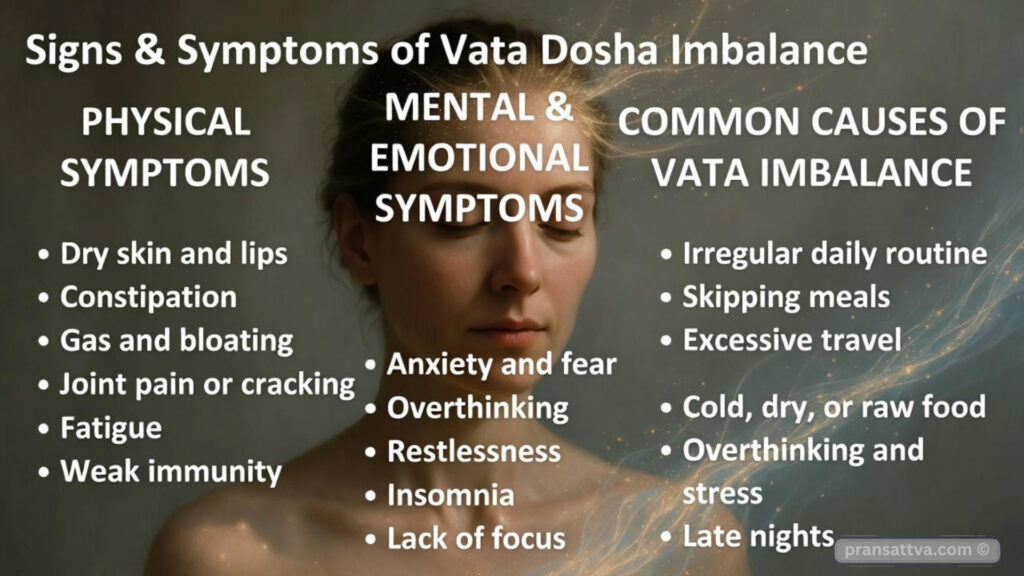
🌿 Signs & Symptoms of Vata Dosha Imbalance
When Vata becomes excessive, it may cause physical and mental disturbances.
1) Physical Symptoms
- Dry skin and lips
- Constipation
- Gas and bloating
- Joint pain or cracking
- Fatigue
- Weak immunity
2) Mental & Emotional Symptoms
- Anxiety and fear
- Overthinking
- Restlessness
- Insomnia
- Lack of focus
3) Common Causes of Vata Dosha Imbalance
Vata imbalance often happens due to:
- Irregular daily routine
- Skipping meals
- Excessive travel
- Cold, dry, or raw food
- Overthinking and stress
- Late-night sleeping
🌿 Vata Dosha Diet: What to Eat & What to Avoid
1) Best Foods for Vata Balance
- Warm, freshly cooked meals
- Soft and moist foods
- Rice, wheat, oats
- Cooked vegetables
- Ghee and healthy oils
- Warm milk (if suitable)
2) Foods to Avoid for Vata Dosha
- Cold and frozen food
- Dry snacks and crackers
- Raw salads
- Excess caffeine
- Packaged and processed food
🌿 Vata Dosha Daily Routine (Dinacharya)
Routine is the most powerful medicine for Vata Dosha.
1) Morning Routine for Vata
- Wake up calmly (not too early)
- Drink warm water
- Abhyanga (oil massage) with sesame oil
- Gentle yoga or walking
- Meditation or pranayama
2) Evening & Night Routine
- Eat dinner early
- Avoid screens at night
- Practice relaxation
- Sleep before 10 PM
🌿 Best Lifestyle Practices to Balance Vata Dosha
- Follow a fixed daily schedule
- Stay warm and hydrated
- Practice grounding meditation
- Avoid multitasking
- Reduce overstimulation
- Spend time in calm environments
🌿 Yoga & Pranayama for Vata Dosha
Recommended Practices
- Gentle yoga postures
- Child’s pose
- Seated forward bends
- Anulom Vilom Pranayama
- Bhramari Pranayama
👉 (Pranayama for Dosha Balance)
🌿 Ayurvedic Herbs for Vata Dosha Balance
Commonly recommended herbs:
- Ashwagandha
- Shatavari
- Triphala (in proper dosage)
- Licorice (Mulethi)
⚠️ Always consult a qualified Ayurvedic doctor before using herbs regularly.
🌿 Can Vata Dosha Be Balanced Naturally?
Yes ✔️
Vata responds best to:
- Regular routine
- Warmth
- Nourishing food
- Rest and relaxation
- Mindfulness practices
Even small daily changes can restore balance naturally.
🌿 Conclusion: Living a Balanced Life with Vata Dosha
Vata Dosha brings creativity, enthusiasm, and flexibility into life.
When balanced, it supports clarity and energy. When imbalanced, it creates anxiety and instability.
By following a Vata-friendly diet, routine, and lifestyle, you can enjoy:
- Better digestion
- Mental peace
- Stable energy
- Long-term wellness