Bhakti Yoga is the path of devotion and love toward the divine. Learn the meaning of Bhakti Yoga, its principles, practices, benefits and best time to practice.
Bhakti Yoga is a spiritual path of yoga that focuses on devotion, love and surrender to the divine. It emphasizes cultivating a deep emotional connection through prayer, chanting, service and remembrance, leading to inner peace and spiritual growth.
Its purpose is to open the heart, purify emotions, and create a deep spiritual bond with a higher power.
✤ What Is Bhakti Yoga? Path of Devotion & Divine Love
Bhakti Yoga comes from the Sanskrit word “Bhakti”, meaning:
- Devotion
- Love
- Participation
- Surrender
This yoga teaches that true spiritual growth happens when the heart is open, loving, and free from ego.
Bhakti Yoga is designed for people who feel naturally connected to:
- Prayer
- Music
- Chanting
- Devotional practices
- Emotional connection
- Love for the Divine
It is a gentle, uplifting, and heart-centered path.
✤ How Bhakti Yoga Works: Devotion, Surrender & Emotional Connection
Bhakti Yoga transforms the heart and mind through emotional purification and devotion:
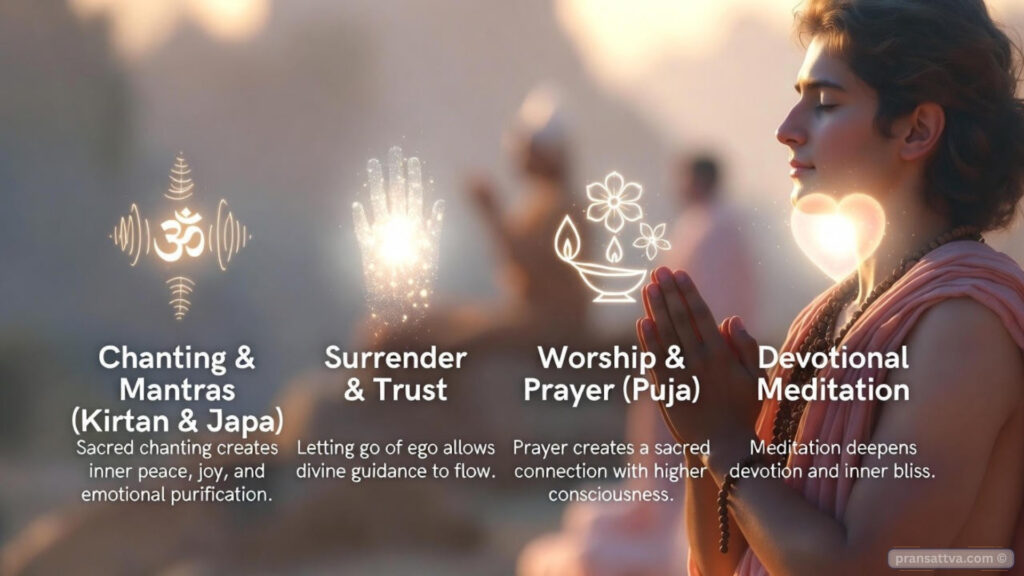
1. Chanting & Mantras (Kirtan & Japa)
Repetition of sacred sounds like “Om,” “Hare Krishna,” “Ram,” “Om Namah Shivaya”
creates inner peace and joy.
2. Surrender & Trust
Letting go of ego and allowing divine guidance to flow.
3. Worship & Prayer (Puja)
Creates a sacred connection with higher consciousness.
4. Devotional Meditation
Meditation on love, compassion, and divine presence.
5. Seeing Divine in All Beings
Bhakti Yoga teaches unity and unconditional love.
6. Cultivating Gratitude & Humility
These qualities purify the mind and bring peace.
✤ Benefits of Bhakti Yoga for Emotional Balance & Inner Peace
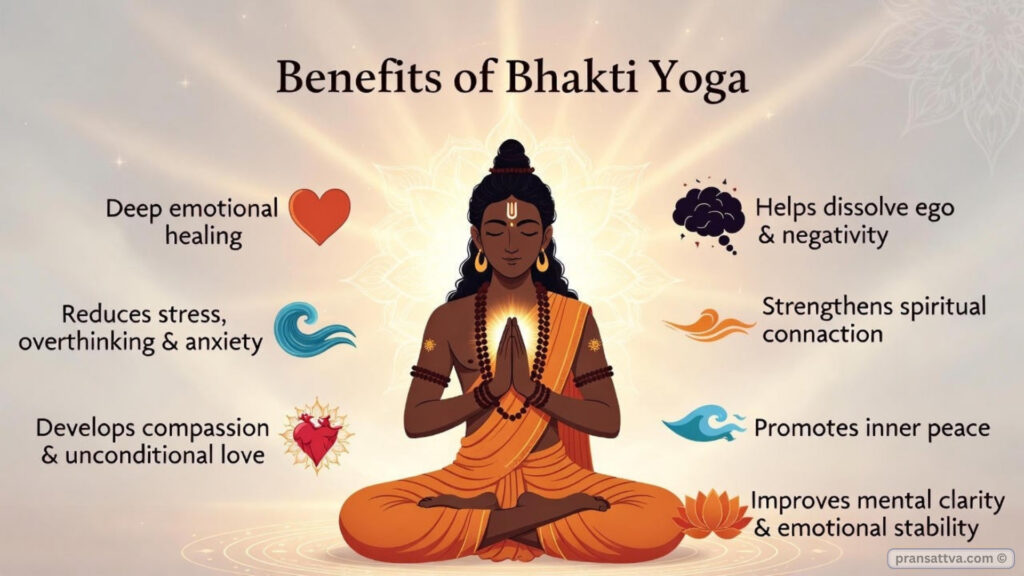
1. Deep emotional healing
2. Reduces stress, overthinking & anxiety
3. Develops compassion & love
4. Strengthens spiritual connection
5. Helps dissolve ego & negativity
6. Promotes inner peace
7. Improves mental clarity and emotional stability
8. Creates happiness from within
Bhakti Yoga is one of the safest, most heart-opening yoga paths.
✤ Key Practices of Bhakti Yoga for Spiritual Connection
Use this list directly on your website:
1. Kirtan (Devotional Singing)
Group chanting using harmoniums, drums, or simple voice repetition.
2. Japa (Mantra Repetition)
Repeating sacred mantras using beads (Mala) to quiet the mind.
3. Puja (Devotional Rituals)
Offering flowers, incense, or prayers with love and gratitude.
4. Devotional Meditation
Sitting in silence and feeling connection with the Divine.
5. Satsang (Spiritual Gathering)
Listening to teachings, stories, or devotional music.
6. Seva (Selfless Service)
Performing good deeds without expectation to purify the heart.
 Best Time to Practice Bhakti Yoga for Devotional Growth
☑ Early Morning (Quiet & peaceful)
Perfect for chanting, prayer, and mantras.
☑ Evening (Wind-down time)
Calms the heart and mind before sleep.
☑ During Emotional Stress
Helps balance emotions and create inner peace.
☑ Anytime During the Day
Short japa or chanting can quickly change your mood.
⚠️ Precautions & Considerations in Bhakti Yoga Practice
Bhakti Yoga is safe for everyone, but:
☑ Practice gently — no force or emotional pressure
☑ Avoid over-attachment to rituals; focus on inner sincerity
☑ Stay emotionally balanced
☑ Combine with grounding practices if you feel overwhelmed
No physical risks since Bhakti Yoga has no asanas.
Conclusion
Bhakti Yoga is the path of pure love, devotion, and surrender.
It teaches that spiritual fulfillment comes from the heart, not from physical postures.
Through practices like chanting, mantra repetition, devotional meditation, puja, satsang, and selfless service, practitioners experience deep peace, emotional healing, and a powerful connection to the Divine.
Bhakti Yoga transforms the heart — making life more joyful, compassionate, and spiritually aligned.