Prenatal Yoga is a safe and gentle yoga practice designed for pregnancy. Learn the benefits of Prenatal Yoga, safe poses, precautions and best time to practice.
Prenatal Yoga is a gentle form of yoga specially designed for pregnant women to support physical comfort, emotional balance and overall well-being. This practice focuses on safe movements, breathing techniques and relaxation during pregnancy.
Props such as cushions, bolsters, blocks, and chairs are often used to make the practice even safer and more supportive.
✤ What Is Prenatal Yoga? Safe Yoga Practice During Pregnancy
Pregnancy brings physical, emotional, and hormonal changes.
Prenatal Yoga provides safe movements and calming breathwork that help:
- Reduce back pain
- Improve posture
- Support pelvic mobility
- Boost circulation
- Reduce stress & anxiety
- Enhance breath control
- Promote relaxation
Prenatal classes always avoid intense stretching, twisting, pressure on the abdomen, and upside-down poses.
The goal is comfort, safety, and gentle movement.
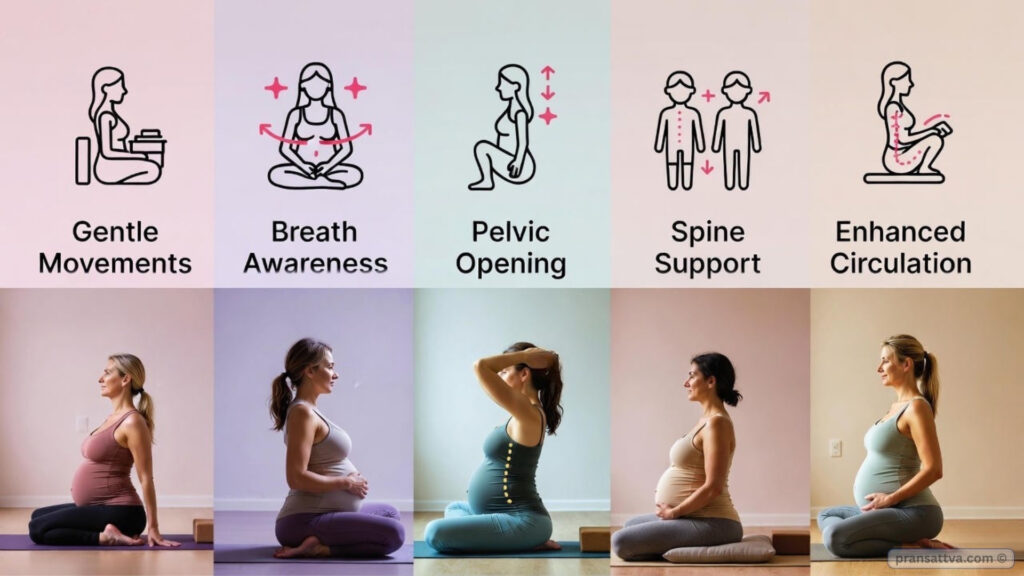
✤ How Prenatal Yoga Works: Gentle Movement, Breathing & Relaxation
Prenatal Yoga helps the body and mind through:
1. Gentle, Safe Movement
Movements are slow and controlled to avoid strain on:
- Belly
- Pelvic area
- Lower back
- Joints
2. Breath Awareness for Calmness
Deep breathing helps reduce:
- Stress
- Anxiety
- Emotional fatigue
It also increases oxygen flow to mother & baby.
3. Opening the Pelvic Region
Soft stretches improve flexibility and mobility needed for:
- Comfort during pregnancy
- Easier labor preparation
4. Supporting the Spine
Prenatal Yoga reduces:
- Back pain
- Hip tension
- Shoulder tightness
5. Enhancing Blood Circulation
Gentle poses support a healthy cardiovascular system and reduce swelling in legs.
6. Promoting Emotional Balance
Breath-based practices help stabilize mood and improve relaxation.
✤ Benefits of Prenatal Yoga for Mother & Baby
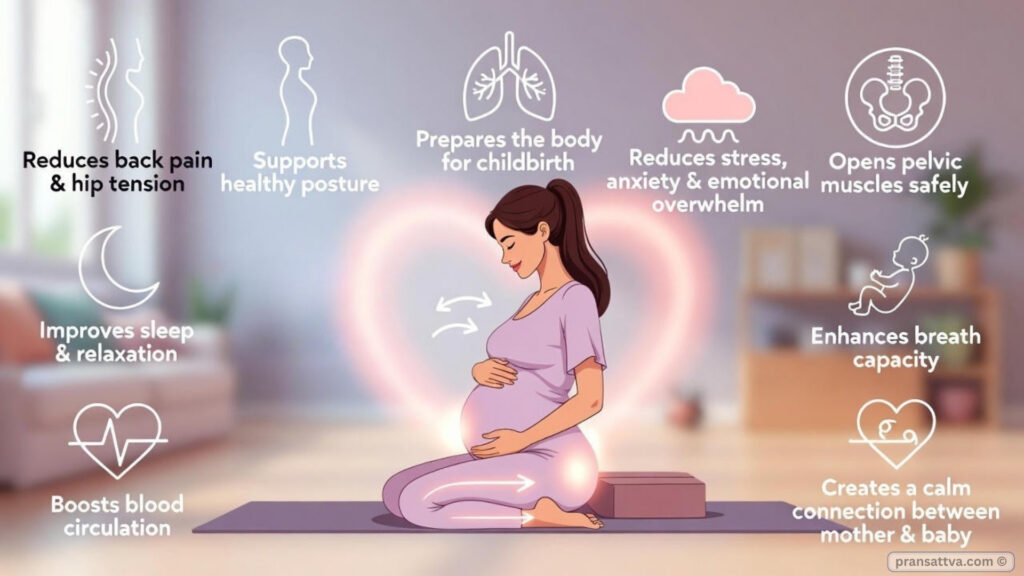
1. Reduces back pain & hip tension
2. Supports healthy posture
3. Improves sleep & relaxation
4. Boosts blood circulation
5. Reduces stress, anxiety & emotional overwhelm
6. Opens pelvic muscles safely
7. Enhances breath capacity
8. Prepares body for childbirth
9. Creates a calm connection between mother & baby
✤ Safe Prenatal Yoga Poses for Each Trimester
1. Cat–Cow Stretch
Relieves back pain, increases spinal mobility, and eases tension around the belly and lower back.
2. Modified Warrior Pose
Strengthens legs and builds stamina gently without straining the abdomen.
3. Butterfly Stretch (Baddha Konasana)
Opens pelvic muscles and hips, improves flexibility, and supports comfort during pregnancy.
4. Side-Lying Savasana
A safe relaxation position that supports the belly and helps the body fully relax.
 Best Time to Practice Prenatal Yoga During Pregnancy
☑ Morning (gentle wake-up)
Helps start the day with calmness and openness.
☑ Evening (stress-relief)
Reduces fatigue and prepares the body for restful sleep.
☑. Anytime You Feel Back Pain or Tension
Gentle poses can provide instant relief.
Always practice on a full stomach gap of at least 1–2 hours.
⚠️ Precautions & Contraindications of Prenatal Yoga Practice
☑ General Safety Guidelines:
- Avoid lying on the stomach
- Avoid deep twists & intense forward bends
- Avoid strong backbends
- Keep movements slow & controlled
- Maintain stable balance
- Use props for support
- Avoid overheating
- Stop immediately if you feel discomfort
☒ Avoid or practice only under professional guidance if:
- High-risk pregnancy
- Severe back or pelvic pain
- Dizziness or breathlessness
- High or low blood pressure
- Any pregnancy complications
- Doctor has advised rest
Prenatal Yoga should always feel gentle, safe, and calming.
Conclusion
Prenatal Yoga is a safe and nurturing practice that supports the physical and emotional well-being of pregnant women.
With gentle asanas like Cat–Cow Stretch, Modified Warrior Pose, Butterfly Stretch, and Side-Lying Savasana, mothers can experience relief from pain, improved flexibility, emotional balance, and relaxation.
It helps create a calm, healthy, and connected pregnancy journey.