Restorative Yoga is a gentle yoga practice that promotes deep relaxation and healing. Learn what Restorative Yoga is, its benefits, poses and best time to practice.
Restorative Yoga is a slow and gentle style of yoga that uses props to support the body in restful poses. This practice helps activate the relaxation response, reduce stress and promote deep healing.
Unlike active yoga, Restorative Yoga uses props (cushions, bolsters, blankets, blocks) to fully support the body in simple poses so you can rest deeply.
The purpose is healing, relaxation, and emotional balance, making it ideal for stress relief, trauma recovery, sleep improvement, and burnout healing.
✤ What is Restorative Yoga
Restorative Yoga is all about comfort, stillness, and deep rest.
It focuses on:
- Long-held relaxing postures
- Very minimal muscular effort
- Full-body support using props
- Slow breathing
- Nervous system healing
- Emotional and mental relaxation
This style is perfect for beginners, seniors, people with anxiety, chronic pain, or anyone needing gentle healing.
✤ How Restorative Yoga Works: Deep Rest, Support & Nervous System Calm
Restorative Yoga transforms the mind and body through:
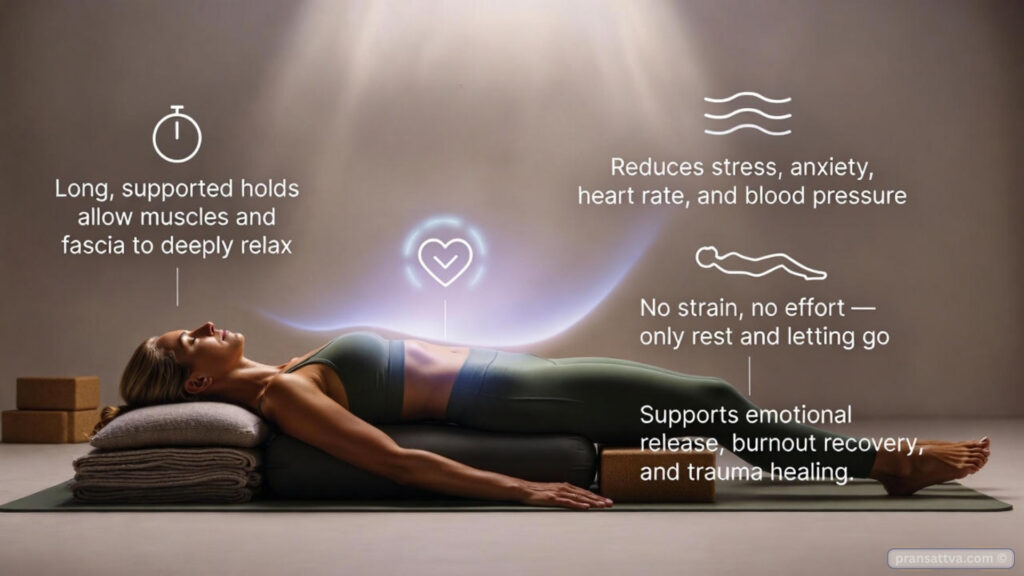
1. Long Holds With Full Support
Poses are held for 5–15 minutes, allowing:
- Muscles to relax
- Fascia to unwind
- Mind to settle
2. Activating the Parasympathetic Nervous System
This reduces:
- Stress
- Anxiety
- Heart rate
- Blood pressure
The body enters deep relaxation mode.
3. Minimal Effort, Maximum Healing
No strain, no pushing — only comfort and letting go.
4. Emotional Release & Nervous System Reset
Very effective for:
- Nervousness
- Burnout
- Trauma healing
- Emotional fatigue
5. Increased Circulation & Lymphatic Flow
Gentle poses improve recovery and reduce inflammation.
✤ Benefits of Restorative Yoga for Relaxation, Recovery & Healing
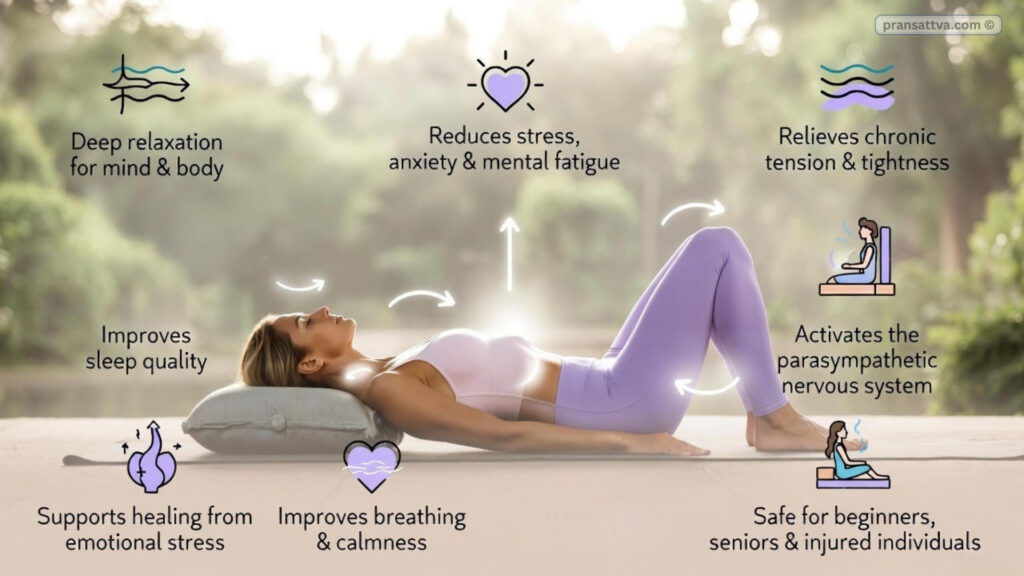
1. Deep relaxation for mind & body
2. Reduces stress, anxiety & mental fatigue
3. Improves sleep quality
4. Relieves chronic tension & tightness
5. Supports healing from emotional stress
6. Improves breathing & calmness
7. Activates parasympathetic response
8. Safe for beginners, seniors & injured individuals
✤ Popular Restorative Yoga Poses for Deep Rest & Recovery
1. Supported Child’s Pose
A deeply soothing posture that calms the mind instantly and releases tension from the back.
2. Supported Bridge Pose
Gentle backbend using props to relax the lower back and improve circulation.
3. Legs-Up-The-Wall (Viparita Karani)
A mild inversion that reduces swelling, refreshes the legs, and relieves stress.
4. Supported Reclining Bound Angle Pose
A heart-opening restorative pose that relaxes the chest, hips, and nervous system.
 Best Time to Practice Restorative Yoga for Maximum Relaxation
☑ Evening or Before Bed (Highly Recommended)
Promotes deep sleep and relaxation.
☑ After a Stressful Day
Helps calm mental and emotional tension.
☑ During Recovery or Fatigue
Perfect for:
- Burnout
- Illness recovery
- Physical exhaustion
☑ Anytime You Need Emotional Grounding
Slows down the mind and promotes inner peace.
⚠️ Precautions & Contraindications of Restorative Yoga Practice
☑ General Precautions:
- Enter and exit poses slowly
- Use props generously
- Never strain or stretch too much
- Maintain gentle, natural breathing
- Keep your body completely supported
☒ Avoid or modify if you have:
- Severe knee injuries (modify Child’s Pose)
- Neck issues (use cushions for head support)
- Lower back sensitivity (modify backbends)
- Pregnancy (use special restorative variations)
Restorative Yoga should always feel safe, soft, and relaxing.
Conclusion
Restorative Yoga is one of the most healing and calming styles of yoga.
With poses like Supported Child’s Pose, Supported Bridge Pose, Legs-Up-The-Wall, and Reclining Bound Angle Pose, practitioners experience profound relaxation, emotional balance, and nervous system healing.
It is the perfect practice for stress relief, deep rest, and long-term well-being.