Yin Yoga is a slow and meditative yoga practice that targets deep connective tissues. Learn what Yin Yoga is, its benefits, poses and how it works.
Yin Yoga is a slow-paced style of yoga that involves holding poses for a longer duration to target deep connective tissues, joints and fascia. Yin Yoga promotes flexibility, relaxation and mental calm.
Poses are held for 2 to 5 minutes or even longer, allowing the body to slowly release tension stored deep inside.
This style is perfect for stress relief, flexibility, relaxation, emotional balance, and healing.
✤ What Is Yin Yoga? Meaning, Benefits & Practice Explained
Yin Yoga works on passive stretching.
Unlike active yoga styles (like Vinyasa or Ashtanga), Yin uses:
- Slow movements
- Long-held postures
- Deep breathing
- Stillness
- Mindfulness
Yin Yoga balances the fast pace of modern life and helps calm the nervous system.
It is also excellent for people with:
- Tight hips
- Lower back tension
- Stress
- Anxiety
- Stiff joints
- Emotional heaviness
✤ How Yin Yoga Works: Deep Stretching, Stillness & Recovery
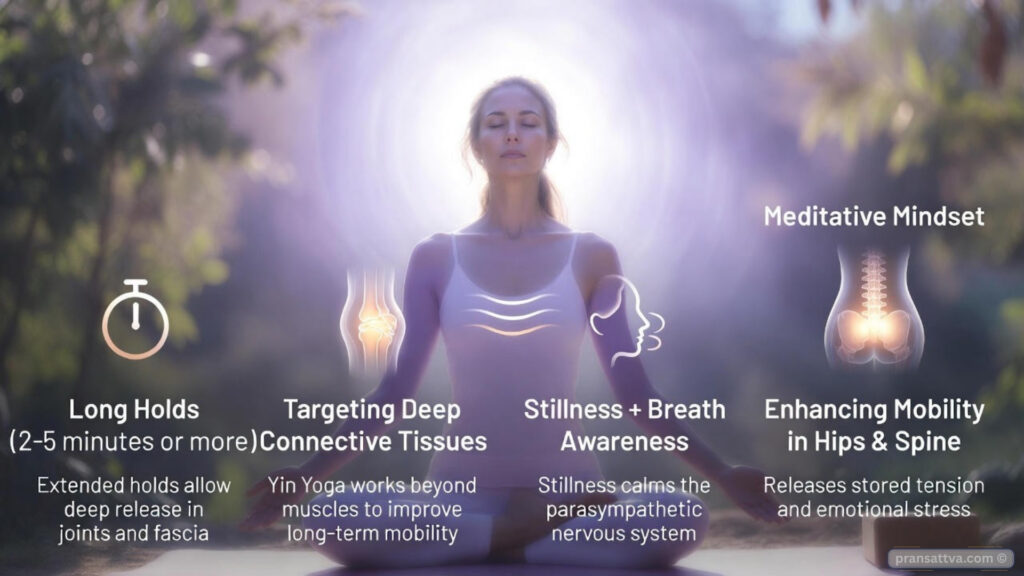
Yin Yoga transforms the body and mind through:
1. Long Holds (2–5 minutes or more)
This gives time for tension in fascia and joints to slowly release.
2. Targeting Deep Connective Tissues
Unlike muscle-focused yoga, Yin affects:
- Ligaments
- Tendons
- Fascia
- Joints
This enhances long-term flexibility and mobility.
3. Stillness + Breath Awareness
Staying still helps calm the parasympathetic nervous system, reducing stress and anxiety.
4. Enhancing Mobility in Hips & Spine
Most Yin poses focus on hips, pelvis, and lower back — the areas that store emotional stress.
5. Meditative Mindset
Slow, quiet practice encourages mindfulness and emotional release.
✤ Benefits of Yin Yoga: Flexibility, Relaxation & Joint Health
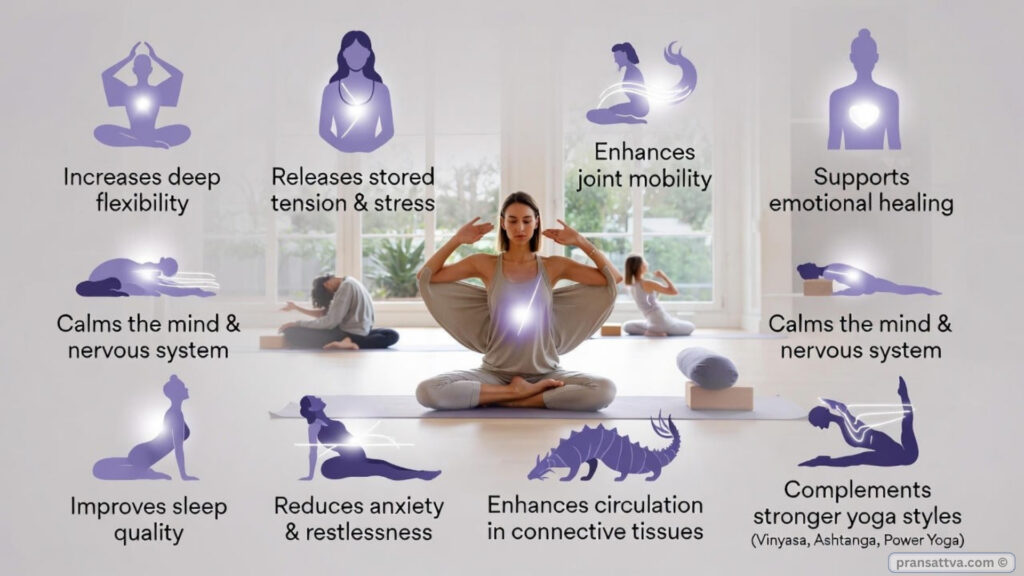
1. Increases deep flexibility
2. Releases stored tension & stress
3. Enhances joint mobility
4. Supports emotional healing
5. Calms the mind & nervous system
6. Improves sleep quality
7. Reduces anxiety & restlessness
8. Enhances circulation in connective tissues
9. Complements stronger yoga styles (Vinyasa, Ashtanga, Power Yoga)
✤ Popular Yin Yoga Asanas: Deep Stretch Poses Explained
1. Butterfly Pose (Baddha Konasana – Yin Version)
Deep hip- & groin-opening posture that releases tension in the pelvis and lower back.
2. Dragon Pose
Powerful hip-flexor stretch that opens the front hips and releases deep stored tension.
3. Sphinx Pose
A gentle backbend that targets the lumbar spine, relieving stiffness and improving circulation.
4. Caterpillar Pose
A passive forward fold that stretches the hamstrings, spine, and back body deeply.
 Best Time to Practice Yin Yoga for Maximum Relaxation & Recovery
☑ Evening (Highly Recommended)
Relaxing and perfect for stress relief before sleep.
☑ Early Morning (Calm & Meditative)
Helps wake the body gently.
☑ After a Stressful Day
Releases emotional & physical tension.
☑ After Intense Workouts
Balances the body by stretching deep tissues.
⚠️ Precautions & Contraindications of Yin Yoga Practice
☑ General Precautions:
- Move slowly in and out of poses
- Avoid overstretching
- Use props for support when needed
- Maintain steady, relaxed breathing
- Keep muscles relaxed — Yin works passively
☒ Avoid or modify Yin Yoga if you have:
- Hypermobile joints
- Recent injuries (especially hips, knees, spine)
- Severe osteoporosis
- Herniated discs (modify forward folds)
- Pregnancy (needs special Yin modifications)
Conclusion
Yin Yoga is a slow, relaxing, and deeply therapeutic yoga style that nurtures both body and mind.
Asanas like Butterfly, Dragon, Sphinx, and Caterpillar Pose open connective tissues, calm the nervous system, and release long-held tension.
It is the perfect style for anyone seeking emotional relief, deep stretching, or a peaceful meditative yoga practice.