
Nadi Cleansing / Energy Channel Balancing Breath
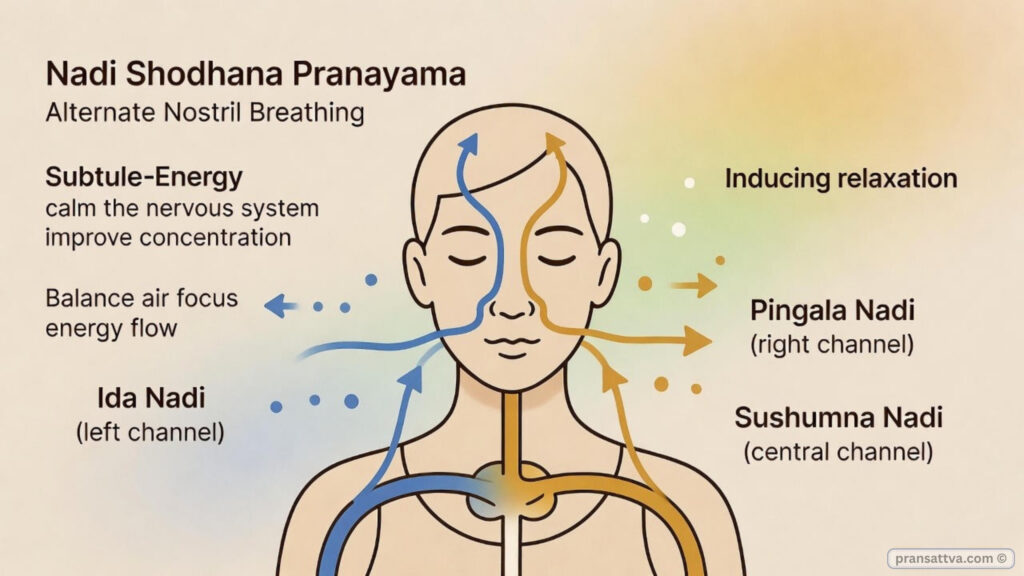
Nadi Shuddhi, also known as Nadi Shodhana Pranayama, is a gentle breathing practice designed to open, cleanse, and balance the body’s subtle energy channels—Ida, Pingala, and Sushumna.
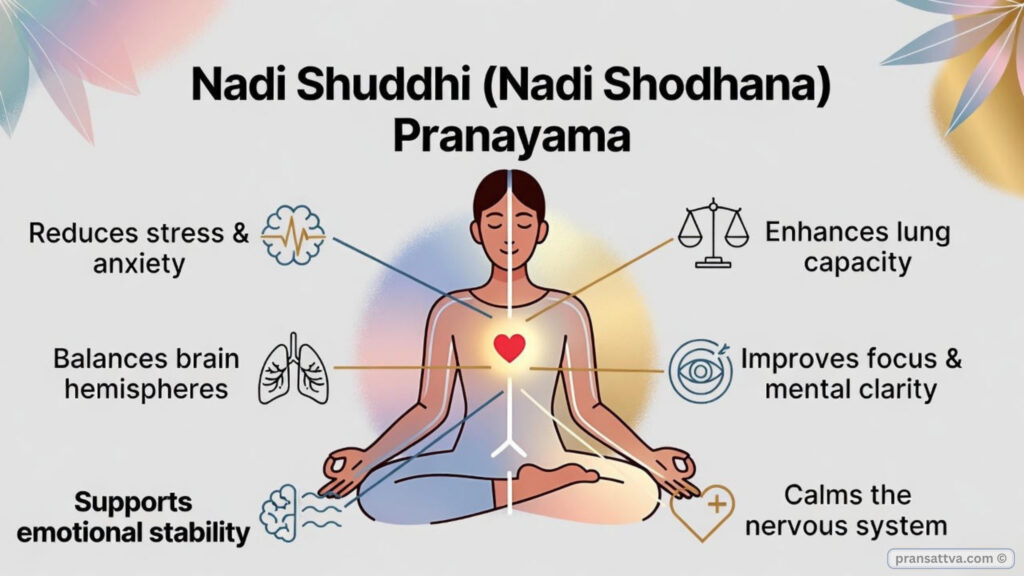
This technique helps calm the mind, harmonize both brain hemispheres, and restore inner equilibrium.
It is one of the most widely recommended practices for beginners, students, working individuals, meditators, and anyone looking for mental clarity and inner balance.
✤ What Is Nadi Shuddhi (Nadi Shodhana) Pranayama?
Meaning of Nadi Shuddhi: Ida, Pingala & Sushumna Explained
“Nadi” means energy channel, and “Shuddhi” or “Shodhana” means purification.
According to yogic sciences, the body contains thousands of nadis, but three major ones are important:
- Ida Nadi – cooling, calming, feminine energy
- Pingala Nadi – warming, active, masculine energy
- Sushumna Nadi – central channel for higher awareness
Nadi Shuddhi pranayama helps remove energetic blockages and ensures a smooth flow of prana (vital energy) throughout the body.
This creates a state of mental balance, emotional stability, and physical relaxation.
✤ How Nadi Shuddhi Pranayama Works to Balance Mind & Energy
Alternate Nostril Breathing and Nervous System Balance
Effect of Nadi Shuddhi on Brain Hemispheres
The technique works through alternate nostril breathing, which:
- Improves oxygen supply
- Supports the nervous system
- Balances left–right brain activity
- Reduces accumulated stress
- Harmonizes Ida and Pingala nadis
- Activates Sushumna when done consistently
Regular practice leads to deeper peace and prepares the mind for meditation.
✤ Benefits of Nadi Shuddhi (Nadi Shodhana) Pranayama
☑ 1. Deep Mental Relaxation
Calms overthinking, reduces anxiety, and creates inner stillness.
☑ 2. Balances the Nervous System
Stimulates the parasympathetic response (relaxation mode), reducing stress and tension.
☑ 3. Enhances Focus & Clarity
Strengthens concentration, improves decision-making, and sharpens mental alertness.
☑ 4. Improves Breathing Efficiency
Strengthens lungs, regulates breath, and increases oxygen intake naturally.
☑ 5. Emotional Balance
Helps manage mood swings and supports stable emotional responses.
☑ 6. Prepares the Mind for Meditation
Creates inner harmony and reduces distractions, making meditation deeper and easier.
☑ 7. Balances Ida & Pingala Nadis
Restores natural pranic flow and energetic stability in the system.
☑ 8. Reduces Fatigue & Tiredness
Increases vitality by removing energetic blockages.
☑ 9. Supports Better Sleep
Helps calm the mind before bedtime and reduces restlessness.
☑ 10. Beneficial for High-Stress Lifestyles
Ideal for students, working professionals, and anyone with a busy, stressful routine.
✤ Types Under This Category (Beginner-Friendly List)
Nadi Shuddhi / Energy Channel Activation (6 Types):
These pranayamas help balance Ida–Pingala–Sushumna Nadis.
1) Nadi Shodhana – Cleanses & purifies subtle energy channels.
👉 Read More
2) Ida Nadi Breathing – Left-nostril breathing for cooling & relaxation.
👉 Read More
3) Pingala Nadi Breathing – Right-nostril breathing for warmth & activation.
👉 Read More
4) Sushumna Breath – Helps activate the central energy channel.
👉 Read More
5) Right-start Anulom Vilom – Stimulates Surya (Pingala) Nadi for focus & heat.
👉 Read More
6) Left-start Anulom Vilom – Activates Chandra (Ida) Nadi for calmness & cooling.
👉 Read More
☑ Precautions & Contraindications for Nadi Shuddhi (Nadi Shodhana) Pranayama
Although Nadi Shuddhi is one of the safest breathing practices, it should still be performed with awareness and proper guidance.
Here are important precautions to follow:
1. Practice on an Empty or Light Stomach
Avoid practicing immediately after meals.
A gap of 2–3 hours after eating is ideal.
2. Maintain a Slow, Gentle Breath
Do not force or control the breath aggressively.
The breathing should remain natural, smooth, and effortless.
3. Sit in a Comfortable, Straight Posture
Avoid slouching or bending the spine.
Proper posture ensures smooth airflow and balanced oxygen supply.
4. Avoid Fast or Jerky Breathing
Nadi Shuddhi is a calming practice.
Rushing the breath can create dizziness or discomfort.
5. Stop Immediately if You Feel Lightheaded
If you experience:
- Dizziness
- Heaviness
- Discomfort
pause the practice and breathe normally.
6. Practice in a Fresh, Well-Ventilated Space
Avoid practicing in:
- Very hot rooms
- Very cold rooms
- Polluted or closed spaces
Good airflow improves the effect of pranayama.
7. Do Not Hold Breath if You Are a Beginner
Breath retention (kumbhaka) should only be done:
- With experience
- After learning from a qualified instructor
For beginners, simple alternate nostril breathing is enough.
☒ Contraindications (Who Should Avoid or Be Careful)
1. Severe Asthma or Breathing Disorders
People with serious respiratory conditions should practice only under expert supervision.
2. High or Uncontrolled Blood Pressure
Forceful breathing or retention should be avoided.
Gentle breathing is safe but must be slow.
3. Heart Patients
Should avoid advanced forms and breath-holding, and consult a doctor before starting.
4. Recent Surgery
Anyone recovering from thoracic, abdominal, or cardiac surgery should avoid pranayama until medically cleared.
5. Migraine or Frequent Headaches
Practice very gently; avoid long sessions or breath-holding.
6. Severe Anxiety or Panic Disorders
Practice slowly and calmly; fast or intense breathing may trigger discomfort.
7. Blocked Nose / Sinus Infection
If both nostrils are blocked, avoid the session until breathing becomes normal.
8. Pregnant Women
Normal gentle Nadi Shuddhi is usually safe,
BUT breath retention must be strictly avoided.
☑ Best Practice Tips (Safe Mode)
- Start with 2–3 minutes, then slowly increase to 5–10 minutes.
- Keep shoulders relaxed.
- Focus on natural breathing.
- Practice daily for best results.
✤ Conclusion
Nadi Shuddhi is one of the most effective breathing techniques for calming the mind, purifying energy pathways, and restoring emotional balance.
With regular practice, it builds inner peace, stability, and mental clarity—making it an essential foundation for meditation and advanced pranayama practices.
✤ Nadi Shuddhi (Nadi Shodhana) Pranayama – FAQ (Questions & Answers)
1) How long should I practice Nadi Shodhana daily?
Beginners: 2–5 minutes
Intermediate: 5–10 minutes
Advanced: 10–15 minutes
Practice slowly and comfortably.
2) How many rounds should I do?
Start with 5–10 rounds, gradually increasing as your breath becomes calm and steady.
3) Can I do Nadi Shodhana after eating?
Avoid practicing immediately after eating.
Leave at least 1–2 hours gap after meals.
4) Who should avoid Nadi Shuddhi Pranayama?
Avoid or modify if you have:
- Severe cold or nasal congestion
- Acute asthma attack
- Breathlessness
- Dizziness
- High anxiety phase (start very slow)
Always breathe gently.
5) Does Nadi Shodhana help with sleep?
Yes!
It activates the parasympathetic nervous system, which reduces stress and promotes deep relaxation — ideal for better sleep.
6) Should I breathe deep or normal?
Always breathe naturally, slowly, and comfortably.
Do not strain or forcefully inhale/exhale.
7) What hand gesture is used in Nadi Shodhana?
Use Vishnu Mudra with the right hand:
- Thumb → right nostril
- Ring finger → left nostril
8) Can beginners practice Nadi Shodhana?
Yes, it is one of the safest and easiest pranayamas for beginners.
9) How is Nadi Shodhana different from Anulom Vilom?
Both involve alternate-nostril breathing, but:
- Nadi Shodhana includes breath awareness and sometimes ratio breathing.
- Anulom Vilom is more rhythmic and simple.
Nadi Shodhana is more meditative and calming.
10) Can pregnant women practice Nadi Shuddhi?
Yes, but only slow and gentle breathing.
Avoid breath retention (kumbhaka).
Always consult a doctor if unsure.
11) Does Nadi Shodhana detox the body?
Yes, by increasing oxygen flow, calming the nervous system, and balancing energy channels.
12) What mistakes should be avoided?
- Breathing forcefully
- Lifting shoulders
- Closing nostrils too hard
- Practicing in a noisy environment
- Rushing the inhale–exhale cycle
Slow and relaxed breathing is key.
13) How soon will I feel results?
Some people feel calmness in 1–2 minutes.
Consistent practice for 1–2 weeks brings deeper benefits like better focus and emotional balance.
14) Can I do Nadi Shodhana before meditation?
Yes!
It is one of the best pranayamas to prepare the mind for meditation.